How would you react if someone ordered you to lift a heavy box and carry it to your house?
""What's in the box?" you ask, and receive the answer: "Stones." You don't understand where this trouble landed on your head. The box is heavy. Beads of sweat are dripping down your face. At a certain point you stop, place the box on the ground, and say: "I have no more strength.".
Then, at this point of despair, you discover that there are indeed stones in the box, but not just any stones – gemstones, diamonds! The box is full of precious stones, worth millions, and it's all yours! Just take it home with you.
At that second, you will lift the box as if it weighed a feather, your legs will be as light as a deer, and with exploding happiness you will run home with it.
Brain activation
The Lubavitcher Rebbe used this parable to illustrate the importance of joy.
Objective reality did not change. The weight of the box remained the same. The blazing sun also remained the same. The only change that occurred was in the person's consciousness. And suddenly something that had seemed unbearable became the easiest and most pleasant thing.
The difference between a happy person and a depressed person is not in the objective conditions and difficulties of life. There are rich people who are depressed and poor people who are happy. There are people who are sick and yet full of energy and optimism, and in contrast, there are people who are healthy but sad and withdrawn. There are those who attack life's challenges with joy and vigor, and those for whom everything is difficult and burdensome.
Is it a matter of character? Indeed, innate character certainly influences a person's ability to feel joy, but it is mainly a matter of upbringing, worldview, and approach to life.
The question of whether you will be a happy person is not predetermined. It is in your hands. If you want to – you will be happy; if you don’t want to – happiness will be far from you. You, through your behavior and approach to life, determine whether you will be a happy person or not.
The Book of Tanya states a fundamental principle – "The mind rules the heart." The emotions we feel can be controlled. With the help of the mind, we have the power to determine what we will feel. Some thoughts lead to feelings of sadness and depression, while other thoughts inspire joy and cheerfulness in the heart.
Of course, this requires investment and inner work, but ultimately a person can adopt patterns of thinking that will make them feel happy.
When a person remembers the constant presence of the Creator, the fundamental belief that "no evil comes from above," and that everything is for the best - he has the power to overcome the difficulties of life and always maintain joy and optimism.
The wells are opening.
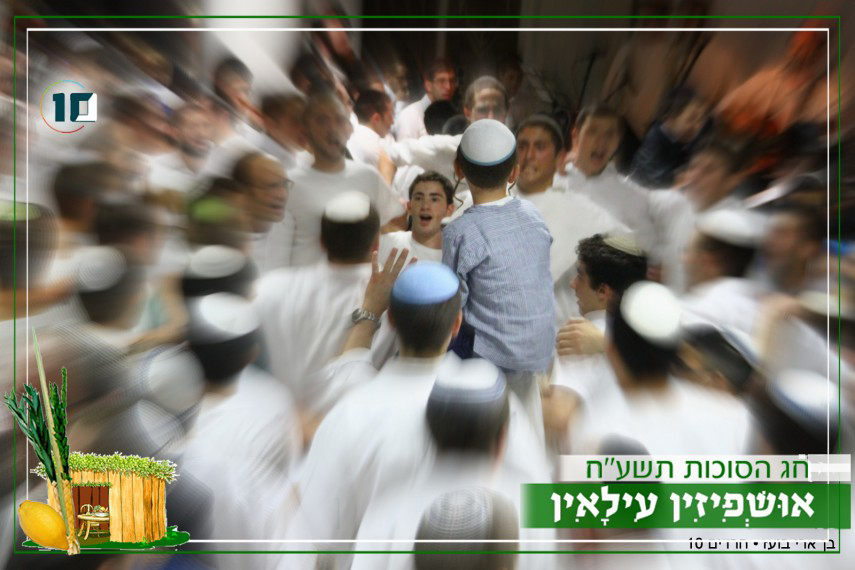
But we also need God's blessing, to open the upper gates of joy for us. Here things connect with the holiday of Sukkot and Simchat Torah. On this holiday, the wells of joy are opened, and anyone who wishes is invited to draw buckets and barrels of joy for the entire year.
The great Hasidic scholars said that all the things that are achieved on Rosh Hashanah and Yom Kippur through weeping and a broken heart, are achieved on Simchat Torah through joy and dancing. So, if you want to be happy in the new year – rejoice on Sukkot and dance enthusiastically on Simchat Torah. Now we give an abundance of joy for the whole year!
 Join the Haredim 10 Facebook page >>
 Join the X page of Haredim 10 >>
 Want more news, videos and stories? Join the Haredim 10 WhatsApp channel >>