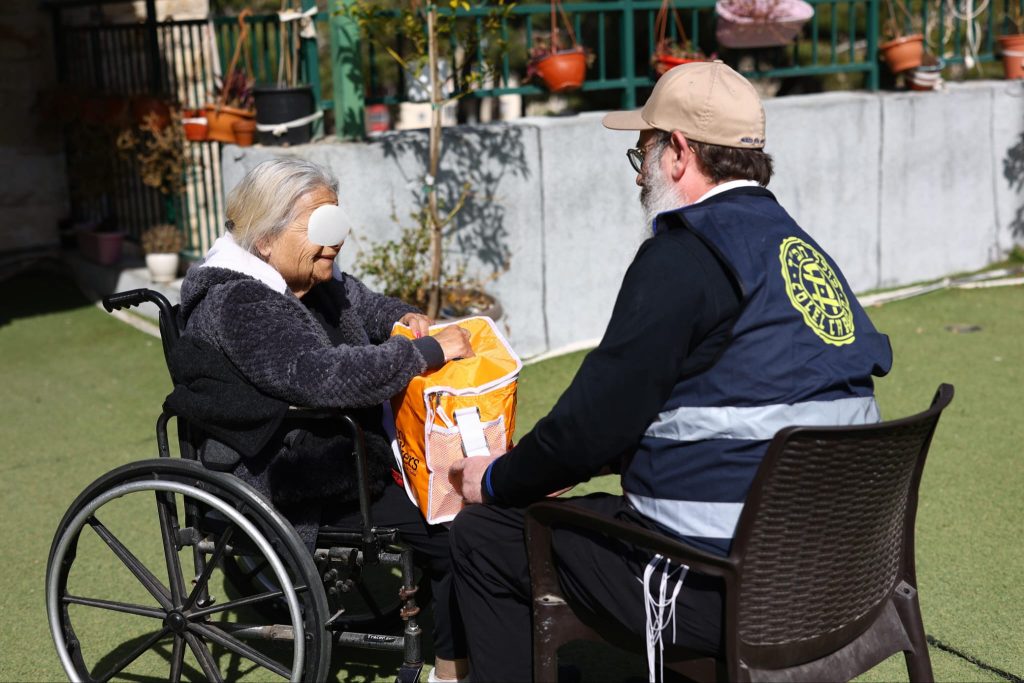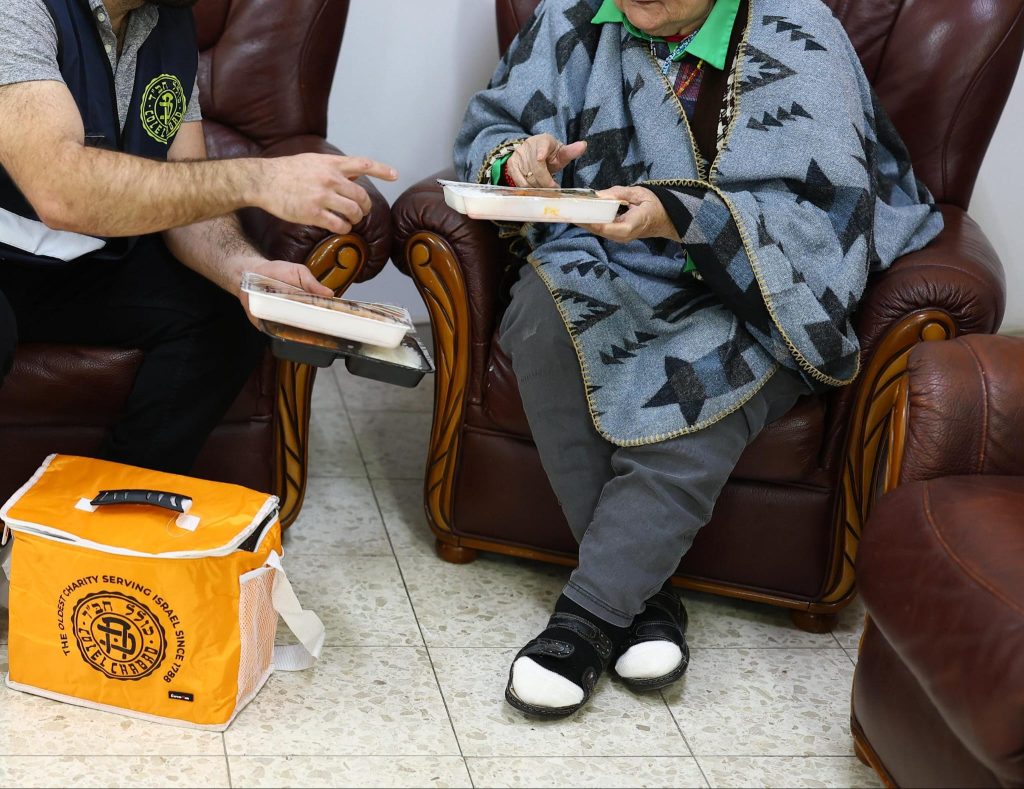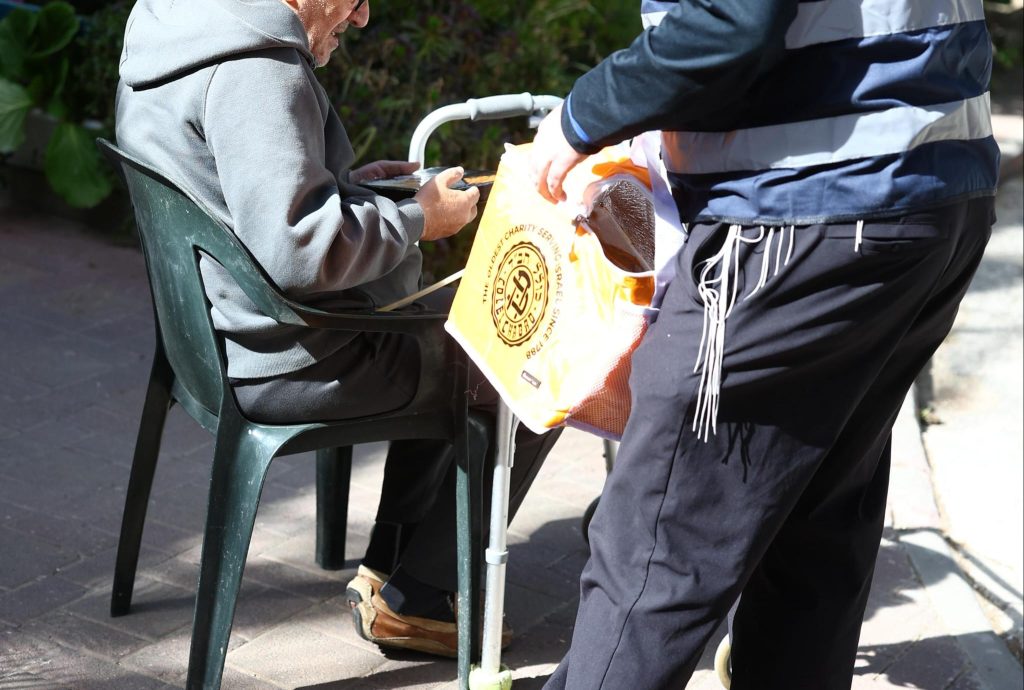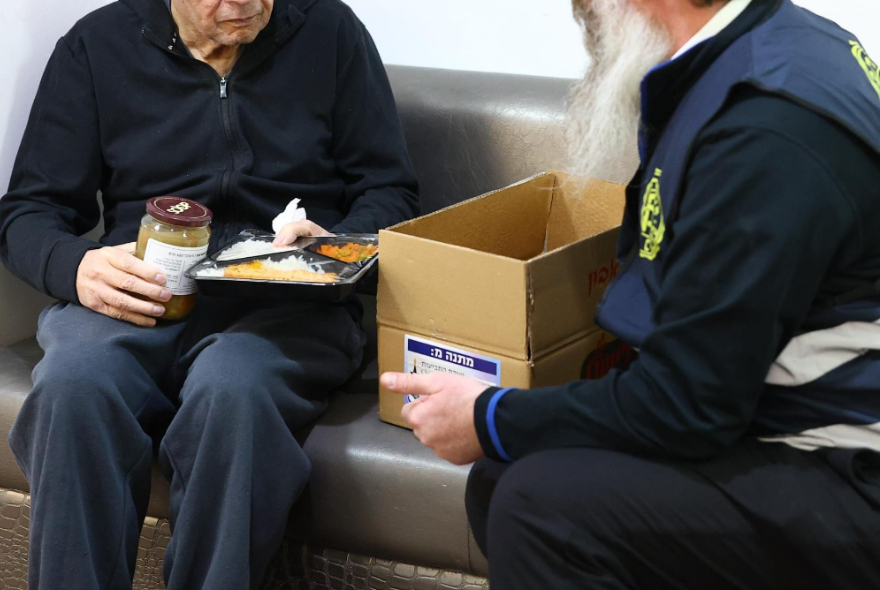
While Israel is trying to maintain a routine under fire, tens of thousands of elderly people and Holocaust survivors find themselves under a silent siege.
The anxiety from the alarms and the security tension caused many of them to lock themselves inside their homes, suffering from severe loneliness and having difficulty performing basic tasks, such as going out to buy groceries or cooking.
Starting Monday of this week, a special aid project began designed to address this plight among thousands of isolated Holocaust survivors.
 Want more news, videos and stories? Join the Haredim 10 WhatsApp channel >>
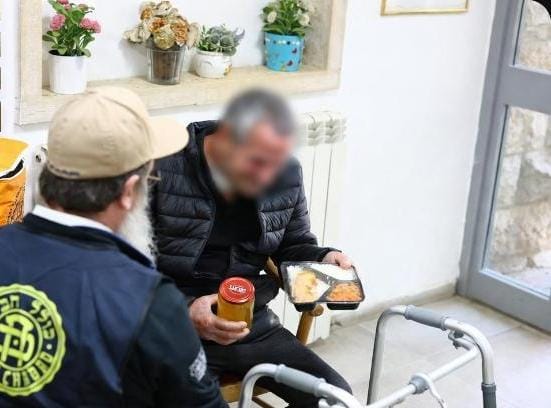
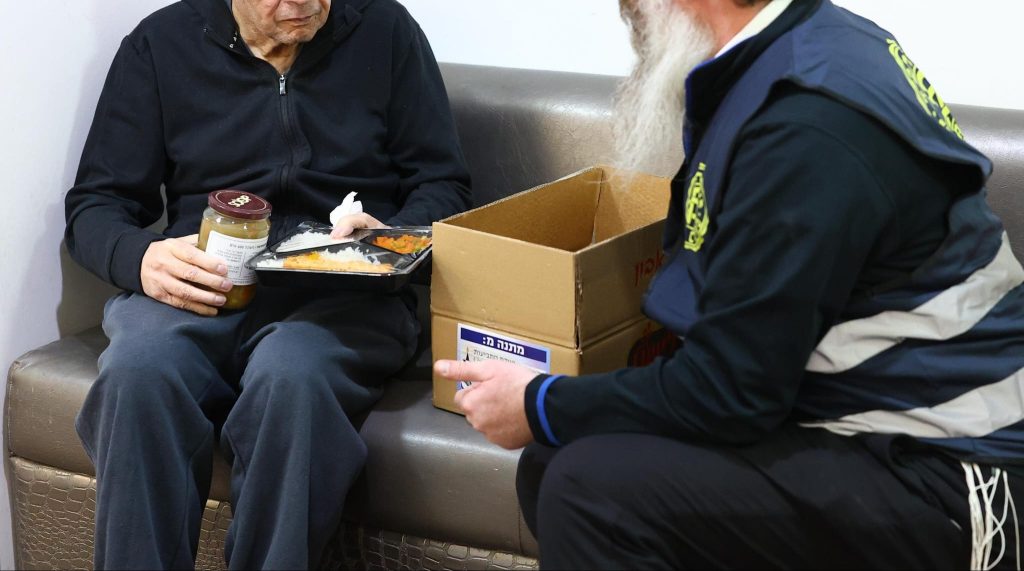
As part of the project, led by the Eshel Chabad Association, together with the Claims Conference and the Friendship Foundation, freshly cooked meals are distributed daily directly to homes, to ensure that, at least nutritionally, they will not be left behind.
The decision on the project was made after an extensive mapping operation conducted in recent days, during which telephone calls were made to many elderly people, including Holocaust survivors. The conversations revealed a worrying picture: Many survivors reported that following the war they were experiencing severe anxiety that prevented them from functioning.
""There are elderly people who are simply afraid to go out to the kitchen or stand near the gas because of the pressure from the alarms," says Rabbi Mendi Blau of Eshchel Chabad. "Many of them live on dry food, bread and cheese, because they are mentally unable to take care of themselves. Loneliness makes everything worse - when they are alone between four walls, every noise outside becomes a threat. The telephone is sometimes their only connection to the world, but they don't always have anyone to call.".
Knocking on the door as a lifeline
Starting today, the logistics network is being deployed in several cities, primarily Jerusalem. Volunteers are arriving at homes with hot meals that will be cooked daily in giant kitchens in Ma'ale Adumim.
In cities that have suffered heavy rains, the distress is particularly pronounced, and the goal is to locate even those who have not yet actively sought help.
According to Rabbi Blau, the war created a "new wave of distress" among a population that was independent until recently.
""Our duty is to reach each of them. The goal is not only to provide food, but to show them that someone is knocking on the door and remembering them. The operation will continue as long as necessary, with the aim of providing a safety net for those elderly people until they can return to some kind of routine.".