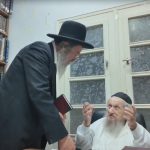
Tuesday this week, 7 p.m. The ceasefire is taking effect right now, but at Rabbi Kook's house in Jerusalem, they're talking about a different kind of fire.
While commentators analyze whether this time is just a lull in preparation for the next round, an entire evening at the museum at Rabbi Kook's house was dedicated to one of the previous rounds: the riots of 1919.
85 years ago, 19 years before the establishment of the state, 133 Jews were massacred in one week across the country. In Hebron, three Torah scrolls were saved from the great fire and brought to the home of Rabbi Kook. They have been lying there ever since, unusable of course. Recently, it was decided to repair them and place them in the Ark of the Covenant there, in a festive ceremony. An event that was supposed to deal with the past, became – under the auspices of the negotiations in Cairo – topical.
 Want more news, videos and stories? Join the Haredim 10 WhatsApp channel >>
In the procession that accompanied the Torah scrolls, accompanied by musicians, politicians and rabbis, along with the descendants of survivors of the riots, could be seen dancing happily with the restored scrolls, but also constantly glancing at their cell phones to see if the shooting had indeed stopped.
""The eternal people are not afraid of a long road," said Rabbi Chaim Druckman. "Look how far we have come since 1949. It is a shame that we are unable to recognize the great and good things that happen to us and only see the bad." Deputy Minister Rabbi Eli Ben-Dahan drew a direct line between the murdered people of 1949 and the late four-and-a-half-year-old Daniel Tragerman from Nahal Oz: "The Arabs from the events of 1949 remained the same Arabs, the Jews remained the same Jews, and only the means of murder were replaced by missiles and tunnels. Happily for us, the Jewish spirit and faith in life have only strengthened and grown.".
But President Reuven Rivlin chose to address, specifically there, the fabric of relations between Jews and Arabs. A series of speakers before him mentioned almost exclusively Arab cruelty. Many years before ISIS, it turns out, the tactics of the rioters included amputation of limbs, burning alive, and more. The British, needless to say, did not make too much of an effort to stop this.
But Rivlin chose to quote an unpublished paragraph by Rabbi Kook, which spoke of the day after. In response to the accusations of the senior Muslim leader, Mufti Husseini, Rabbi Kook wrote the following surprising words. If you will, this is his vision upon the declaration of the ceasefire of 1949: "I know clearly that the Arab people as a whole, and also the greater part of the Arabs of the Land of Israel itself, are full of sorrow and shame for the evil deeds that a small part of them committed due to the fault of their instigators. We hope that that tradition of peaceful ways and reciprocity, to build together with all the inhabitants of the Land of Israel the beloved and abandoned land, to transform it into a paradise and a civilized land as it deserves to be, that same holy tradition will triumph over all the plots of lies and deceit that the instigators of strife and bloodthirsty people want to spread among the people of the land.".
Rivlin finished quoting and told the audience: "Let us also continue the same sacred tradition of paths of peace.".
The woman sitting next to him replied in a whisper: "We'd be happy to, it's them who still don't want it.".
 On Thursday evening, the first of many memorial services was held at the Ha'ama Building in Jerusalem to mark the one-year anniversary of the passing of Rabbi Ovadia Yosef. What have we learned since the spiritual leader of Shas left us?
• That there is a person who has no replacement. How embarrassing to recall the discussions surrounding the question "who will be the successor." Neither Begin nor Ben-Gurion has an heir. Nor does Elvis Presley, for that matter. Sometimes a one-time phenomenon appears in history in a certain field, and the battles to step into his shoes are simply irrelevant. A great man in the Torah lives among us, with a life mission of restoring the Eastern Jewish faith to tradition, and he is no more.
• Is Shas itself relevant? Many see this party as a wound, but many also see it as the Band-Aid, the bandage for a religious and sectarian wound that has been bleeding here since the founding of the state. Many think that Shas only offers jobs, but many understand that first and foremost it offers identity. A rare Zionist-Haredi-Mizrahi mix.
According to the polls, it is weakening, losing seats to Moshe Kahlon, Likud, and the Jewish Home, and perhaps it itself will split due to many disputes and factions. But the political question is less interesting than the social question. Shas is not just a mandate curve, but a religious and cultural statement. It used to be very clear what it wanted to do: restore its former glory, uphold the deprived heritage of Sephardic Jewry, introduce tradition into the Israeli soundtrack. And what now?
• It should be remembered: The hundreds of thousands who came to the rabbi's funeral did not come because of the Shas MKs (most of whom they do not recognize), but because the deceased bestowed honor and significance on them. This is also the reason why thousands will flock to the series of expected memorial events. In order to become stronger, the Shas leadership needs to excite the masses around some shared vision, not around internal squabbles.
 The ceasefire began exactly on Rosh Hashanah. If in Jewish tradition we talk about 30 tense days of judgment up there in the sky, a time when future moves are determined, then this year it is very tangible here in Israel as well. A 30-day ceasefire is supposed to end exactly on Rosh Hashanah.
Elul also begins "Elul Time," the prime time of the yeshiva world. Intensive and in-depth study in an attempt to improve and arrive as prepared as possible for the holidays of Tishrei.
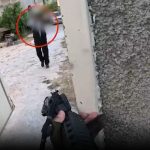
Rabbi Baruch Vider, head of the HaKotel Hesder Yeshiva, is accustomed to receiving students returning from vacation, not war, at this time of year. Dozens of his students have participated in Operation Protective Edge in the past two months. One of them, Eviatar Turgeman, a paratrooper from Beit Shean, was killed in an encounter in Khan Yunis.
How do you return from the tank to the Gemara? And what about Eviatar's empty place in the yeshiva? These questions also occurred to him, and the rabbi decided to write a letter to the students on the eve of their return to the Beit Midrash: "Elul. In the yeshiva, this word is enough to send a great tremor of trembling. Our Eviatar was supposed to return to the study with us, to take his place. The stack of books was already ready on his table in the room of the house in Beit She'an. He told one of the rabbis, before entering the Strip: 'I miss returning to the yeshiva. After a year and a half in the army, I feel how much I miss the Torah.' Eviatar ascended to a higher yeshiva. Who could fill his place? There is no one who can do it, and there is no one who is not obligated to do it.
""I fought in the Galilee Peace War, in the terrible battle at Sultan Yaakov. Beloved friends from the yeshiva were injured. Anyone who experienced this will no longer be the same. His world cannot be the same as the day before yesterday. "We say to Eviatar's parents, 'The place will comfort you.' The place is not only the Holy One, blessed be He. The place is also Eviatar's empty place in the Beit Midrash. We must fill the silence in this place with the loud voice of Torah.".
 Jewish status:
 ""You shall not pervert judgment, you shall not respect persons, and you shall not take a bribe, for a bribe blinds the eyes of the wise and perverts the words of the righteous. Pursue justice and righteousness, that you may live and inherit the land that the Lord your God is giving you" (from this week's Torah, "Shoftim")