The IDF announced this evening (Sunday) that as of today, the army is missing approximately 12,000 soldiers in compulsory service - of which between 6,000 and 7,500 are combatants.
According to the briefing, security officials warn that these gaps are expected to deepen for thousands of additional fighters, combat support personnel, and technology personnel, if the reduction of mandatory service to 30 months goes into effect as planned.
The defense establishment warned that the direct connection between the conscription law and the operational order of forces is immediate. "If a law does not come that brings in more servicemen, and especially a significant conscription of ultra-Orthodox Jews, we will face a severe shortage in just a few months.".
According to the source, the IDF needs thousands of additional fighters, and according to some estimates, the number needed is 8,000 additional reservists, along with strengthening the regular force. "The numbers currently being discussed in the law do not provide a full response. We need sanctions that meet the individual, otherwise it will not happen.".
The pressing operational need in 7 different combat theaters requires regular service members to operate continuously throughout the year, and reservists to carry out dozens of days of operational readiness beyond the original planning.
To deal with the complex reality, the Human Resources Department has been leading an extensive strategic plan for the past two and a half years to optimize human capital and expand recruitment sources.
As part of the force building and the establishment of the new reserve force, 9 regular armor companies, an engineering battalion, a home front command battalion, an air defense and combat reconnaissance battalion, as well as a new Haredi battalion have been established in the past two years in order to facilitate the reserve force.
At the same time, a large-scale reserve force was established, integrated into the current combat graph for 2026, which includes 25 "David" brigade battalions, the "HaShomer" brigade (4 battalions), the 500th Armored Brigade, the 38th Division, and 49 additional armor teams.
These establishment are made possible by the return of volunteers, the call-up of those exempted by a command order, and the exhaustion of reserves of previously unassigned servants.
At the same time, the army is investing significant efforts in expanding the integration of the ultra-Orthodox public, but the current increase in recruitment still does not meet the immediate needs of the army, which continues with enforcement and recruitment processes according to the law.
According to the IDF briefing, out of the 80,000 who are in "evasion processes," about 50% definitely belong to the ultra-Orthodox public and an additional 25% are estimated to be such. As part of the settlement of the issue, the Chief of Staff signed a dedicated General Staff order defining the conditions of service, and in July 2025, he directed that draft orders be issued for all ultra-Orthodox draftees, while adjusting the summoning processes.
In addition, Brigadier General Avinoam Emunah was appointed advisor to the Chief of Staff for Haredi affairs, and the procedures for the first order, the days of recruitment, and the kashrut and gender training programs were coordinated.
The data indicate a gradual upward trend: in 2023, about 2,200 Haredim enlisted, in 2024 the number rose to 2,800, and in the first half of 2025, about 1,850 fighters and combat supporters enlisted, with the expectation for the end of the year being that the number of recruits will cross the 3,000 mark.
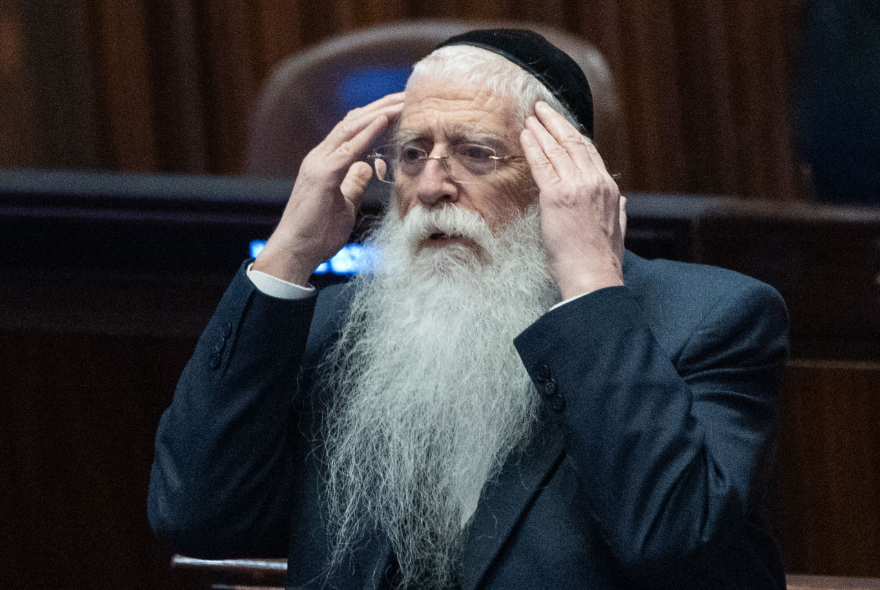
MK Meir Porush responded: "The briefings from the army raise concerns that various elements have decided to turn the army into a political tool in the hands of the persecutors of Torah scholars.".
He noted that "the Shkedi Committee, a professional committee headed by a retired major general and with the participation of senior army officers, which was appointed by Defense Minister Galant with the backing of the acting Chief of Staff Zamir, recommended not harming those who study three Seders a day.".
""The conduct of the army, under the direction of the lawyers, to persecute Torah scholars and hold media briefings against any arrangement that is consistent with the recommendations of the Shkedi Committee - shows that there are those in the army who decided to join politics before taking off their uniform.".
 Join the Haredim 10 Facebook page >>
 Join the X page of Haredim 10 >>
 Want more news, videos and stories? Join the Haredim 10 WhatsApp channel >>