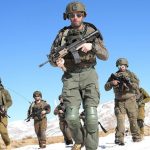
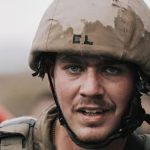
On the fortieth anniversary of the establishment of the 'Shaldag' commando unit in the Air Force, the IDF is releasing new videos that include a rare glimpse into the unit's operations.
''Shaldag' was established in 1976, following the lessons of the Yom Kippur War, in order to provide the Air Force with independent commando and intelligence capabilities.
The unit's founder and first commander was Colonel Muki Betzer, a paratroopers veteran and reserve commander in the IDF's General Staff, who was greatly assisted by Dodik Rotenberg, a paratrooper and hero of the Battle of Ammunition Hill, and Yiftaha Spector, head of the Air Force's Operations Department.
 Want more news, videos and stories? Join the Haredim 10 WhatsApp channel >>
The soldiers of the elite unit are carefully selected after being formed on a patrol day and commit to a year of permanent service in addition to regular service. They begin the warrior training course, which lasts one year and seven months, and upon completion are assigned to teams in combat, command, planning, control, intelligence gathering and training roles – and continue together until the age of 34, in reserve service.
[vimeo url="https://vimeo.com/185654874" width="600" height="400" responsive="yes" autoplay="no"]
Shaldag's greatness was revealed in Operation Grapes of Wrath in 1996, when its fighters located terrorist cells, rocket launchers, and artillery in southern Lebanon.
Over the course of 17 days, the fighting carried out dozens of operations, 37 of which were planned, most of which involved reconnaissance deep inside Lebanon to locate targets. At its peak, about 200 fighters were operating in the area at the same time. The unit was responsible for 81 attacks carried out during the operation, killing 65 terrorists and destroying 65 targets.
A senior officer in the Air Force explains that the unit operates all the time, in wars, operations and routine. "'Sheldage' goes on special operations and operates deep in the ground and in additional combat areas from the perimeter fence to deep inside enemy territory.".
""One of the most difficult challenges for the Air Force is the ground-based missile challenge," says the senior officer. "This is a struggle that began in the Gulf War with the launches of Scuds into Israeli territory. The main challenge is the mobile missile. What we are doing is simply building a unit of ground-to-ground missile hunters in combat zones and hostile to Israel, an area that is sometimes thousands of kilometers away that must be targeted and analyzed through intelligence for operational needs, and operate effectively while building a combined air-ground operational capability, which in those days was being built with a complete capability ready to go to western Iraq.".
[vimeo url="https://vimeo.com/185656480" width="600" height="400" responsive="yes" autoplay="no"]
He said, "The need to use the unit on this issue is necessary, because it takes an hour and a half for a plane to attack after identifying the target - and this is irrelevant in a world of moving targets.".
In the Second Lebanon War, the fighters carried out dozens of operations deep in the front and deep in Lebanon – intelligence-gathering operations and equipping squads and launchers, provocation and destruction operations, and offensive operations.
According to the senior officer, "When the ground maneuver began, the unit's fighters engaged in reconnaissance and attack operations that assisted the maneuvering forces and were together with the various units.".
[gallery]