1.
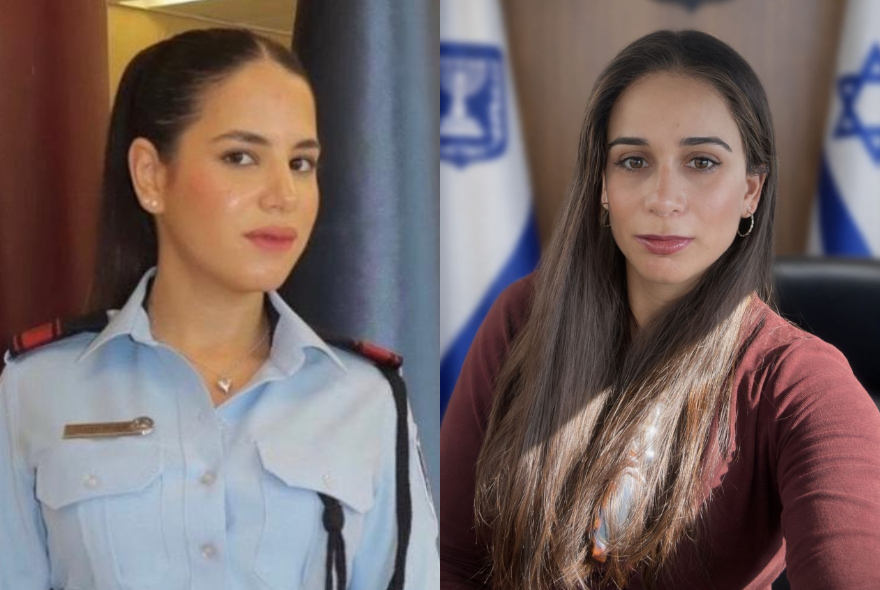
They walk among us, in the ultra-Orthodox cities, in grocery stores, in convenience stores, 'regular' Haredi women. No one would suspect that these are the Haredi investigators of the Israel Police, the ones who do everything so that the public can sleep peacefully and know that justice will be done against perpetrators and violent people.
About a month ago, an unimaginable story shook the ultra-Orthodox city of Modi'in Illit, where there aren't many criminals roaming around. A mainstream Lithuanian yeshiva boy brutally attacked a 6-year-old girl - which is keeping many parents awake at night, just imagining their tender child or granddaughter being harmed by a scumbag.
The girl's family quickly filed a complaint with the local police station - and investigators immediately opened an investigation. Less than a week after the abuser got married, while making his way with the bride to the "Sheva Brachot" dinner hosted by his family, he was arrested by police detectives, in front of the excited bride, who entered her wedding without the slightest idea that she was about to marry her chosen one - who, according to the indictment, was actually a criminal in matters that were better left unsaid.
At first, as expected, the newlywed denied it.
Then they sat him face to face with Haredi investigators, who knew how to ask the right questions, and also spoke to him in his language. Sentences like "Which yeshiva did you study at?", "What family do you come from?" and more, became part of the conversation that built trust, and in the end he confessed: "I did so and so." And he also repeated the terrible act.
The result: an indictment detailing the horrific abuse, which will ultimately lead to the defendant being taken to court. If convicted, he will also pay his debt to the company.
All with the goal of preventing the next crime, the next criminal, and leaving us and our children a world cleaner than heinous acts.
2.
I started the conversation with Oral Sarah Toaito. Her friend, also an ultra-Orthodox, was in the middle of collecting testimony - and joined later.
""We are about 60 Haredi female investigators, there is now another course that opened about two weeks ago, and there are also several dozen Haredi women in it who will later become full-fledged investigators," Ural begins. Which means that in all police stations that have a Haredi public in their area of operation - there are also Haredi female investigators.
I'm trying to understand from Oral how ultra-Orthodox her background is, and I'm definitely surprised.
She grew up in a mixed city, secular and ultra-Orthodox, but later moved to live in the ultra-Orthodox city of Elad. Although she is from the Eastern Orthodox faith, she studied there at a prestigious Ashkenazi seminary. Later, she moved to study at Lustig. Maybe that's where the openness comes from.
""I married a guy from Maor Talmud in Rehovot. She wears a wig, just like the Ashkenazi Haredi women. 'Haredi Lehadrin,' you'll admit. "I know the very small nuances of the Ashkenazi Haredi sector where I and my husband studied, but also of the Lithuanian-Sephardi sector to which my family is affiliated.
I'm trying to understand what brings an ultra-Orthodox woman to say to herself one day, "I'm going to work as a police investigator," I told her.
""I got my degree in business administration, later I converted to a degree in education and also worked for several years in the field of education, in Jerusalem. Mainly with people with disabilities.".
When they had four children at home, the couple decided that he would finish his studies at the kollel and go to work for his living. She just wanted to help him look for a job, because he was "not very good at technology.".
""I started looking for a job for him online. I went to websites, rummaged around, looking for something that could suit someone with no experience, no degree, and even no high school diploma. That's how I got to the police website and saw the following ad: 'Urdu investigator wanted.'".
By the way, while looking for a job for her husband, and when she has no intention of quitting her job. "I'm a very, very curious person by nature, so I started to get interested. Why a woman, why an ultra-Orthodox woman... I've always been interested in the field of criminology, but it's not the field I studied, but I called, asked, checked - and the end is known.".
She learned the profession itself in the police. "It's a very professional course, seven months long, it includes learning, field training, high demands, both physical, both at ranges and physical fitness." After all, it's a field that's associated with the operations department. "There are many girls who tried but dropped out and didn't pass because of the fitness test or other reasons.".
What about your personality makes you a good investigator? Do you have to be mean? Biting? Sophisticated? What?
She tells me about "the good cop, the one who brings sophistication to the investigation," and in her opinion, "he will extract a statement from a suspect much better than the bad cop." And this, she says, has been proven by research.
""When you show the suspect that you understand him, that you don't identify with his actions, God forbid, but that you understand his heart, that you know his world, that you convince him that it's for his own good that he should confess, after all, we're all human beings in the end." And that can only be done after you completely neutralize yourself from the situation.
Well, of course. Imagine how overwhelmed a mother of four is when she hears about someone committing atrocities against a six-year-old girl. How can she sit across from him and maintain a cold expression? Show him that she understands his heart, give him good advice that he should thank and not spit in his face?
""You completely remove yourself from the situation," she repeats.
She starts a conversation, talking to him about 'Friday Night' - the criminal act happened on 'Friday Night', about the world of matchmaking, how long he's been seeing each other, how many meetings, where his engagement was, and he tells, opens up, shares. He feels like she's part of his world, understands his world of concepts. "After all, we're all human, and everyone is thirsty to share and open their hearts.".
I'm trying to hear if he got engaged of his own free will or if someone forced him, trying to find the trigger, but there's none. Everything was fine.
Then I try to get to the most exciting part.
After all, it is clear that every lawyer will suggest to his client to deny. Not to confess. What brings him to sit in front of you, in the interrogation room, to confess and recant?
And here I encounter an impenetrable wall. She neither wants nor can touch on the details, some of which were revealed in the indictment, but out of modesty it is impossible to repeat them from this stage, nor in those that will be revealed in court during the hearings themselves.
She, in fact, can't really tell me what her interrogation method was, how technically she managed to extract the confession. "It's a professional secret." It will be used by her and her colleagues in the profession in future investigations, so they can't reveal it.
Which means that, in a way, I left the conversation disappointed. I didn't really get an answer to the question of how a man who already has what is called a 'path besaloo', a bride waiting for him to enter the chuppa, does what he did. And with a 6-year-old girl!
She explains that this is human nature. The first time you are afraid, you even have anxiety, but when you succeed in your plot and don't get caught, the second time is easier. Because you are sure that just as you weren't caught the first time, you won't get caught again.
And why, in fact, would a man like this, who is aware that he has a serious problem, get engaged? Why would he make the life of his future bride/wife miserable?
She again refuses to go into the details of the specific case, but explains a possible general, logical explanation: "People live their lives, want to start a family.".
How do you think for a moment that this will work out for you?
She stops here. "We have to remember that his wife is also here, who is also hurt and injured. I can't go into the details of the specific case," she asks, almost pleading.
3.
Judy joins us for the conversation. She is also Haredi, a resident of the Brachfeld neighborhood in Modiin Illit.
It's likely that her neighbors don't really know where she works, because ultra-Orthodox researchers don't wear uniforms on the city streets. They come to 'work' in their home clothes.
Judy, unlike Oral, comes from a reclusive family. They are 'outsiders.' But she also studied at a strictly Haredi seminary, and she knows the Haredi way of life inside out.
This case of harming a 6-year-old girl didn't shock you?
""I have seen many cases and many abusers with my own eyes, but I admit that this case is exceptional," she says.
6-year-old girl! You're getting married in a few days! What's going through your mind?
""That's right. Most cases happen with family members, after a previous acquaintance," and here the girl left the house, he met her by chance, and it happened. And that certainly scares parents and makes the event even more terrible.
His lawyer, at trial, will probably say that he needs a psychiatric institution, that he was not in control of his actions...
""You're not getting into it, the court will have to make a decision.".
I want to understand how they interrogate, how they get him to confess to guilt? After all, he's not stupid and his lawyer probably provided him with instructions and advice. And if he doesn't confess, it's ultimately the word of a 6-year-old girl versus his word...
""You are a journalist, you have skill in your field, we also have it in our work. How exactly do we do it? I can't explain. I'm just saying that everything is done in an acceptable, legal manner.".
That is, they didn't extract a confession from him through torture or anything...
""God forbid.".
By the way, in order to file an indictment, there must be a high percentage of conviction, a 'reasonable basis' for conviction in professional language, otherwise the prosecution will not file the indictment. When it comes to criminal cases, it is not enough for the accused to confess, but some kind of evidence is also required. In other words, I understand that the police have evidence, but they do not want to share information about it with me.
It should be remembered that there is confidentiality, that the identity of the victim will be kept confidential forever. There is a child investigator who interrogated the girl and there are haredi investigators who interrogated the defendant. The details themselves are presented in the indictment, but there will also be hearings in court, if they do not reach a plea deal.
The accused, for his part, faces a difficult dilemma, perhaps the most difficult of his life. It is clear to him that a true confession will inevitably lead to the dismantling of his newly built home. There is a situation where he stood before evidence and realized that he had been closed in on, there is a situation where something in his openness to an ultra-Orthodox investigator led him to pour out his heart and reveal what he had done.
What is certain is that their work is not easy at all. "18, 19-hour shifts," they say, and I remember that they also have children at home.
""Work is taking its toll on you," Judy's children once told her. And yes, she pays a price, including the family price, but they see it as work that is a mission.
A mission for all of us. For all of our world. Ours, and our children's. May it be better, free of bad and harmful people.
 Join the Haredim 10 Facebook page >>
 Join the X page of Haredim 10 >>
 Want more news, videos and stories? Join the Haredim 10 WhatsApp channel >>