In grammar classes at the seminary, when I was a girl, we learned, and we still learn today, about the seventh of October.
There is a good address for your redemption of the kaffarat: Yad L'Achim's Redemption of Captives
How is it correct to say the seventh of October or the seventh of October. How exactly?
 Want more news, videos and stories? Join the Haredim 10 WhatsApp channel >>
Suddenly it becomes clear to us that this detail, which in normal times is part of tedious grammar study, leading us to external exams or matriculation exams, is a completely marginal detail compared to what this date really holds.
•
The seventh in October.
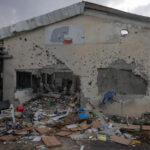
On all the websites, channels, newspapers, they seek to connect us to the date. They present us with documents from those days, just a year ago. They present us with chilling videos of what happened. They tell us hair-raising stories about what happened there, and try to convince us to read the text through the faces of people, flesh and blood, who experienced this terrible experience firsthand.
People's way of connecting with pain is by talking about it. To paint faces and expressions for this grief, to bring it to life, and to describe it in bright colors to stimulate thought.
I remember about 30-40 years ago, years after the terrible Holocaust, writers and playwrights came to the conclusion that in order to move people, you have to talk about a person who has a face and a body. And not about a public like: 'six million people'!
They came to the conclusion that what one person standing in front of them and speaking with his mouth, through his movements, and with the help of his facial expressions would do for people, six million would not!
This is how they began to write books that tell the person's personal story and to release films that tell the story of someone specific, detailing all the details of the act to the point of horror.
This conclusion is now being conveyed in all media outlets, to the horror of our time. To October 7. Through a person's face, with the help of a person's stories, they are trying to connect us to him, to the indescribable reality.
The difference between the two is that we are still in the midst of hell right now. We are not decades ahead.
We are still in the furnace of fire. Our people are wandering and cannot find stable ground for their feet. Soldiers and residents are being killed. Young men - soldiers, are being driven from their homes and there is no stability for anyone. Women are left alone at home with small children and there is no helper or financial support.
The world has changed this year in a way that none of us remember from ancient times.
And I ask myself: Does the idea of "let's get people excited, so they feel" really apply here too? "Let's write exactly what happened, so they understand?" "Let's go all the way to the front and back of the house, the city, the forest, so they absorb it"?
I feel like we're all in hell, still.
There are those among us who are more physically affected and those who are less affected. Those who think more and delve deeper, and there are those who are less affected, but I don't believe anyone can say that it doesn't concern them.
And when we are so deep in the fire, when we feel the fire touching the hem of our dress, when we feel the drowning water, we don't need horror stories.
•
What do you need?
Lots of reassurance and encouragement.
Lots of melodies and hymns.
Many, many prayers and supplications.
And one great hope mixed with victorious faith: Hear, O Israel, the Lord our God, the Lord is one!
In ten years, when perhaps the memory fades a little, something that currently doesn't seem likely to happen, perhaps then we will think about the idea of detailing and telling what happened to us in the inferno of October 7th.
I can't believe that people alive today, adults and children, won't remember this day for the rest of their lives.
But there will come days when we will want to hold on to our memories, to bring the things to our descendants, those who come after us, who did not know those days.
May we have only happy days from now on, perhaps surpassing the days that were, and what remains of the inferno will not be physical scars, engraved on people's bodies and souls, but only photographed and recorded memories.
If only.