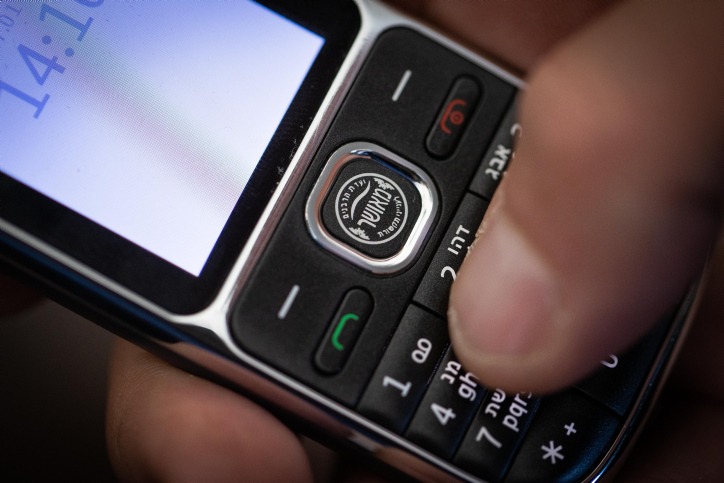
The head of the Jerusalem Rabbinical Court recognized with his keen senses that a stubborn divorce refuser who is unwilling to separate from his wife has a harder time parting with the mobile phone to which he is addicted - and in a brilliant legal move, he managed to arrange a divorce on the same day.
Promoting gender equality in employment? You could get a grant! • Here are all the details
A service revolution in public transportation: Why is it now more profitable to travel?
 Want more news, videos and stories? Join the Haredim 10 WhatsApp channel >>
The story of the case: A complex and intricate divorce lawsuit is being heard in the Regional Rabbinical Court in Jerusalem by a woman whose husband adamantly refuses to grant her a divorce.
As is well known, hearings in the rabbinical court are held behind closed doors to protect the privacy of the litigants. During a hearing held this week in the court, the head of the rabbinical court, Rabbi Meir Freeman, noticed that the husband was recording the hearing.
The judge made it clear to the husband that recording the hearings was prohibited and that this was a disturbance under the Law for the Prevention of Disturbance in Courts. As the hearing continued, the judges suspected that the husband was violating the provision and continuing to record.
Rabbi Meir Freeman, the head of the court, and Rabbi David Birdugo and Rabbi Yitzhak Rabinowitz examined the man's smartphone and found that he had indeed recorded the hearing. The court made it clear to the husband that he could face a fine and decided that the phone would be confiscated and sent for examination for seven days.
In consultation with the Legal Bureau of the Courts, it emerged that, according to Section 3 of the Religious Courts Law, the court hearing a matter under its jurisdiction may invite any person to appear before it to testify or submit a document in his possession to the extent necessary to clarify the matter. If the court has ordered and permitted in advance that someone will film or record the hearing, when it is a matter of behavior that interferes with the court's deliberations, then taking the mobile phone constitutes submitting an electronic document in his possession when this is necessary to clarify the matter.
As soon as the husband was required to hand over the mobile phone and separate from it for seven days, he panicked and agreed to give his wife a divorce, provided he could get his phone back.
So it turns out that the sanction of taking the phone is more effective than the other sanctions against those who refuse a divorce.