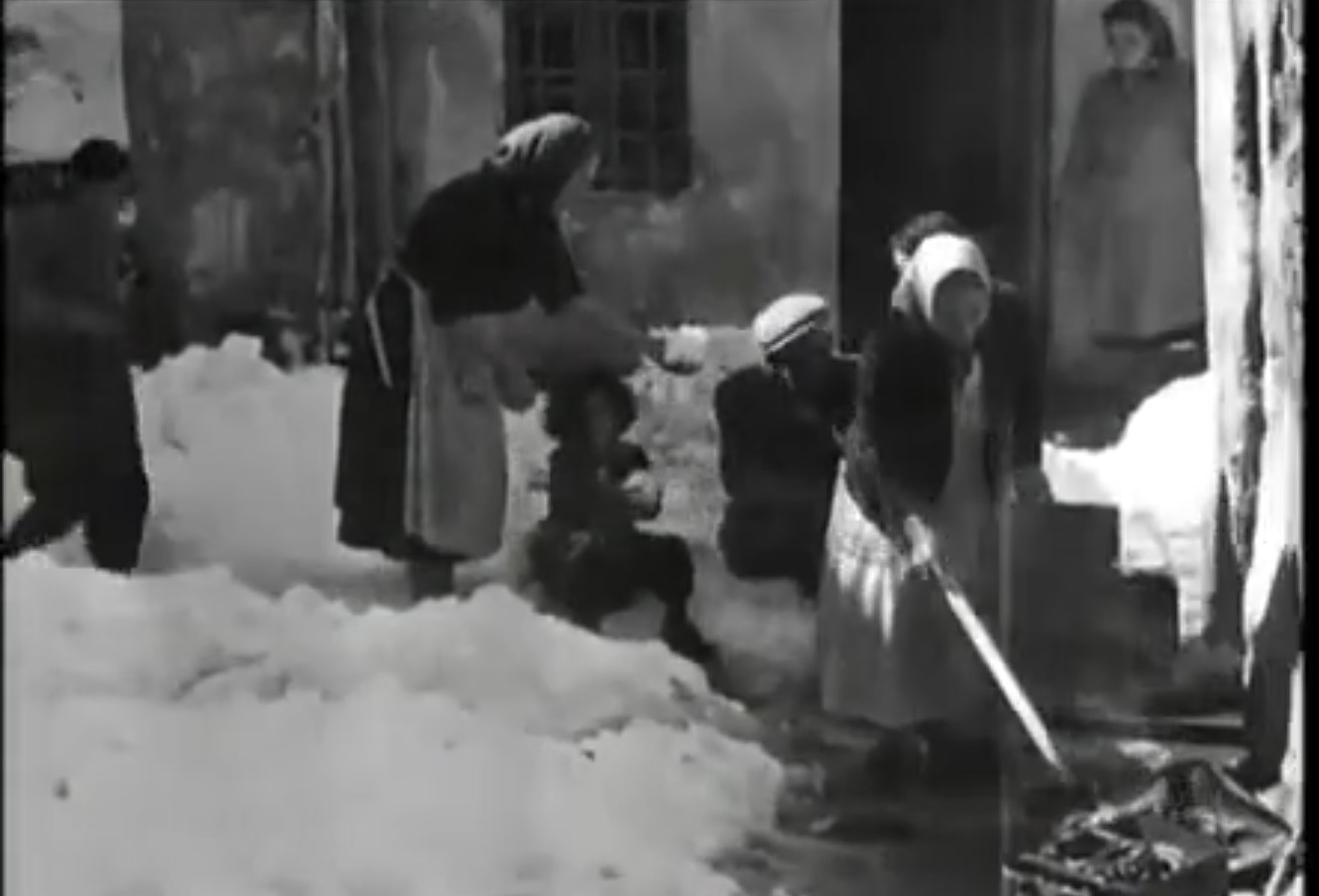
In 1950, the most extensive snowfall event occurred in the Land of Israel since meteorological measurements began there in 1870.
Where are the coronavirus tests performed? What test is done and when? All the information
A snow event of this magnitude has not occurred since. During the event, snow fell in most parts of the country, including the coastal plain and the Negev.
 Want more news, videos and stories? Join the Haredim 10 WhatsApp channel >>
The harsh weather conditions and their damage were particularly burdensome for the tens of thousands of new immigrants who arrived at that time as part of the mass immigration and were housed in tent camps.
In early January, hailstorms began in Tel Aviv and a few snowflakes fell in the Upper Galilee and the Jerusalem mountains. No one imagined that it was just the "Siftah.". On January 27, snow began to fall in the northern mountains and in Jerusalem. Although it piled up to a high altitude, it quickly thawed, leaving behind severe cold.
On the 28th of the month, the people of Haifa and Tel Aviv also rejoiced: in Haifa, the snow piled up to a height of 15 centimeters, and in Tel Aviv, snowflakes fell for several minutes. The next day, it snowed again in Haifa, covering most of the city in white.
But that was just the introduction...
About a week later, on February 6 and 7, heavy snow began to fall throughout the country. Its depth reached 60 cm in Safed, 65 cm in Jerusalem, 17 cm in Haifa, and 12–19 cm in Tel Aviv and Lod. Snow also fell in Petah Tikva, Kfar Saba, Netanya and Samaria, Rishon LeZion, Rehovot and the Negev Mountains, as well as around the Sea of Galilee.
The peak was on February 8, when the white material also reached the Dead Sea, and 8 centimeters of snow piled up.
Many natives of the country had never seen snow until that day, as had tens of thousands of new immigrants who arrived in Israel as part of the mass immigration, who lived in squalid housing in transit camps and without appropriate winter equipment and clothing.
There were also reports of snow in Jericho, an extremely rare phenomenon, and of the collapse of the remains of a synagogue in the Old City of Jerusalem.
The biggest disaster caused by the sudden snow occurred at the immigrant camp in Ein Shemer, where four immigrants were killed when the dining room ceiling collapsed under approximately 18 tons of snow.
Also in Jerusalem, at the S. Friedman Oven Factory in Givat Shaul, the factory ceiling collapsed and one person was seriously injured.
The electricity supply was cut off in many places and over half of the telephone lines were cut. Public transportation within the cities was silent and between the cities operated only partially. The "siege" of the cities, and in particular of the immigrant camps on their outskirts, caused a shortage of food and essential supplies for several days.
Damage was also caused to the country's economy, which was based on agriculture, and in particular on orchards, where thousands of trees collapsed and much fruit froze and was irreversibly damaged.
(From Wikipedia)