The indictment filed against Omri Goren Gorochovsky, 37, for espionage offenses while working at the home of Defense Minister Benny Gantz, details that he had an extensive criminal record.
It's unimaginable: injury, hunger, and thirst • So how should mice be caught?
Employers can receive a financial incentive of up to NIS 22,250. How? Enter
Everyone adopts one vaccinated person: Have you already convinced a friend, neighbor, or relative?
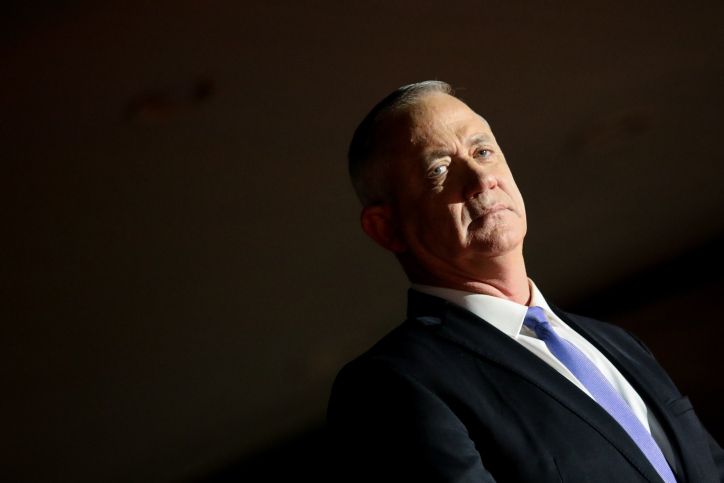
Which raises the question: How did he manage to get hired, despite the security background check? According to the indictment, Goren has five convictions, including for bank robbery and home burglary. He served four prison sentences, the last of which was for 4 years for bank robbery. Yossi Yehoshua, the military and security correspondent for Yedioth Ahronoth, wondered: "How did he get past the security screen?" Tal Schneider of Zman Israel wrote on Twitter: "Since my mother lives on a street near Gantz's private home, I know that they built massive barriers there and added a large gate at the end of the street and passersby cannot approach the defense minister's home. So, how is it possible that a person with previous convictions and a long criminal record could work inside his home?" Attorney Gal Wolf from the public defender's office representing the cleaner at Gantz's home: "After an investigation by security officials, they realized that the cleaner's version was correct, that he had no intention of harming the security of the state and that he did not harm its security. He claims that he acted out of financial distress." According to the indictment, for several years, Goren and his partner worked in housekeeping and cleaning jobs at the home of Gantz, who has served as Defense Minister since June 2021. Last month, articles were published in Israeli media outlets about cyberattacks against Israeli targets carried out by a group of hackers known as Black Shadow, which is affiliated with Iran. Following the publications, Goren decided to contact the group and offer to pass on information from the Defense Minister's home. Goren located, through the Telegram program, the address of a representative of the Black Shadow group, contacted him under a false identity and introduced himself as someone who works for the Israeli Defense Minister, and noted that he could assist the group in various ways. He added that in exchange for a sum of money he could transfer information from the house and even offered to be given a "computer worm" that he would plant on the minister's computer. In order to prove his abilities, during the month Goren photographed several items in the minister's house and sent them to the group's representative on Telegram. Among the items photographed were: a desk, computers, a telephone, a tablet, a box with a label containing IDF affiliation details and serial numbers, a case with a sticker containing an IP address, a closed safe and a shredder, military memorabilia given to the minister in his previous role as Chief of Staff, framed photos of the minister and his family, the minister's property tax payment receipt, and more. After that, Goren deleted all correspondence from Telegram, as well as the photos from his phone. As stated, the case was investigated by the General Security Service and the Israel Police's 433rd Special Investigation Unit, accompanied by the Central District Attorney's Office (Criminal). The Shin Bet says today that the swift and immediate counter-terrorism measures taken by the General Security Service effectively thwarted the defendant's intentions, which could have harmed state security. Alongside the success in the thwarting, the Shin Bet decided to conduct an investigation into the investigation processes, with the aim of reducing the possibility of recurrence of such cases in the future.

 Join the Haredim 10 Facebook page >>
 Join the X page of Haredim 10 >>
 Want more news, videos and stories? Join the Haredim 10 WhatsApp channel >>