It is very unfortunate that in response to the High Court's decision recognizing 'conversions' as improper, some elements responded with attacks against the Reform and Conservatives, thereby shifting the discussion onto the wrong track.
The central question is what conversion is, not the focus on particular groups.
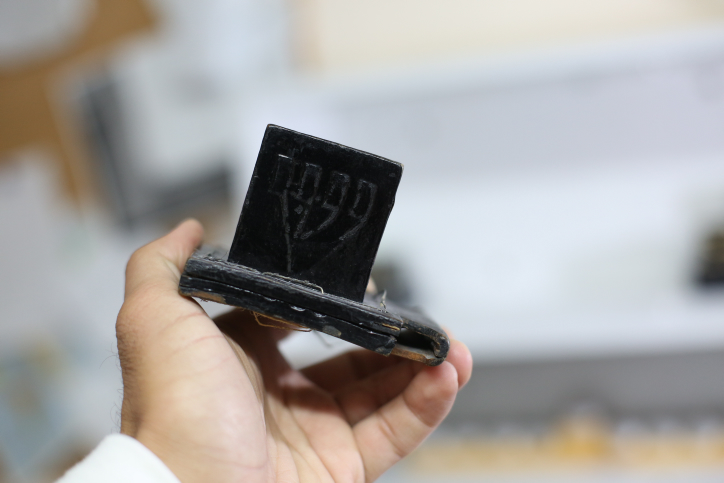
The absurdity is that a secular court, judges who do not understand halachah and do not feel obligated to it, dare to rule on a halachic question. The High Court's decision on the conversion issue is like a decision that plastic boxes are tefillin, that a printed pamphlet is a mezuzah, that a bathtub is a mikveh, and that a lemon is an etrog kosher for the four sexes.
 Want more news, videos and stories? Join the Haredim 10 WhatsApp channel >>
If it weren't so sad, it could be funny. A secular court there itself rules the law, and determines what conversion is.
Excuse me, with all due respect – what do you have to do with matters of halakhic law? Are you rabbis? Halakhic adjudicators? Do you believe in it and are committed to it? How do you even get involved in a purely halakhic question?.
Conversion in fish ponds
If the High Court had ruled that conversion was not necessary at all, and that a declaration to an official would suffice, one could find some logic in this. But to accept the assumption that conversion is mandatory, and to interfere with the content of conversion, which is entirely a purely halakhic concept – is an absurdity that cannot be tolerated.
And why a Reform and Conservative 'conversion'? Why not a 'conversion' of the kibbutz movement? And why would the share of the Artists and Pharmacists' Union and the Fish Farmers' Organization be reduced? What, aren't they good Jews? Why can't they also 'convert'?
And speaking of the fish farmers' organization – that might actually be a good idea, volunteering for a week in the fish ponds and receiving a 'conversion certificate'.
One of two things: Either conversion is a halakhic concept, and then it must be done according to halakhic law, under the supervision of rabbis who are committed to halakhic law; and if conversion is not a halakhic concept, why give Reforms an advantage over the Tel Aviv municipality or the Israel Democracy Institute? That everyone can 'convert' - regardless of religion, race, or gender.
And again, the Reformers are not the issue, but the essence of conversion. Throughout Jewish history, converts have been accepted into the Jewish people in one way – as the Torah has established. If we want to continue Jewish continuity, we must continue in that way. And if, God forbid, we decide to break this continuity and break away from our commitment to the Torah and Halacha – what special status do the Reformers have compared to the Israeli Ecology Association?
Once they understood
In the 1950s, when the issue of "who is a Jew" first arose in Israeli public opinion, then-Prime Minister Ben-Gurion turned to what he called "fifty of the wise men of Israel," including rabbis, intellectuals, and the like, and asked for their opinion. Most of them replied that the traditional halakhic definition should be left intact.
In a speech in the Knesset, at the time of the enactment of the 'Who is a Jew' law, in 1970, MK Menachem Begin declared: "Since for me, the Jew - and this is my understanding - there is no separation between nationality and religion, then from the perspective of both religion and nationality the answer to the question of who is a Jew has been and will be determined by Halacha.".
Conversion was and remains a halakhic concept, and only those who are committed to and act upon the law can convert. Any other 'conversion' is nothing but fraud and deception.