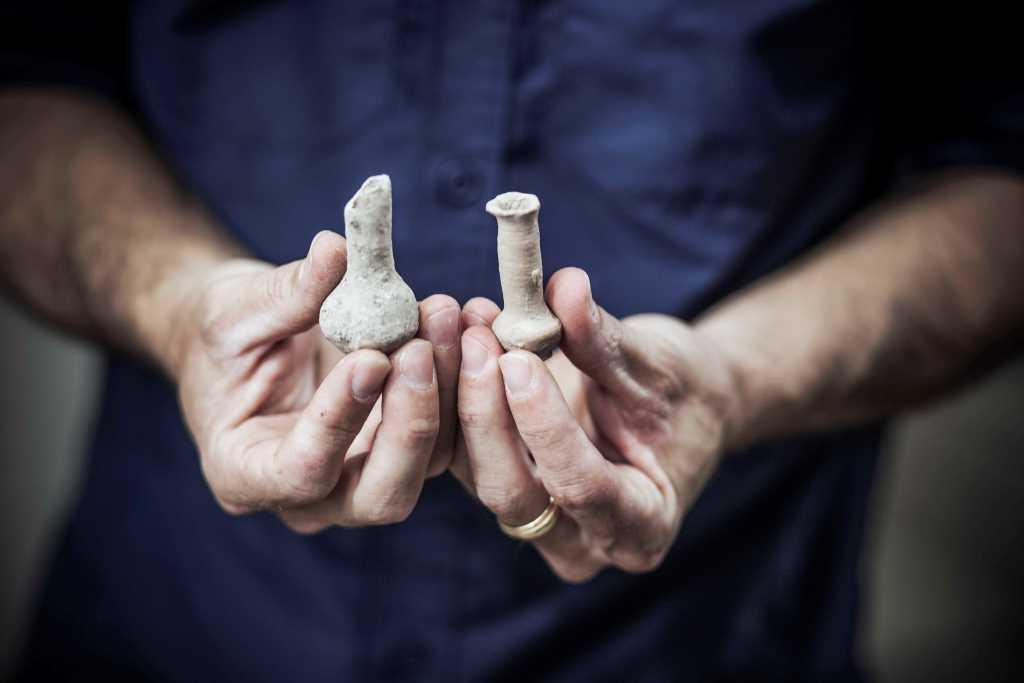
Today, Friday, is the fast of the 10th of Tevet, marking the beginning of the siege that led to the destruction of the Temple and the difficult exile of the Jewish people.
Suffering from a medical problem? Feeling alone? • Can earn 6,400 NIS per month from the situation
At this point, a journey of suffering and torment began that lasted for about two thousand five hundred years - the destruction of the First and Second Temples, the exile of the Jewish people from their land, terrible extermination decrees, cruel persecutions and pogroms, and until the terrible Holocaust of European Jewry only about eighty years ago.
 Want more news, videos and stories? Join the Haredim 10 WhatsApp channel >>
In fact, the starting point can be stretched to an even earlier period, which is recounted in this week's Torah portion - the descent of the Israelites into Egypt. Here begins the story of the suffering of the Jewish people, and from this point on, their stories will be intertwined with hardships and suffering.
The big question that arises here is about the purpose of this suffering.
We cannot understand.
The terrible Holocaust left an open wound in our world of thought as well. It remains a crying question, to which there is no answer. For how can one explain such a terrible Holocaust? Six million Jews, members of God's chosen people, led to the crematoriums like sheep to the slaughter? How can one understand the fate of a million children, innocent children, who were murdered in strange and terrible deaths?
But the truth is that the chain of suffering of the Jewish people has continued since the dawn of history. Jews were tortured and killed brutally and without any sense or logic from the days of the Egyptian exile to the present day. Not only do we not understand the horrors of the Holocaust, but also the Roman edicts, the Inquisition in Spain, the Crusades, the massacre of Jews by Muslims, and even the murders of terrorists here, in our own country.
Trying to answer these questions is pointless. We are unable to understand the purpose of the suffering of the Jewish people, because the ways of the Creator are beyond our comprehension. This is precisely the point at which we are required to bow our heads in humility before the Creator of the world and its Leader.
In the Lenten Haftarah we read the verses: "For my thoughts are not your thoughts, neither are your ways my ways... For as the heavens are higher than the earth, so are my ways higher than your ways, and my thoughts than your thoughts.".
This is actually the proper approach to the issue of suffering and trouble – a deep recognition of our inability to understand the ways and thoughts of the Creator.
Cry and prayer
Moreover, God Himself does not want us to understand the suffering and hardships. He wants the exile, with all its horrors and hardships, to be clearly incomprehensible. The exile should arouse in us a great outcry, prayer, and supplication. Therefore, God has made it truly impossible for humans to understand the sufferings of exile.
And yet we believe with complete faith that there is a purpose to the terrible suffering. When the redemption comes, it will become clear that it was precisely the hardships and suffering of the exile that gave rise to the wonderful and sublime goodness of the days of the Messiah. Today, this is wonderful to our understanding, and yet we believe that the light of the redemption will be in it, providing such great compensation, to each individual who suffered and to the entire people of Israel, that the prophecy will be fulfilled: "I will thank you, O Lord, for you have been angry with me" - the people of Israel will thank the Blessed One for being angry with us and tormenting us. This is our faith and this is our comfort.