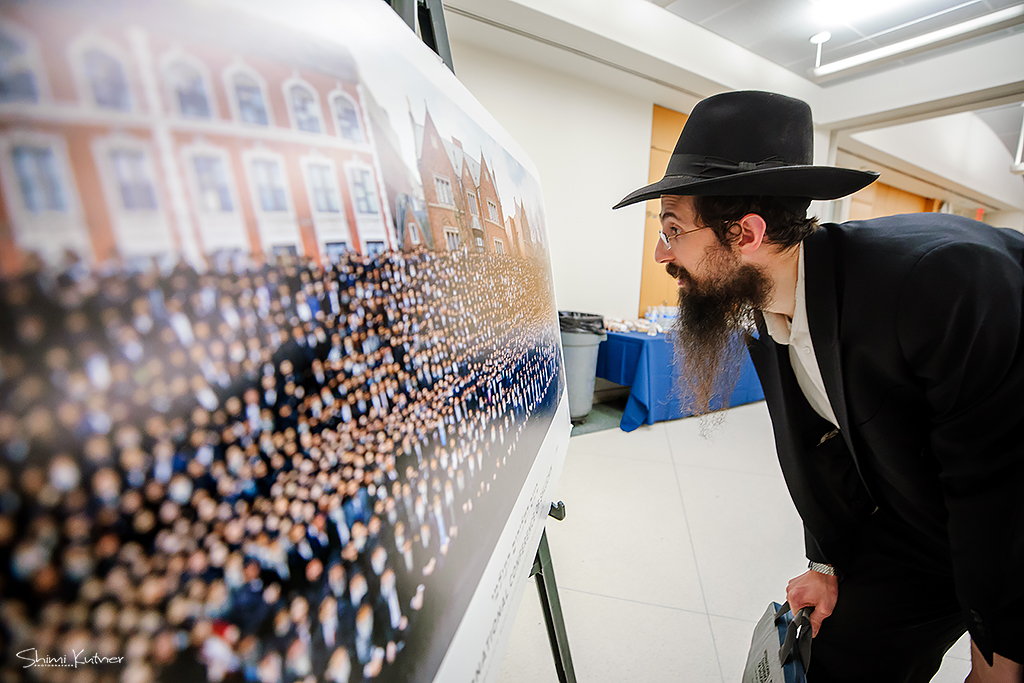
Thousands of the Rebbe's emissaries around the world look forward to Shabbat each year, blessing the month of Kislev. This is the Shabbat on which they meet together, at the World Shluchim Conference.
Nativ Real Estate Company celebrates 30 • And how do you earn benefits that will never come back?
This Shabbat was traditionally set for the gathering, because the goal was to gather at the first opportunity after the month of Tishrei when the Rebbe was certain to hold a Shabbat meeting, and Shabbats of Blessing were a fixed time for the meeting.
 Want more news, videos and stories? Join the Haredim 10 WhatsApp channel >>
It is difficult to overstate the importance of this meeting for the emissaries who live year-round in the far corners of the world.
This is an opportunity for them to meet friends, discuss common problems and challenges together, hear words of encouragement and awakening, and most importantly, to recharge their batteries with mental strength for another year of mission and activity for the people of Israel.
The Challenge of Loneliness
This year, the Shluchim need this gathering even more. Although we are all going through a difficult year, in which our spiritual and physical lives have changed significantly, there is no doubt that the challenges that the coronavirus poses to the Shluchim are doubly great.
If we cannot pray in the synagogue, we can have courtyard and balcony minyans. What would a messenger do in Stockholm and Hamburg, in Laguna Beach and Bighamton, in Bariloche and Hanoi? In many places, even in normal times, it is not easy to organize a minyan. Now the synagogues have been closed for many months. There are no prayers, no Torah lessons (in the usual format), no events.
Even in years of correction, the Shluchim face the challenge of loneliness. In many places, they are the only family that observes Torah and mitzvot, let alone a Hasidic family. This year, the loneliness has deepened, as even meeting other Jews who come to pray or study has become rare or impossible.
The health restrictions have also severely affected the activities of the emissaries. This year there were no mass Passover seders and Lag BaOmer processions, no summer camps, and no second laps in the majority of the community. Here in Israel, solutions were found in the form of joy trucks that roamed the streets, but around the world these alternatives are generally not practical.
And all this is accompanied by economic damage. In many places, the Shluchim rent buildings for their activities, and manage to pay the rental expenses with donations or income from the activities. When there are no visitors and worshippers, travelers and diners, and when many of the donors have also suffered a hard blow - one can imagine the economic significance for the Shluchim.
The forces were given
In this reality, the global conference is even more essential than the air we breathe, but it cannot be held in its usual format, except through technological means. These are the challenges that will be discussed this year during the conference, and in the hundreds of virtual workshops that will take place during it.
The key sentence that stands before the eyes of the Shluchim is the statement of Chazal, which the Rebbe used to frequently mention - "God does not come in sorrow with His creatures." In other words, God does not impose on man a task that he cannot meet. If any challenge is presented to us - we are given the strength and possibilities to deal with it and overcome it.
And perhaps from the global pandemic we can learn how it is possible for the entire world to unite, but this time not to defend against a virus, but to welcome our righteous Messiah, and to correct the entire world in the kingdom of God, as the prophets foretold – 'Then I will turn to the peoples a pure language, that they may all call on the name of the Lord, to serve Him with one accord.".