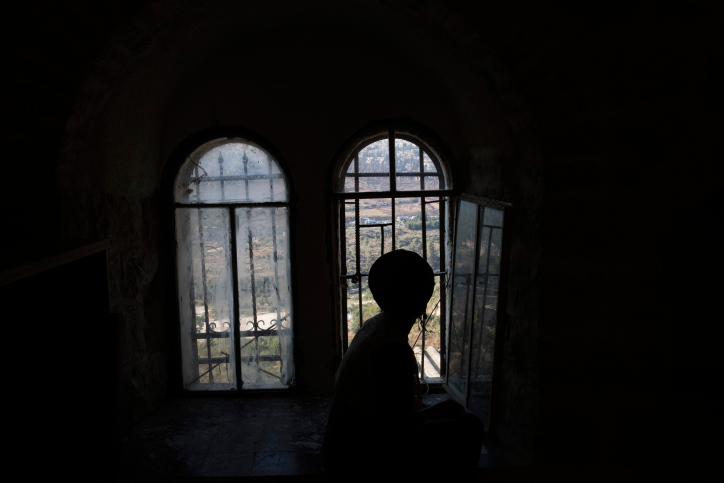
Shabbat Tisha B'Av is called 'Shabbat Hazon', a name that carries the meaning of something sublime, hope, a bright future.
Rabbi Levi-Yitzhak of Berdichev used to say that the Sabbath before Tisha B'Av is called 'Chazon' – from the word 'Mazhage', since on it every Jew is shown the vision of the Third Temple. Although physical eyes do not see the spectacle, the soul within us also sees.
But the simple reason for the special name 'Chazon' is in the name of the Sabbath Haftarah, which begins with the words "Chazon Isaiah Ben-Amoz." This Haftarah is full of extremely harsh words of rebuke to the people of Israel, and the prophet warns the people of what awaits them if they do not mend their ways.
Not complete
It turns out that the name 'Shabbat Hazon' combines mourning and hope, the sorrow of exile and the glory of redemption. These two feelings are intertwined and one cannot exist without the other.
Grief and pain without hope and faith lead to sadness and despair. Hope and faith that are not accompanied by a sense of grief and sorrow for the destruction and exile are not real. It is precisely the combination of grief and hope, sorrow and faith that creates the perfection of the Jewish being.
The Torah established for the people of Israel a complete system of laws, the purpose of which is to nourish these two feelings. Laws were established that are a 'remembrance of destruction.' Special fasts were established. Three weeks were defined in which the entire Jewish people are in increasing mourning, which reaches its peak on Tisha B'Av. At the same time, we are required to hope for redemption and await the coming of the Messiah "every day that he comes.".
The Torah demands that the Jew feel the full force of the pain of exile and destruction. That he may not find rest for his soul. That he may not come to terms with the existing reality. That he may remember at every moment that the current situation is a distortion, a situation of "sons exiled from their father's table." That he may not fill his mouth with weariness as long as the Temple is destroyed and foxes walk in the Holy of Holies.
At the same time, God forbid a Jew should sink into sadness. He must be full of hope, that here and there, in a little while, our righteous Messiah will come.
""We have hoped for your salvation all day long" – we wait for it every day and throughout the day. We wait because we know that redemption must come right now. And we are not just waiting, but we already feel the joy of the expected redemption. We are already in the midst of the 'vision' of the wonders of the sublime redemption.
Just don't despair.
These mixed feelings plague us on the eve of Tisha B'Av. After having already gone through all the hardships of exile, all the decrees, exterminations, and tortures, we eagerly await the coming day when we will realize that the suffering was worth it, when we will be worthy to see the wonderful goodness promised to us.
After so much suffering and torment, the complete redemption will come, which hundreds of generations of Jews have been waiting for. The redemption promised in the words of our holy prophets. And we must not despair, strengthen our faith, ask God to make it even more tangible, and prepare for the great day, when Tisha B'Av will become a joy and a celebration.
 Join the Haredim 10 Facebook page >>
 Join the X page of Haredim 10 >>
 Want more news, videos and stories? Join the Haredim 10 WhatsApp channel >>