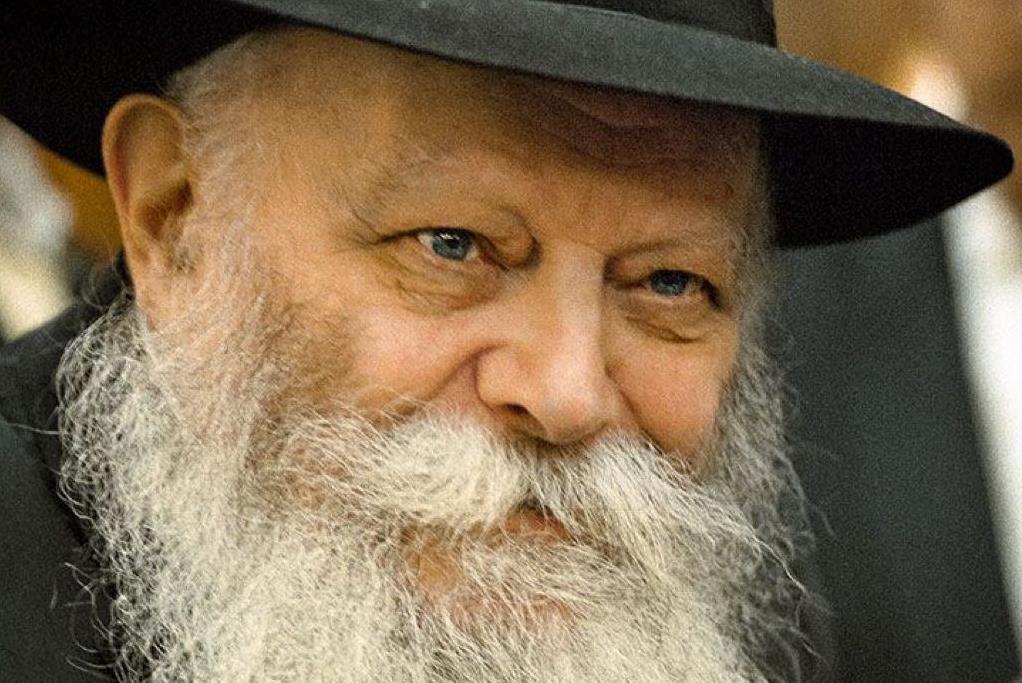
This Shabbat we will mark the great and holy day of Tammuz, the day of rejoicing of the Lubavitcher Rebbe. The thought of half a jubilee that has passed since that bitter day, in 1954, pierces the heart. How much we miss his illuminating image, his clear voice, his insightful advice, and his enlightening analysis of the problems of our generation at this time.
And yet, we approach this day with a feeling of exaltation and empowerment. Because the essence of the day is expressed in its name – the Day of Rejoicing. 'Rejoicing' is great joy, the joy of a wedding. Here the question immediately arises, how can such a day be called 'rejoicing'? What is the joy about?!
Real life goes on.
Joy comes from the realization that the lives of the righteous are not ordinary lives. Even when they walked among us, their lives were conducted on higher spiritual levels. Their true lives were the lives of the spirit, the lives of the soul. This life continues even after their departure. Moreover, it is said in the Zohar that the lives and influence of the righteous, both in the higher worlds and in this world, are even more intense and powerful after their departure.
Chassidic teachings explain that the Day of Rejoicing is a day of joy not only for the tzaddik himself, but for all of his generation, for the entire body follows the head, and when the tzaddik of the generation ascends, an ascension occurs for all of the generation. The joy therefore stems from the understanding that on this day we receive strength and the ability to connect even more with the light of the Rebbe.
These things are true of every righteous person, even when he appoints someone to fill his place and lead his congregation. When it comes to the Rebbe, the very fact that he did not appoint a replacement shows that he himself continues to lead the flock of his flock, and even more forcefully.
Sow alive
Therefore, the 3rd of Tammuz is a day of the greatest ascension – a day when the Rebbe transcended the limitations of this world, and now his great soul can act and influence even more intensely. It is a day when each and every one of us can ascend with the Rebbe and receive even more of his abundant light and blessings.
We do not understand the miracle of it, but it appears in our sources. For example, the sages say of Samson that he judged Israel twenty years after his departure, to the extent that the Philistines "feared him twenty years after his death as they had feared him twenty years during his life." In other words, even though Samson did not live in this world in the physical sense, he continued to lead Israel in practice and instilled fear in his enemies.
The Gemara says: "What is sown in life, he also lives." If the 'seed' of the righteous man follows his path, learns his Torah, and continues his works – then this is proof that "he also lives." Indeed, everyone sees that the Rebbe’s tens of thousands of students, followers, emissaries, and associates continue to follow his path and strengthen his great works throughout the world.
The Rebbe is with us and within us. Multitudes of Jews write to him, follow his lead, and witness miraculous salvations. There is no doubt that the Rebbe continues to shake heaven and earth for us and for the fulfillment of his soul's greatest and most important desire – true and complete redemption.
 Join the Haredim 10 Facebook page >>
 Join the X page of Haredim 10 >>
 Want more news, videos and stories? Join the Haredim 10 WhatsApp channel >>