clarification: In this article, a paragraph was published dealing with the change of the verse 'And it was like a player playing' in Shweki's poem, which included the claim that there is no such verse. Following the publication, a reader sent me a message stating that while it is true that this wording does not appear in the verse, it certainly appears in the words of the Yerushalmi. I checked it and saw that he was right, and therefore I apologize and take back my words.
They will destroy Jerusalem.
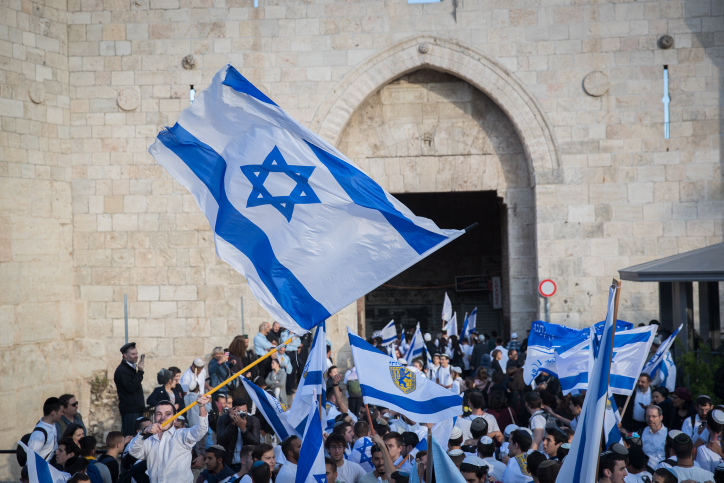
If you listened to the radio the last day, it is safe to assume that among the sounds of songs accompanying the Jerusalem Day celebrations, you also encountered one of the well-known and beloved "Jerusalem Songs," "Jesus discovered Jerusalem in it - all its lovers.".
 Want more news, videos and stories? Join the Haredim 10 WhatsApp channel >>
Everyone who listens to the song is convinced that the source of the lyrics is from the Bible, but they are not entirely right. The verse on which the song is based appears in Isaiah and its full version is this:
Let Jerusalem rejoice, and let all her lovers rejoice in her; let all who mourn over her rejoice with her. [50:10].
i.e Rejoice And not Jesus. Semantics? Not when dealing with the Bible. To the credit of the author of the poem, Akiva Nof will say that he mentions this (as stated on the 'Shironet' website), but no one pays attention to it.
[youtube url="https://www.youtube.com/watch?v=jYZYBR-_hQs" width="600" height="400" responsive="yes" autoplay="no"]
Jerusalem of Iron
With Jerusalem's day at its twilight, it is perhaps appropriate to bring to light a fascinating and lesser-known story surrounding the song perhaps most associated with Jerusalem - 'Jerusalem of Gold'.
It turns out that the lyrics to the song written by Naomi Shemer (and it was later announced that part of the melody belonged to an earlier Basque folk song) were composed with new lyrics immediately after the end of the Six-Day War by the wonderful poet Meir Ariel, then a reserve paratrooper fighting in the Old City.
According to the kibbutzim website, Ariel "returned dusty on a bus from Jerusalem to Lebanon, heard Shemer's song on the radio during the trip and instead composed alternative lyrics to the hymn 'Jerusalem of Iron'.".
The newspaper Davar published another version of how the poem was written: "At night, in a state of sleep deprivation, between life and death, surrounded by fallen friends and discovering bullet marks that hit his helmet and his own blood, Meir Ariel wrote 'Jerusalem of Iron'.".
In any case, the young soldier sought to express his feelings about the city, which was far from the optimism and radiance that emerged from Shemer's poetry. Not long after, Ariel's poem spread like wildfire. It simply became the alternative anthem of the war.
Shemer was furious at the use of her song and the radical changes to it, and a meeting was held between her and the young Ariel. What happened at the meeting? Here too, there are several versions, one of which claims that unexpectedly, following the meeting, Shemer completely changed her mind and even agreed to transfer the rights to the lyrics to Ariel. Another version claims that the arrangements were indeed settled, but it was agreed that the royalties for the song were mostly transferred - with Ariel's consent - to Shemer - an arrangement that continues to this day.
The uniqueness of this story is not only in its very existence, but also in the fact that it is not known to many. Ariel's 'alternative anthem' has disappeared and faded away over the years, and today everyone only knows 'Jerusalem of Gold', which has become almost the national anthem of the State of Israel.
The power of myth and collective memory.
Jerusalem of Iron
[youtube url="https://www.youtube.com/watch?v=atlO4ofBSJc" width="600" height="400" responsive="yes" autoplay="no"]
In your darkness, Jerusalem, we found a loving heart.
When we came to expand your borders and eradicate the enemy
At the sound of his mortars, we were filled with joy, and dawn suddenly arose -
And it had only just risen, it had not yet turned white, and was already red.
Jerusalem of iron, lead, and bereavement
Didn't we call your walls a haven?
The battalion, regummed, burst forward, blood and smoke all over
And mother after mother came in the crowd of bereaved
Biting its lips and not without fatigue, the battalion continued to fight.
Until the flag was finally replaced over the besieged house.
Jerusalem of iron, lead, and bereavement
Didn't we call your walls sparrows?
All the king's battalions were scattered, a sniper - his tower was silent
Now you can go to the Dead Sea on the Jericho road
Now you can go to the Temple Mount and the Western Wall
Here you are in the light of the evening, almost all gold.
Jerusalem of gold and lead and dream -
Peace will dwell forever within your walls.