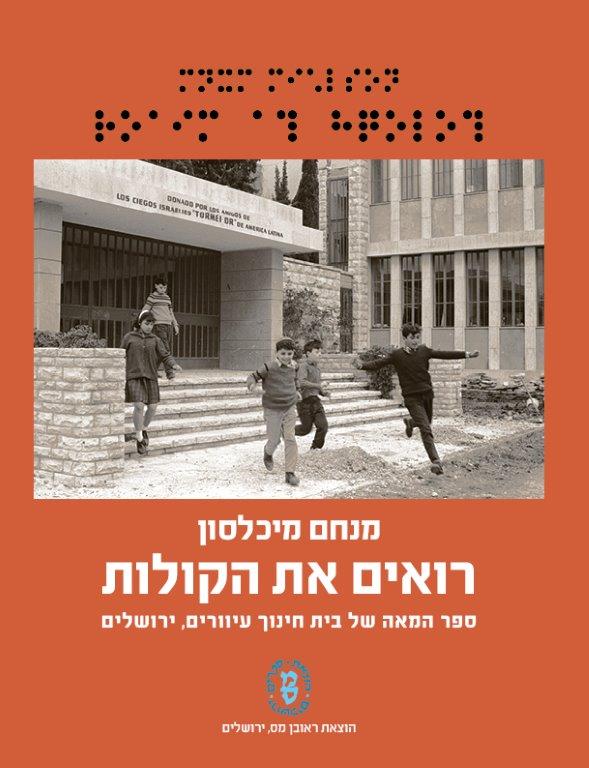
A new, colorful and elegant book called 'Seeing the Voices' was published last week (published by Reuven Mas, 512 pages), revealing the story of 'A School for the Blind in Jerusalem'.
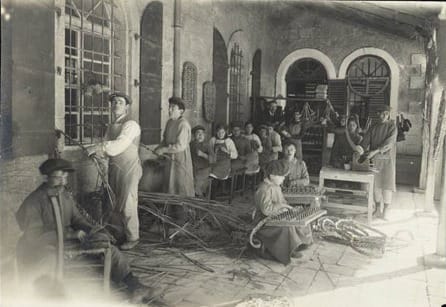
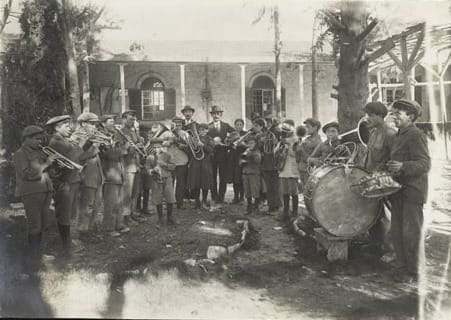
The book is actually an album that tells the story of the 'School for the Blind' in Jerusalem, which this year marks 100 years since its establishment, using ancient and rare photographs and in fascinating language, following extensive research.
This is a Jerusalem institution for the education and rehabilitation of youth and adults who are blind and have special needs.
 Want more news, videos and stories? Join the Haredim 10 WhatsApp channel >>
Since 1932, it has been located on Degel Reuven Street in the Kiryat Moshe neighborhood of Jerusalem.
A home for the blind strives to prepare blind and visually impaired people for as independent a life as possible in the community. The main goal is to create opportunities for full autonomy in educational, social, interpersonal and occupational areas, in order to bring the blind person to maximum independent functioning. A home for the blind is sensitive to the changing needs of the blind population in modern reality.
So how did it all start?
It turned out that the person responsible for establishing the place was a boy named Shabtai Nissenbaum. He was a blind boy who was walking down a narrow alley in the Old City and was hit by a camel. He fell to the floor and was injured. The incident was near the house of merchant Nachum Natanzon, and he rushed to treat and help the boy, and even took him to his shop.
Following the incident, he and his friends wondered why the child was not in an educational or vocational setting. After realizing that there was no such place, they decided to establish a special institution through which they could learn and acquire tools.
As a result of the incident, together with Haim Michal Michlin, Menachem Wolfinsohn, Avraham Moshe Lunz, who was blind himself, and Dr. Gershon Yitzhak Krishevsky, they decided to establish an educational and occupational framework for blind children, so that they could receive an education and not wander the streets.
The book describes the beginning and also what is happening today in the successful and unique institution.
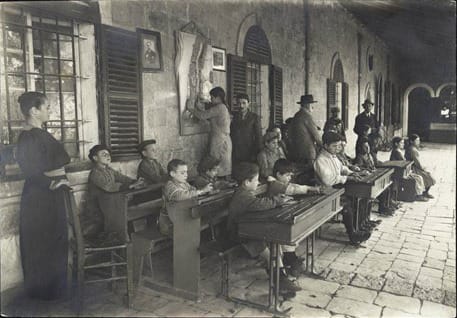
The institution has two divisions: the educational-rehabilitative division, which includes a school, a boarding school, and a therapeutic-rehabilitative system for children and youth, and the community services division, which provides therapeutic, rehabilitation, and social services for both adults and young students integrated into regular education.
The institution also includes a library equipped with Braille books in various fields of study, and recorded books - including Torah books and reading books, as well as a dedicated sports center for the blind, which includes a swimming pool, a sports hall, and a luxurious gym.
The title of the book on the cover is written in Braille and raised letters. The book is recommended for those who want to learn about the wonderful stories of the people of the old Yishuv in Jerusalem and hear about an institution that is all about kindness, giving, and seeing others.
The author, Menachem Michelson, is a thinker and researcher who writes about historical and current issues in an interesting and intriguing way. He grew up and was educated in Bnei Brak, and attended a religious municipal high school in Bnei Brak. He served in Nahal and served as a military correspondent for 'In Camp Nahal'. .
He is a graduate of Bar-Ilan University in the departments of Hebrew Literature and Political Science, and was one of the founders of the Communications major in the university's Continuing Studies Unit. Since 1969, he has been a member of the editorial board of Yedioth Ahronoth and was the newspaper's news editor, deputy editor of the '7 Yamim' supplement, one of the editors of the political supplement, and a general affairs correspondent.