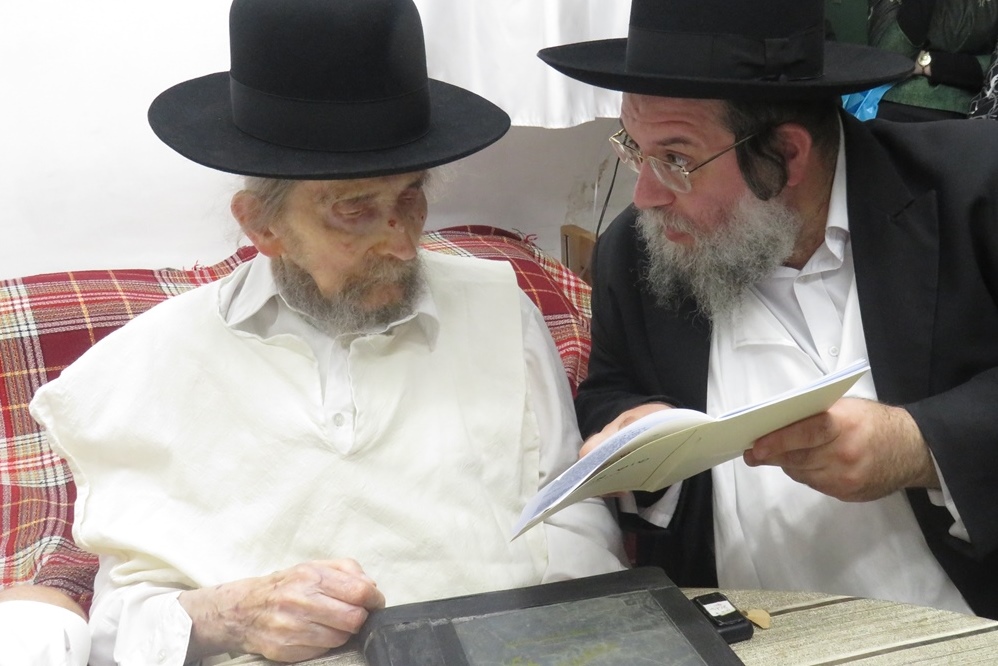
The Gaon Rabbi Moshe Yehuda Schneider, the companion of Maran Gerail Steinman, zt"l, tells of words and traditions he heard in previous years from the Rosh Yeshiva on the occasion of the beginning of the study of sacrifices in the Seder Daf Yomi, Pesach Sheni, Lag BaOmer, the Omer Count, and more.
""On Tractate Zevachim, we were awarded three volumes of Eilat Hashachar by our great rabbi, which changed the way the world of Torah views sacred things," says Rabbi Schneider. "The lesson on Zevachim began when we noticed that Tractate Zevachim had been on the table for several days. The head yeshiva said that the congregation had just started reading the daily Daf Yeomi Zevachim, and he was also trying to learn, but he was not successful, because everything had so many questions and comments, and he was not able to make any progress. Then he reached Daf 5b.
""We asked our rabbi to hold a lesson, and he said we would come to study at a quarter to 11 at night, after the public reception was over. And, God willing, for eight years, our rabbi plowed through the tractate, with several repetitions, and innovations were renewed like a fountain. But our rabbi erased a great deal, and after a great sifting, he brought out the book.
 Want more news, videos and stories? Join the Haredim 10 WhatsApp channel >>
""He was especially happy when the first volume was published, and he wore a new suit that they bought at the same time, and greeted 'Shechai'u' with great joy.".
On the leadership of the Rosh Yeshiva on Pesach Sheni - Rabbi Schneider writes:
~ Our Rebbe would not eat matzah on Pesach Sheni.
~ Tachanun was not said on Pesach Shani. And when we studied in a small yeshiva in Ponevezh, the Maran Rosh Yeshiva, the Gaon Rabbi Michal Yehuda zt"l, would say Tachanun, and our Rabbi would not say it, but would sit and be silent. And when Pesach Shani began in the fast of Batra, he said to end with mercy and forgiveness.
Regarding Lag BaOmer, he says: "Since this year Lag BaOmer falls on a Thursday, we will see what our Rabbis asked in the past: is it possible to get a haircut on Thursday, which is three days before Shabbat - or is it better to get a haircut on the night of Lag BaOmer? He replied: There is no 'prohibition' to get a haircut on Thursday, and on the night of Lag BaOmer they did not allow haircuts, only weddings were permitted because it is the time of urgency" (due to the large number of weddings on Shabbat and the scarcity of halls...).
Rabbi Schneider adds and says: "Our rabbi was surprised - Rabbi Shimon bar Yochai, who died some two thousand years ago, and whose soul is in Zion, after all, the righteous sit in the company of Ma'ale and enjoy the light of the Shekhinah - and what does he have to look for in a grave?
But while Jews come to pray at his grave, God sends his soul down, and this is a grace that God performs in order to merit the soul of the righteous. (And where there is prayer by many, especially with awakening and outpouring of the heart, it is very capable in itself).".
Rabbi Schneider tells of a question that was asked to the Rosh Yeshiva: If someone has not counted the Omer, and has already recited the blessing of the Omer, is he permitted to count after the Omer, since he will not be able to count in the blessing tomorrow?
Answer: It is not permissible to stop after the omer to count the Omer, as this is not related to sleep. Rather, the advice is that one should lie down for half an hour, and ask someone (in writing) to wake him up after half an hour, and then count with a blessing.