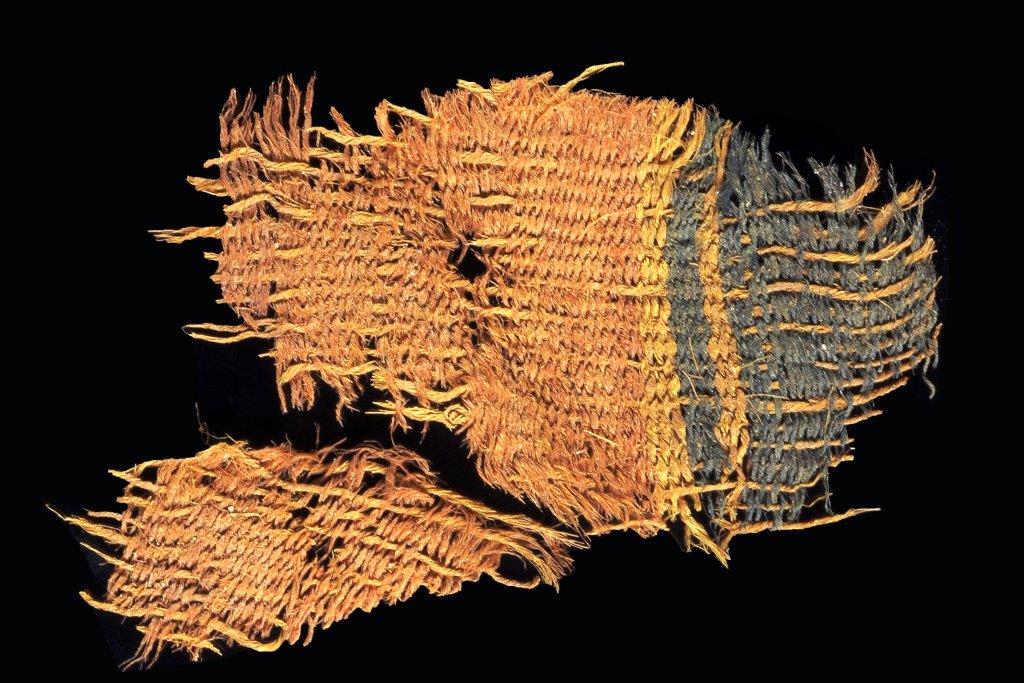
Uncovered evidence of the use of dyeing plants in fabrics from the time of Kings David and Solomon.
This was published today (Wednesday) in the prestigious magazine PLOS ONE, led by Dr. Naama Soknik of the Israel Antiquities Authority and Dr. Erez Ben Yosef of Tel Aviv University, and in collaboration with a team of researchers from Tel Aviv University, Bar Ilan University, and the Israel Antiquities Authority.
In excavations conducted in the Timna Valley, led by Dr. Erez Ben Yosef of Tel Aviv University, since 2013, dozens of pieces of 3,000-year-old textiles have been found, preserved thanks to the dry and extreme climate prevailing in the area.
The fabrics date to the Iron Age (12th–10th centuries BC), during the reigns of David and Solomon, and are partly decorated with a striped pattern in shades of red and blue.
This is the earliest find in which remains of paint originating from plants (dyes) were found in Israel and the Levant (the ancient Middle East).
The identification of the dyes was done using advanced analytical equipment (HPLC) in the laboratories of Bar-Ilan University. Analysis of the data indicated the use of two main plants: the dye plant, whose roots were used to achieve the red hue, and the substance indigotin – which probably originated from the dye plant Isis, and which was used to achieve the blue hue – in a long and complex process that in the past lasted several days.
These two plants, which are among the most prominent dye plants in the ancient world, are closely associated with the dyeing industry. They were previously grown in the Land of Israel specifically for the dyeing industry, and were used until the discovery of synthetic dyes.
The fabrics were dyed with true dyeing, which is characterized by a chemical bond between the dye and the fiber, a fact that indicates knowledge and professional craftsmanship in dyeing already during this period.

The discovery of colored woolen fabrics surprised the researchers, as Timna during the Iron Age served primarily as a central site for copper production and included smelting and mining sites.
Dr. Erez Ben Yosef of Tel Aviv University and Dr. Naama Soknik of the Israel Antiquities Authority: "The findings indicate that the society in Timna, identified during this period with the Kingdom of Edom, was stratified, and included a high class, which had access to the colorful and prestigious fabrics. The context of the fabric find suggests that the metalsmiths, responsible for operating the smelting furnaces, were also among this class.".
The art of turning stone into copper required great skill. It was one of the most knowledge-intensive crafts of the ancient world, and it seems that metalworkers were treated with special respect by the society in which they worked, and wore clothing decorated with color.
In this sense, this is a real innovation, because the findings contradict the previous research concept, according to which slaves operated the kilns in the heart of the desert.

This rare find of 3,000-year-old colorful textiles provides an extraordinary opportunity to examine intriguing research questions, including: social stratification and organization, economic status of the local population, trade relations, technological capabilities, and more.
The rare 3,000-year-old textiles are today kept in the organic warehouse at the Israel Antiquities Authority, under strict climate control.
Research partners: Dr. Naama Suknik, Dr. Erez Ben Yosef, Dr. David Iloz, Dr. Alexander Warwack, Prof. Zohar Amar, Ms. Vanessa Workman and Dr. Orit Shamir.

Roots of the marigold plant, which was used to produce the red dye. Photo: Shahar Cohen, courtesy of Prof. Zohar Amar, Bar Ilan University
 Join the Haredim 10 Facebook page >>
 Join the X page of Haredim 10 >>
 Want more news, videos and stories? Join the Haredim 10 WhatsApp channel >>