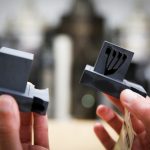
The root of the word "dalton" comes from the verb "daliyya", to raise and exalt, as in: "You have lifted me up, O Lord, for you have lifted me up" = "You have lifted me up" (Psalms 32:2). This is why when you want to build a vine arbor, you raise them on dahlias, and about this it is said in the Mishnah: "A vine is a model" (Pah 4:1 and Bertanura).
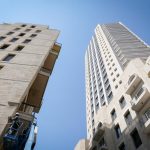
You can assume from the title that our visit this time is to the Dalton Winery in the Dalton settlement. The settlement is named after the Arab settlement A-Delta that existed in the area in the past. Incidentally, the Arabs did not invent this name either, but copied it into Arabic, as its Arabic name is named after the ancient "Dalton" which is mentioned in the Tosefta as Beit Daltiya - the elevated place. Anyone visiting the place will immediately understand that the name is appropriate for the place.
However, in this context we are dealing with the Dalton Winery and not the ancient settlement. The winery did not actually start in Dalton, but in the settlement of Kerem Ben Zimra, by the farmer Armond Maman, who lived there and grew grapes on his plot of land. He opened the winery with his partner Matti Roni, a businessman from England (whose goal was also Zionist - to develop the Galilee).
Already there, the winery began to grow, and as it grew, it always remained faithful to the land, taking in only grapes from the lands and vineyards of the area, from Ramot Naftali to Mount Meron.

Build a new park
In 1999, the winery reached 250,000 bottles. This was a turning point when the founders realized that the space could not accommodate this quantity, certainly not with their big plans for the future. They founded a new industrial park and moved to it. Today it is known as the "Dalton Industrial Park.".
And indeed, the winery has grown and developed to the point where today 1,570 barrels are stored in the cellar, from which one million and one hundred thousand bottles are filled each year.
I arrived there in the middle of a cold, rainy winter, so the visitor center was sparse compared to a normally bustling winery. From the visitor center, I looked out at the clouds drifting below, and I understood why the place is called "Dalton." Later, when I tasted the wine, I understood what else was so sublime there, but let's not get ahead of ourselves.

Meet the supervisor
You can gain some of my insights from the visit yourself, at any wine store that sells Dalton products, but at the place itself I met Rabbi Chaim Abergel, a very special mashgih, kind, knowledgeable, and happy to explain. It is recommended to come and meet him there. Rabbi Abergel is a scholar, and is skilled at connecting the topics of wine to the weekly parsha and other interesting Torah topics, and in general, he knows how to conduct a wine course in one go.
And now for the important surprise that I must share with you: this white wine is not what you thought!
Anyone who encounters the white wines - Canaan, Puma Blanc, Alma Blanc and the White Reserve - will understand what I'm talking about.
Canaan White (2013) Semi-Dry is a blend of Chardonnay. Sauvignon and Muscat didn't speak to me that much, because I don't like sweet or semi-dry wines, but those who like the style will be pleasantly surprised, both floral aromas, both the whiteness and the sweetness of the Muscat, all are well felt in this successful blend.

Place name 'Puma''
Puma Blanc - made from Sauvignon Blanc grapes in an interesting method, part of it is fermented and stays for three months in wooden barrels with the lees, and the other part in stainless steel tanks, when finally Naama the winemaker creates a blend that goes back into French oak barrels for an additional three months. Such a process for such a variety is called Puma Blanc (the origin of the name 'Puma' is the village of "Poi Puma" where they used to put white wines into toasted barrels).
Sauvignon Blanc is a simple variety without depth, with high acidity and green scents of chopped grass, lemon peel, etc., and is usually used as a blend with deeper wines, so the brilliant idea of storing it alone in a barrel, although unfamiliar, is surprising, because it gets an added smoky flavor from the toasting of the barrels, and this is the "Puma Blanc".
Aromas of citrus, excellent acidity, flavors of lemon and passion fruit. Not only worth it, but even very pleasantly surprising, especially for those who have a prejudice against white wine, here they will discover that whites rise wonderfully (48 NIS).
Alma is a white blend of several white grape varieties: Semyon 67%, Viognier 23%, and 10% Pinot Gris (the first in Israel), some fermented in barrels and some not.
A surprising wine with good, mineral flavors, good and delicate body, excellent residual flavor (70 NIS).
After all, it is possible to achieve surprisingly high quality with white varieties.
So we wrote about white wine, but it's not everything at Dalton Winery. On the other hand, it's impossible to tell more than enough at once.
And yet I will tell you something else: Anyone who wants to invest 10,000 NIS on El Al, to be in "first class", will receive Dalton's red and white wines there. All that's left for you, dear readers, is to invest 60 or 70 NIS, and take the whole family to a Shabbat meal in "first class.".
Shraga Gebhard, consultant in the professional and training field of wine.
shraga gebhard
+972-52-6176201

 Join the Haredim 10 Facebook page >>
 Join the X page of Haredim 10 >>
 Want more news, videos and stories? Join the Haredim 10 WhatsApp channel >>