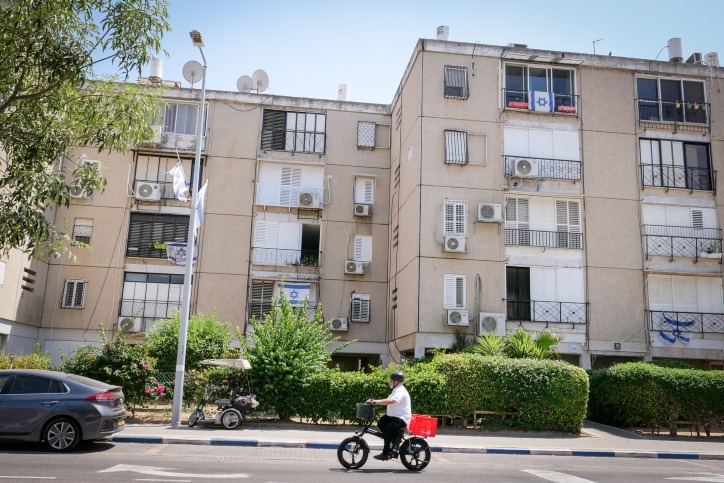
Urban renewal is often seen as a 'once-in-a-lifetime opportunity', and rightly so. It is a process that can fundamentally change quality of life, personal security, and property value.
Traveling to Tel Aviv and the surrounding area? Let's get to know the fast lanes • Mekdem
But precisely because of the magnitude of the opportunity, quite a few tenants make mistakes that haunt them for years to come. Some stem from a lack of knowledge, others from pressure, impatience, or excessive stubbornness.
 Want more news, videos and stories? Join the Haredim 10 WhatsApp channel >>
Zeev Greenberg, VP of Midar, talks about some of the most common mistakes:
- Rushing to choose an entrepreneur before understanding the full picture
One of the most common mistakes is quickly choosing a developer based on promises, beautiful visualizations, or an offer that sounds “particularly generous.” Many tenants don’t stop to ask: What is the real planning status? Is the offer realistic? Does the developer have experience in similar projects? Urban renewal is a marathon, not a sprint. A good developer is tested not only by what he offers on paper, but by his ability to lead a complex process, facing authorities, tenants, and changing constraints, to the end.
- Disagreements among residents
Many people enter the process without basic agreements. Each tenant pulls in a different direction, there are mismatched expectations, and sometimes ego battles continue. In such situations, the project stalls before it even starts.
Proper tenant organization at an early stage is critical. A functioning tenant committee, professional support, and transparent communication are basic conditions for the project's success.
- Waiver of independent professional advice
Some tenants try to “save” in the first stage and forgo a lawyer or inspector on their behalf, thinking that everything will work out on its own later. In practice, mistakes made at the beginning may prove costly later.
Professional guidance is not intended to delay the project, but rather to protect the tenants and ensure that their rights are preserved throughout.
- Focusing only on the reward and ignoring the path
A lot of the discussion revolves around “how many meters will I get,” “what kind of balcony,” or “how many parking spaces.” But equally important are schedules, temporary housing solutions, and real-time management.
Urban renewal is a long process. Tenants who understand the significance of the journey, not just the outcome, experience a calmer, safer, and more successful process than those who do not.
- Expectation of absolute certainty
Some people expect clear answers to every question on the first day: when exactly the permit will be received, when they will move out, when the demolition will take place, and when they will return to the new apartment. In practice, this is a planning process that depends on many factors and can change.
Transparency is important, but it is important to understand that planning processes involve changes. An experienced developer will know how to manage uncertainty, update in real time, and maintain the trust of tenants.
A successful project is not only measured by a new building, but also by the way the residents went through the process. Knowledge, patience, and professional guidance are the difference between a project that gets stuck and one that reaches the finish line successfully.