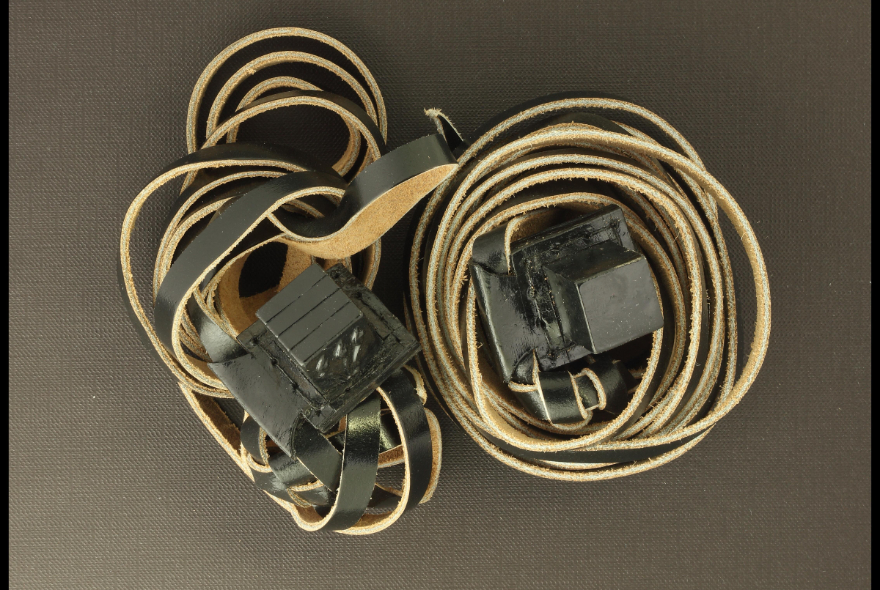
The National Library preserves several particularly rare items that illuminate a dramatic chapter in the history of Iranian Jewry: Inscriptions, prayer books, and a pair of tefillin used by the Anusi community of Mashhad - Jews who were forced to live as Muslims for more than a century, but continued to secretly maintain their faith and managed to hide holy objects.
The Jewish community of Mashhad in northeastern Iran was founded in the 18th century, when the Persian ruler Nader Shah brought 17 Jewish families to the city to manage his treasures.
 Want more news, videos and stories? Join the Haredim 10 WhatsApp channel >>
After his murder, the Jews found themselves in a fanatical Shiite city, living in a ghetto outside the walls.
In 1839, a severe bloodbath broke out in the city following a blood libel: a Muslim mob attacked Jewish homes, burned synagogues, and murdered dozens of people. The next day, the community was faced with a cruel choice - convert to Islam or die.
The members of the community outwardly accepted the religion of Islam and have since been called “Jadid al-Islam” – “the new Muslims.”.
And so, for about a hundred years, the Anusi of Mashhad led a double life: Muslims on the outside and Jews inside their homes. Prayers were held in secret, kosher meat was slaughtered in secret, and mitzvot - including the wearing of tefillin - were observed away from the eyes of the authorities and neighbors.
Women played a central role in preserving tradition: they smuggled sacred objects, organized underground prayers, and ensured that religious laws were observed within the family. Outwardly, they behaved like devout Muslims, fasting during Ramadan, participating in prayers, and dressing like Muslims in every way. But from the moment a baby was born, he was given two identities, a higher name – a Muslim name, and a lower, secret name, which was his Jewish name.
Sometimes even the closest friends of the Jadid - the new Muslim, discovered his lower name only during preparations for his burial.
To avoid mixed marriages, the Jadids used to hold "cradle engagements," meaning to match the children of forced marriages at an early age, sometimes even before the age of 4 or 5. This way, when a Muslim arrived who was interested in someone, they could tell him that the girl was already engaged.
A 16-year-old girl was already considered an old bachelor with danger hanging over her head if she caught the eye of a Muslim.
The similarity between some Islamic and Jewish customs made it easy for the Anusi of Mashhad to impersonate each other. For example, regarding the commandments of circumcision. However, in other matters, there was particularly tight supervision, such as that concerning the Sabbath and kosher. The Jadids used to purchase game meat to dispel rumors about keeping kosher, but then they would scatter the meat to stray animals or give it as a gift to Muslim servants.
The National Library preserves evidence of the Jewish life led by the Anusim in secret: a hidden Torah scroll, prayer books, inscriptions written at weddings held in secret, and tefillin that are about two hundred years old.
The tefillin were donated to the library by Dr. Joe Levin, a board member of the Friends of the Library in the United States, who serves as a physician on Long Island. He treats Jews who fled Iran and who managed to smuggle the tefillin into the United States.
According to him, this is tangible testimony to the courage and adherence to tradition of the Jews of Mashhad, who managed to maintain their Jewish identity even under constant danger to their lives.
In the 1940s, the last members of the community left the city and emigrated to Tehran, Israel, and other countries. Today, there are no Jews left in Mashhad, but their story continues to resonate through historical evidence and artifacts, some of which are now preserved in the National Library in Jerusalem.
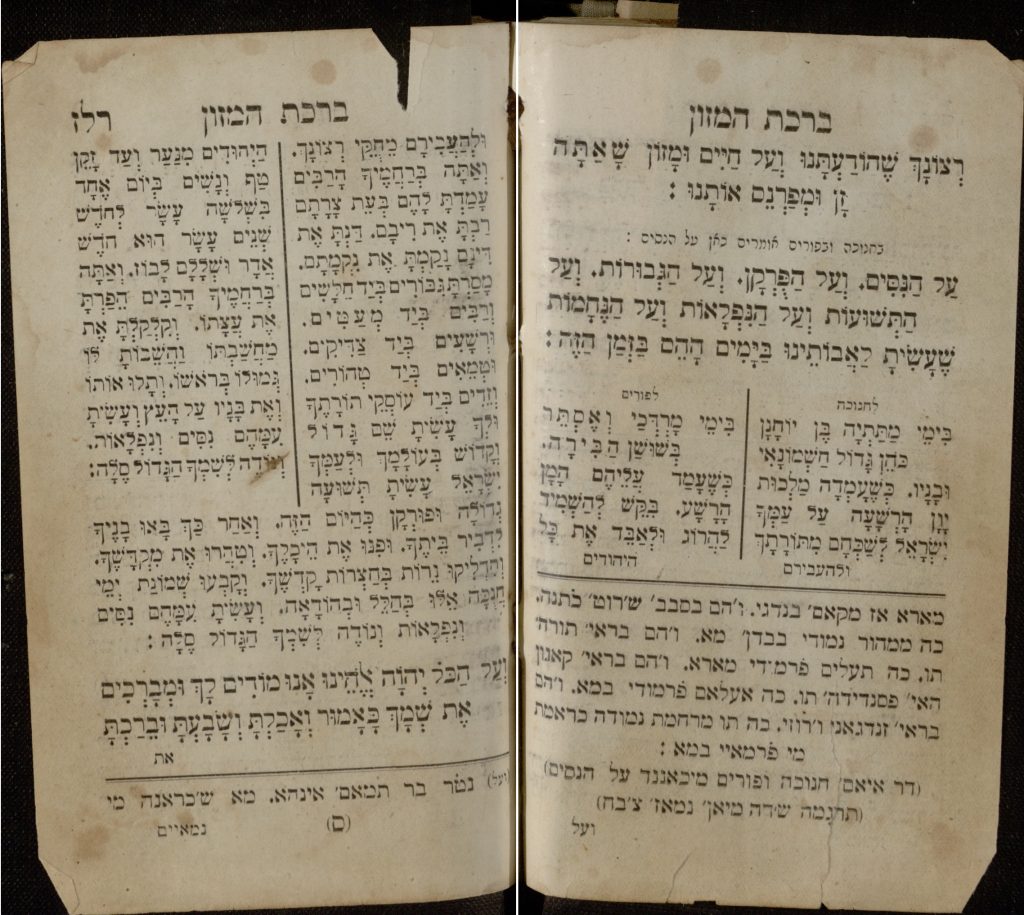
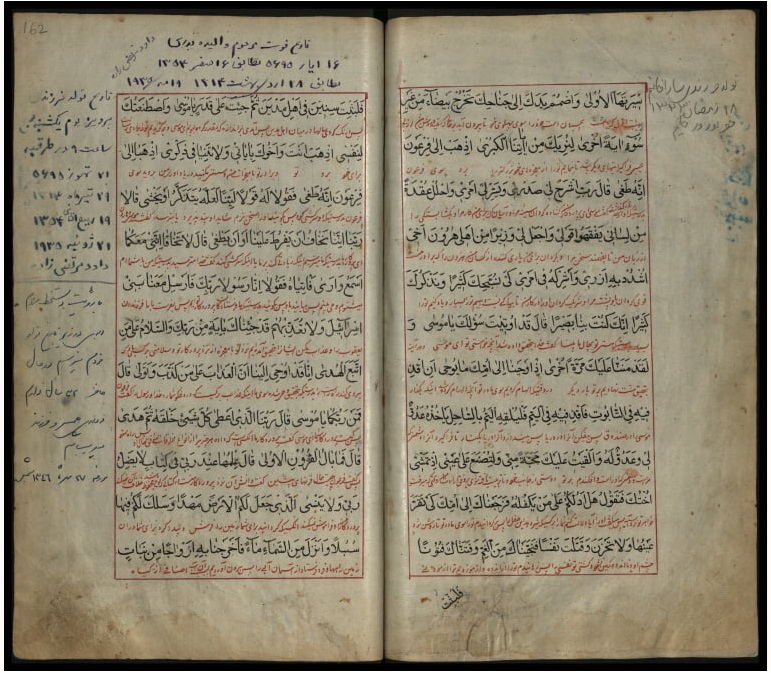
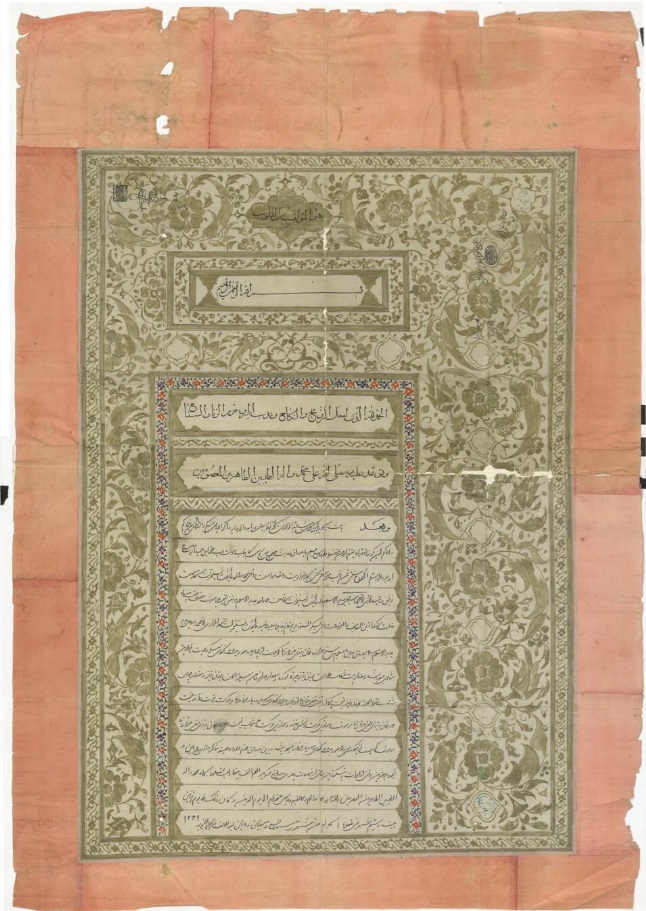
The arrangement and writing of the Anusim. Photo: The Jewish Collection at the Haim and Hannah Salomon National Library