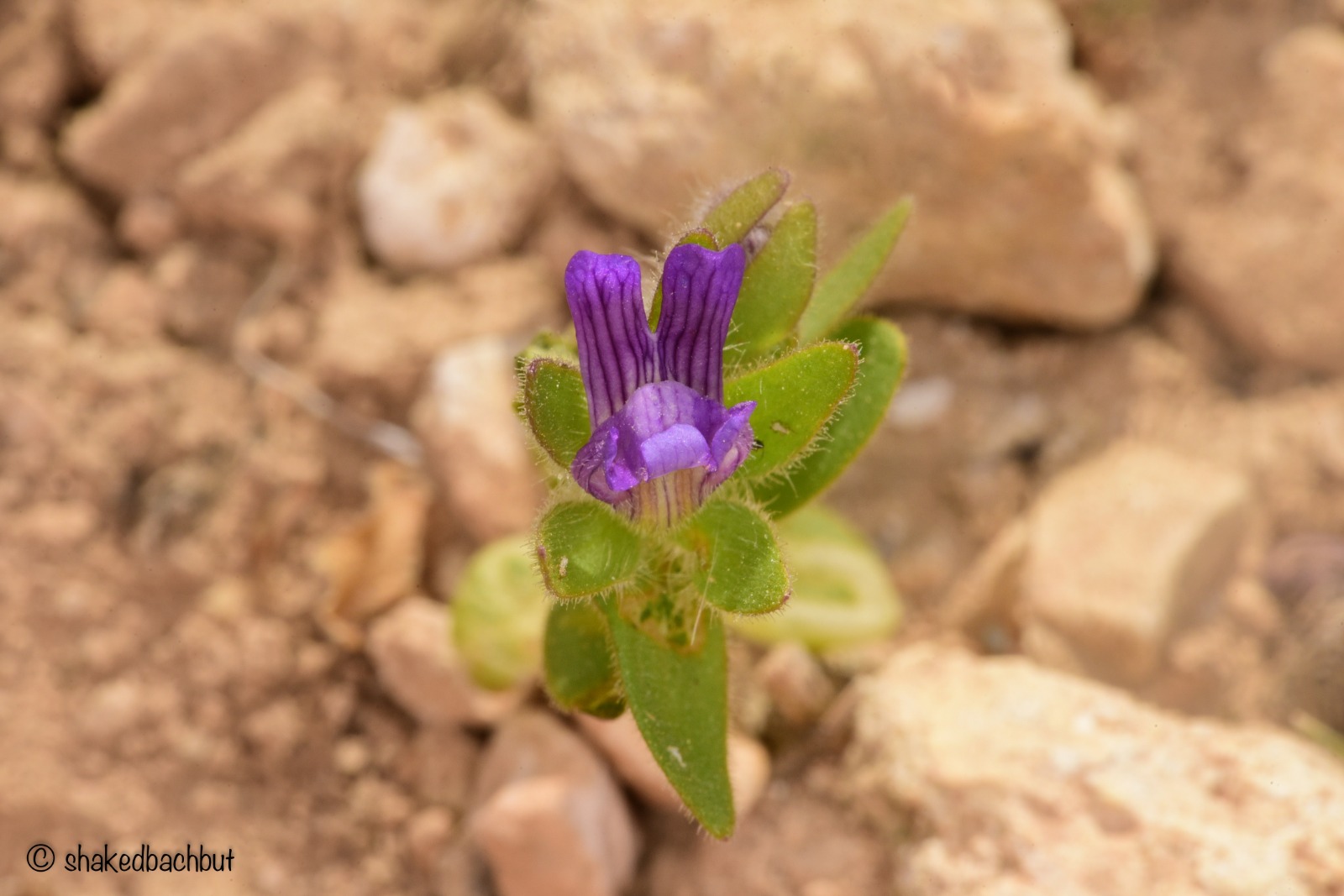
An exciting botanical surprise: The Persian puma, a small plant considered particularly rare in Israel, which was last observed and documented about 19 years ago, was recently discovered by Shaked Habout, a supervisor and ecological field center at the Nahal Prat Nature Reserve, at the Horbat Alamit archaeological site in the Judean Mountains.
In a flash, he recalls the moments of the surprising discovery, and says that as part of a routine trail inspection in the reserve with ranger Iris Aronovich, he noticed a small purple dot out of the corner of his eye.
""I went back and looked at the small flower, which is 4 cm high. I didn't recognize it. There was another detail next to it, I took a picture and continued on examining the trail. As with any plant I don't know, I went to my computer at home in the evening and began the identification process, and then I realized that it was a Persian puma, a very rare species that is in serious danger of extinction.
 Want more news, videos and stories? Join the Haredim 10 WhatsApp channel >>
""I sent the find to the botany group of the Nature and Parks Authority, and a 'storm' immediately began. That's how I discovered that these are the only 2 known individuals in Israel, and that the special flower has not been observed for 19 years. It's always nice to find a rare species, whether it's a plant or a dragonfly. Along with the pleasure of the discovery, I move on to find the next species. During my years of working in the reserve, I became very connected to the ecological field, and in recent years I have been conducting various surveys throughout the reserve.".
The next day, Shaked, Ofra Friedman, Dar Ben-Natan and Uri Pergman-Sapir surveyed the area, but no further details were found.
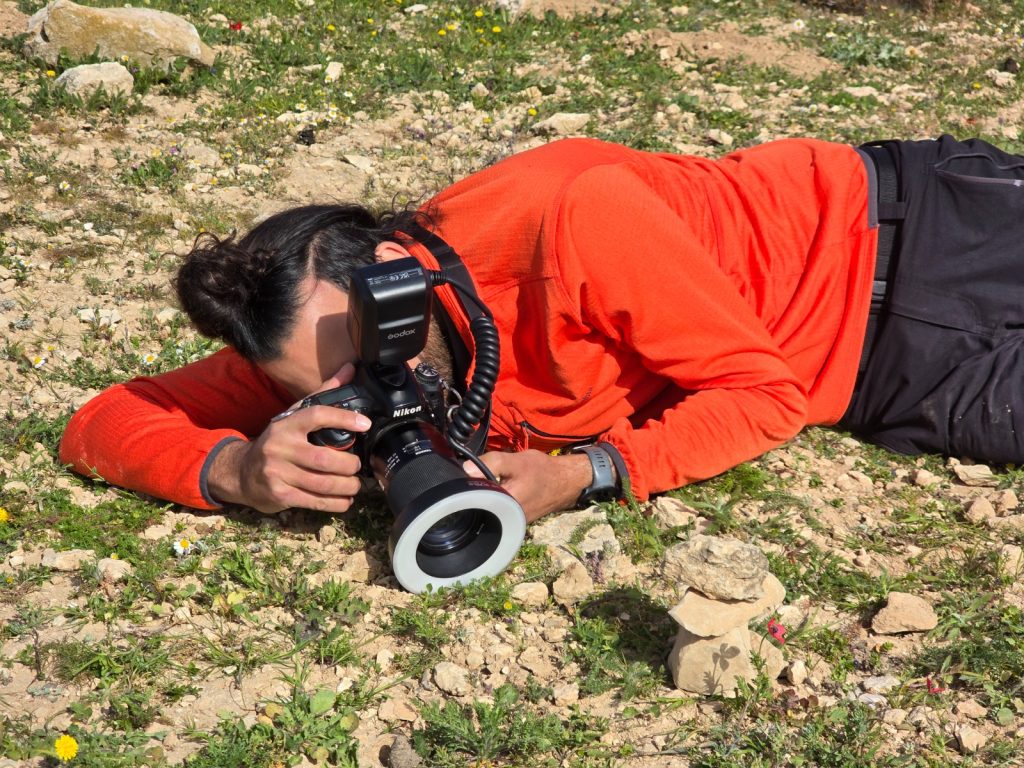
Shaked documents the Persian puma. Photo: Uri Pergman-Sapir
Dr. Fragman-Sapir, the scientific director of the botanical garden and an advisor to the Israel Nature and Parks Authority on endangered plants, says that the plant is small and hides in pots. It is covered in glands that secrete an unpalatable substance that protects it from being eaten, and at the end of the stem it has single, beautiful purple flowers.
According to him, the flower looks like a small snapdragon flower, it is closed and only strong bees manage to open its lips to sip from the nectar and also to pollinate it.
""According to the Red Book and the Red Plants website, the plant is in serious danger of extinction and has only been collected twice in the Judean Mountains in the past. In 1940, it was found by Michael Zehari on Mount Scopus and documented in a paper in the National Herbarium at the Hebrew University, and in April 2007, it was found by Oz Golan, Shir Vered and their colleagues near Aristobelia in the Hebron Mountains, where it has not been found since despite extensive searches. We did not find any further details, but it is likely that there are additional seeds in the soil that will germinate in the coming years.".
""Soon, an effort will be made to collect seeds from existing plants and include them in the gene bank to produce many seeds, some of which will be returned to nature in the future and some of which will serve as a backup for the rare plant. The site where it was discovered is not within a nature reserve.".
Dr. Fragman-Sapir notes that the Persian puma has a wide Iranian-Turkish distribution - it is widespread from Israel and Jordan and southern Sinai and northeast from the Syrian desert and Iran to Central Asia. In Israel, the plant, as mentioned, is known from a single site and it is possible that it will be found in a few more sites, and in any case, the number of its individuals is extremely small, which is why the plant is so sensitive to extinction. The plant's habitat - fallow fields - is also in danger from the development of settlements and the transition to modern agriculture.