Did you know? The sound that jolts us out of bed into a protected space has remained the same for 78 years: but the system that activates it has changed beyond recognition. Stav Cohen Tidhar The IDF website follows the alarms - from the days of the Mandate, through the establishment of the state to the present day
Already during the War of Independence, the young Israel took on the task of warning - but its means were meager, and each settlement took care of itself through observers, who warned residents with a bell or trumpet about the main threat at the time - the approach of hostile aircraft to the area.
Shortly thereafter, in 1948, the Civil Defense Organization (GA) was established. Its members wore uniforms and began organizing and managing defense in Israel: from activating alarms and educating the population to rescuing casualties in times of emergency.
At that time, the warning system was based almost entirely on powerful mechanical sirens, which were installed in almost every city and town. Even then, they produced the sound that every Israeli citizen recognizes - a rising and falling tone, warning of an air raid.
Since then, horn technology has changed and evolved greatly: from the first horns that operated with a motor that rotated a disk and produced the sound, to electronic horns in the early 1990s, to the newest ones that also play voice messages such as "red color.".
And despite all the changes, the alarm sound remains the same - and not by chance. This specific type of sound has been used in warning systems since World War II - and not just in Israel.
This follows years of psychological research that addressed the question: What sound makes humans react the fastest to danger?
Indeed, it has been determined that the human brain is sensitive to the rising and falling frequency, and is unable to ignore it. It causes an increase in heart rate, adrenaline secretion, immediate alertness and focus of attention - in other words, it awakens the body's survival mechanism.
During the Six-Day War and Yom Kippur, Israel already had a national warning system, with one warning zone - this was because it was impossible to know where the planes would actually attack.
Thus, when the observation posts detected planes approaching Israel, all citizens of the country, from Metula to Eilat, received a signal to take shelter, either in shelters or in trenches dug near their homes. At the end of the attack, a continuous siren sounded throughout the country.
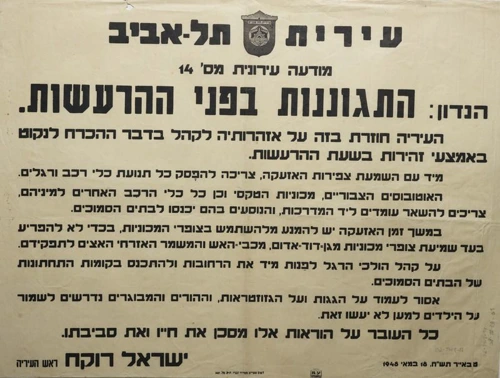
Photo: IDF Archives
The turning point came in the Gulf War in 1991. The time for defense was significantly shortened, because this time it was not planes, but many missiles that were fired at the home front. For a change - it was possible to give an indication of where they would hit.
So, a 'siren map' was developed that divided the country into several different geographical areas, but it was then used only for the gradual release from the protected area - not for entry into it. That is, everyone entered, and then instructions were given as to who could leave and when.
The mechanism worked well: Therefore, it was decided to activate a selective warning system, which divided the country into several more siren zones. It sounded an alarm only in places where the missiles were expected to land - if, God forbid, they were not neutralized with the help of the IDF's systems. And in 1992, a designated official body was established whose mission was to accompany, guide, and even rescue, especially on days like these - the 'Home Front Command'.
The command created a new concept, which states that the defense system is responsible for both fighting on the front and taking care of the home front. And then the transformation began: every apartment built in Israel since then was required to have a MMAD or MMAK, public awareness and guidance on protection gained momentum, and personal protective equipment was distributed to all citizens.
In 1997, the country was divided into 10 alert zones, and in 2006, during the Second Lebanon War, it was divided into 25.
As of this writing, there are more than 1,700 areas, also called 'polygons,' which allow alarms to be activated in localities and even specific neighborhoods in large cities. This move has significantly reduced the frequency of entry into protected spaces and allowed for functional continuity to be maintained.
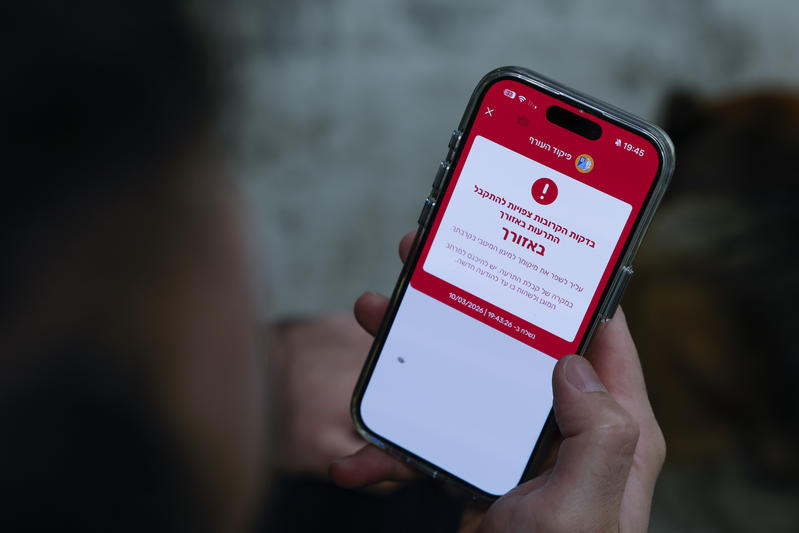
Today, you no longer have to wait for an alarm to sound from the roof of a building to stay informed. The Home Front Command app was launched to the public in 2016, and for the first time, alerts were also received directly on mobile phones. The app has also been adapted for the hearing-impaired and deaf: it alerts them by vibrating and flashing the flashlight.
And yes, we are all already familiar with the loud message, which signals to 'turn around' just before entering the shower. This is "Cell Broadcast" technology - all mobile phone owners in the area under 'Extreme Alert' receive a text message sent directly to the device accompanied by a designated sound, without the need to download an app or take any action on the part of the citizen.
The system also works without internet access: as its goal is to provide alerts to anyone, anytime, anywhere. It is important to note that it does not receive information about devices or their location, and user privacy is fully maintained.
For 78 years, the same sound has made us jump out of bed, tie our shoelaces, and run to a safe place without a second thought. And although the sound of the alarm remains the same, the system that activates it has been improved hundreds of times, in order to create optimal civil defense.
 Want more news, videos and stories? Join the Haredim 10 WhatsApp channel >>