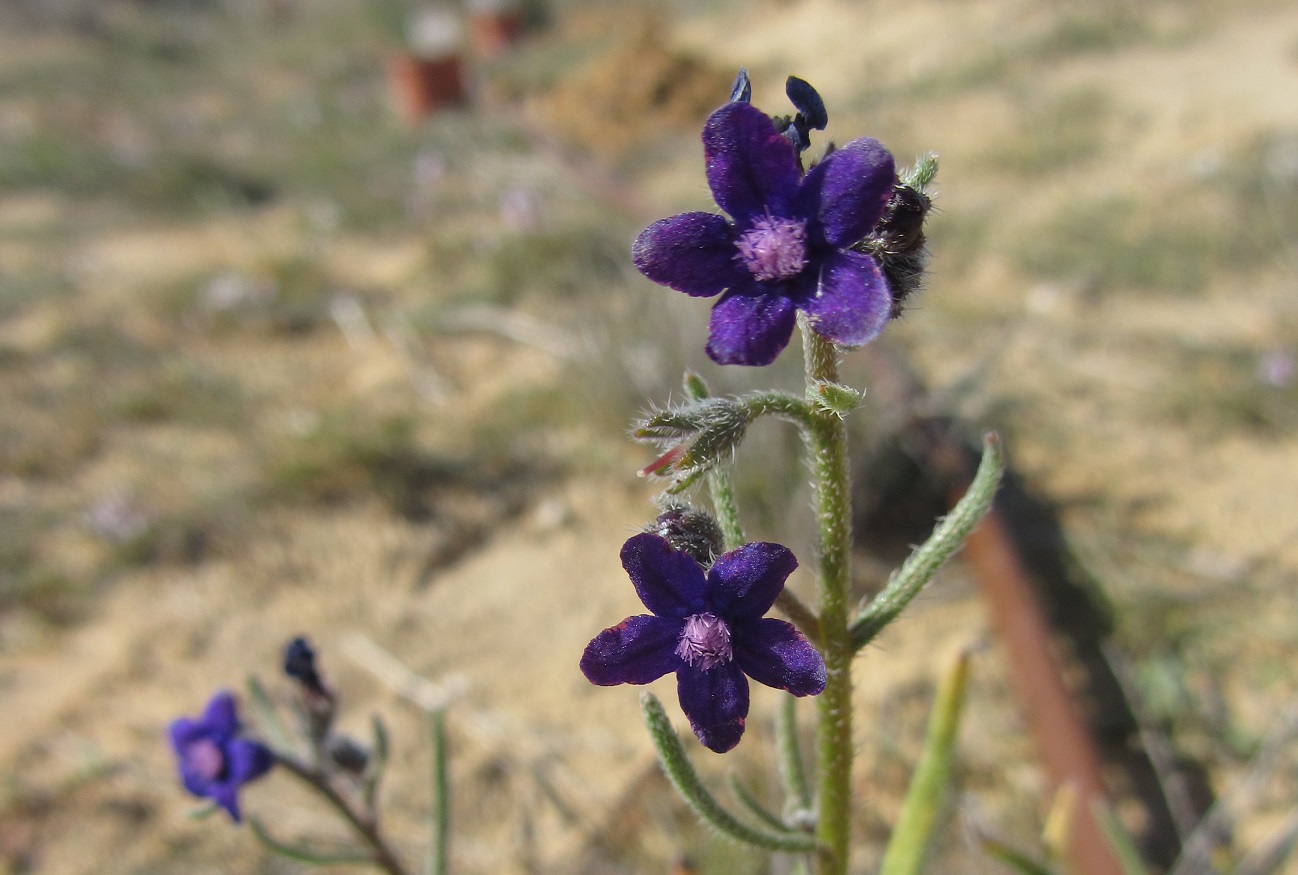
The Negev ox-tongue is a low shrub from the bramble family that blooms from mid-winter to late spring with spectacular blue-purple blooms.
This is an especially rare species: its entire global population is found in Israel, in a single natural site on the Yamin Plain, a very sensitive desert area.
Over the past few years, there has been a sharp decline in the number of plants in nature: from 66 individuals in 2020 to 28 in 2024, 6 in 2025, and now only 3 individuals remain.
To save the species, a conservation program has been in operation since 2014. As part of the program, a sanctuary garden was built in Mamshit, where about 50 mature plants are currently growing in a controlled environment with irrigation adapted to the seasons. Recently, another 70 individuals from the Vulcani Institute's gene bank joined the garden. The survival rates of previous plantings in the garden are relatively high, about 40%, which also allows for seed collection and natural propagation within the garden.
In addition, a natural field experiment has begun: in November 2025, 220 seeds were sown in the Iros Yerucham Reserve, and the first sprouts have already been observed in the winter of 2026 (a positive sign), although there is still a long way to go. Additional sowings are planned in Nahal Yamin and Nahal Efaa in 2027, in the hope of establishing new populations that will be able to survive even without artificial irrigation.
This year, an irrigation system that simulates rain was installed in the shelter garden to encourage natural germination and support plant reproduction.
The Nature and Parks Authority has invested a lot of work in recent months in restoring the natural habitat of the Negev ox-tongue. The project, which cost about 600,000 NIS, included building a high stone wall at the edge of the natural area to stop the erosion of the soil, which was making it difficult for the plants to continue to function.
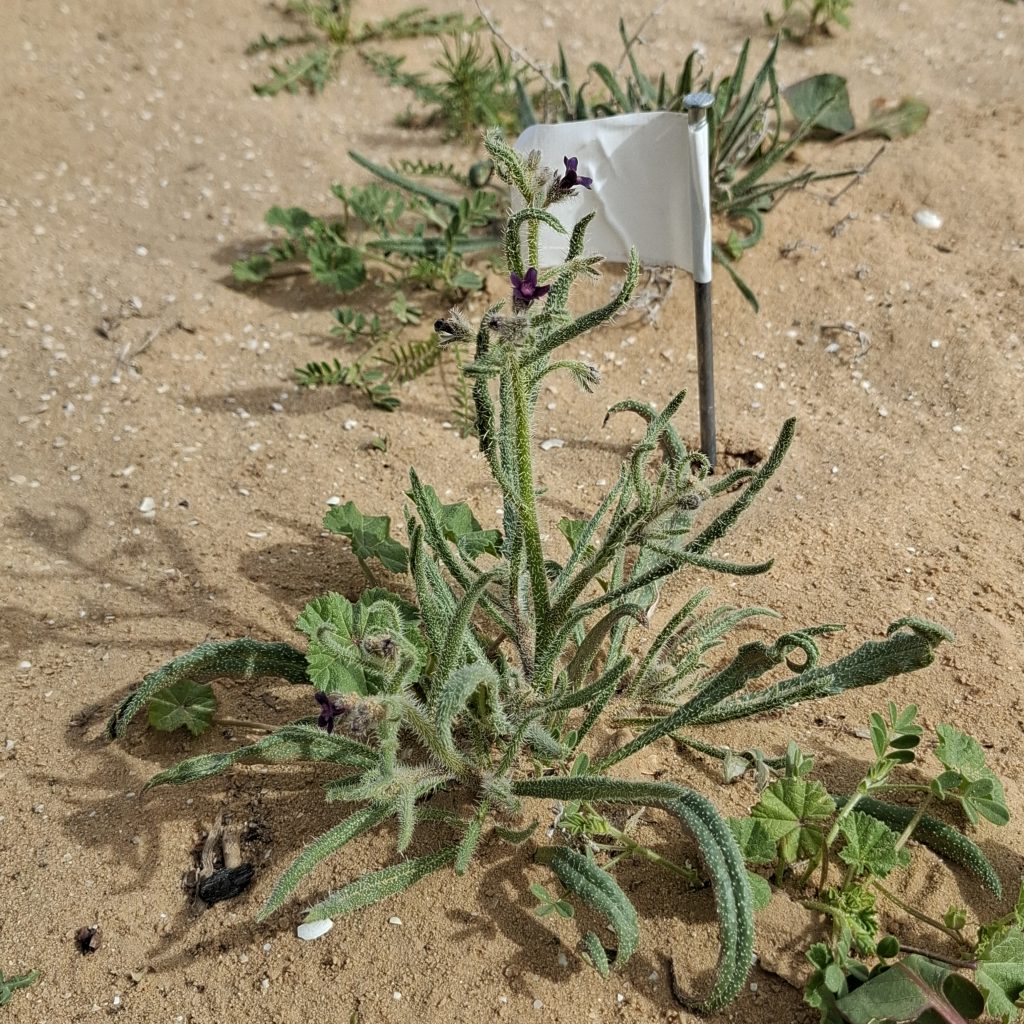
Photo: Merav Lebel Vin, Israel Nature and Parks Authority
The authority is currently working on establishing an irrigation system, which will be used in part of the natural area for the first few years to help the plants establish themselves, even if the rains are not sufficient. As of today, there are only three living individuals in the natural area.
The authority notes that once the work is complete, seeds and plants from the sanctuary will be scattered throughout the natural area to help the population recover. The hope is that within a few years, once the population has recovered, external intervention will be able to stop.
Merav Lebel Vin, a plant and flora ecologist in the Science Division of the Nature and Parks Authority: "The Negev bull's tongue is currently on the verge of complete extinction, and every individual in nature is precious. We see great importance in combining protection in a sanctuary garden with field experiments. This is the way to learn about the plant, understand its survival conditions, and give it a chance to return and reproduce in the wild. This is not just a conservation project, it is our responsibility towards the next generation.".
 Join the Haredim 10 Facebook page >>
 Join the X page of Haredim 10 >>
 Want more news, videos and stories? Join the Haredim 10 WhatsApp channel >>