KKL-JNF's Chief Ornithologist: Bird migration reaches its peak in the next two weeks - could disrupt Air Force operations
Hundreds of millions of birds are expected to pass over the skies of Israel in the next two months as part of their spring migration from Africa to Europe and Western Asia.
Although this is an impressive natural phenomenon that recurs every year, experts warn that in the midst of a tense security period, the bird migration could create challenges for the activities of the Air Force and air defense systems.
 Want more news, videos and stories? Join the Haredim 10 WhatsApp channel >>
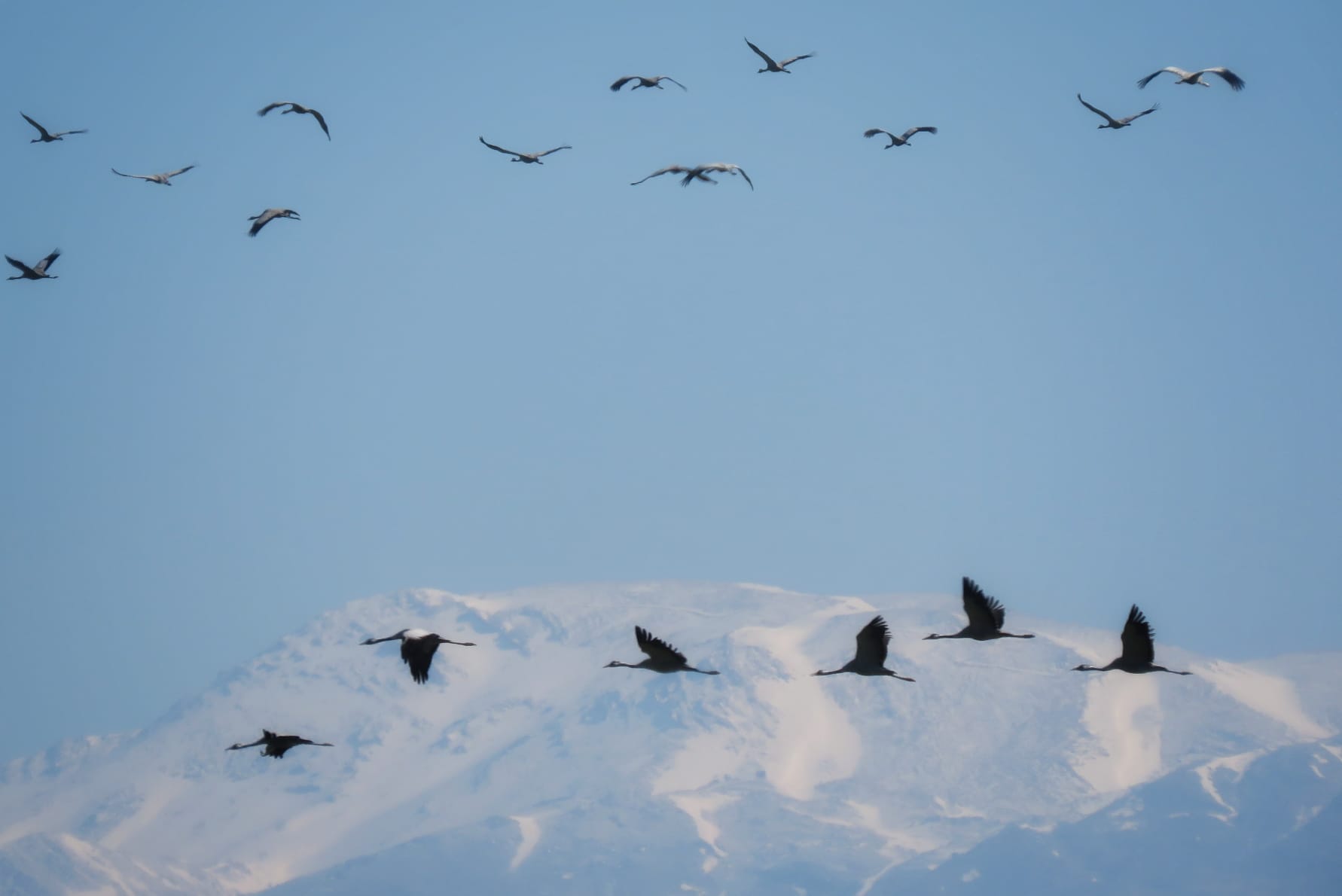
March and April are the peak of the migration season in Israel. During this period, large flocks of white storks, common pelicans, grey cranes, and birds of prey pass over Israel, moving along one of the world's main migration routes.
In the past week, the reporting groups of birdwatchers working with the Air Force received numerous alerts about significant movement of large flocks passing over Israel.
According to Yaron Charka, KKL-JNF's chief ornithologist, the coming days are expected to be particularly intense in terms of bird movement.
""In the next two months, hundreds of millions of birds are expected to pass over Israel on their way from Africa to Europe and Western Asia. These are mainly herons, pelicans, cranes and birds of prey, which move in large flocks and sometimes at altitudes where aircraft also operate," he said.
One of the main challenges concerns the activities of the Air Force. Planes are forced to share airspace with large flocks of birds, sometimes especially large ones.
A high-speed collision with a bird such as a white stork or a common pelican could cause significant damage to the aircraft and even endanger human life. For this reason, the Air Force has been operating a special procedure for decades to avoid flying on busy migration routes during the migration seasons.
Another challenge concerns air defense systems: large birds are sometimes seen on radar screens as suspicious objects, and in recent years there have even been cases where anti-aircraft fire was mistakenly directed at flocks of birds after they were identified as unmanned aerial vehicles.
The migratory movement is also being felt in the KKL-JNF's Agmon Hula. Some of the cranes that spent the winter months in Israel have already begun their journey north, and at the same time, new flocks of cranes from Africa arrive every day for a stopover in the area.