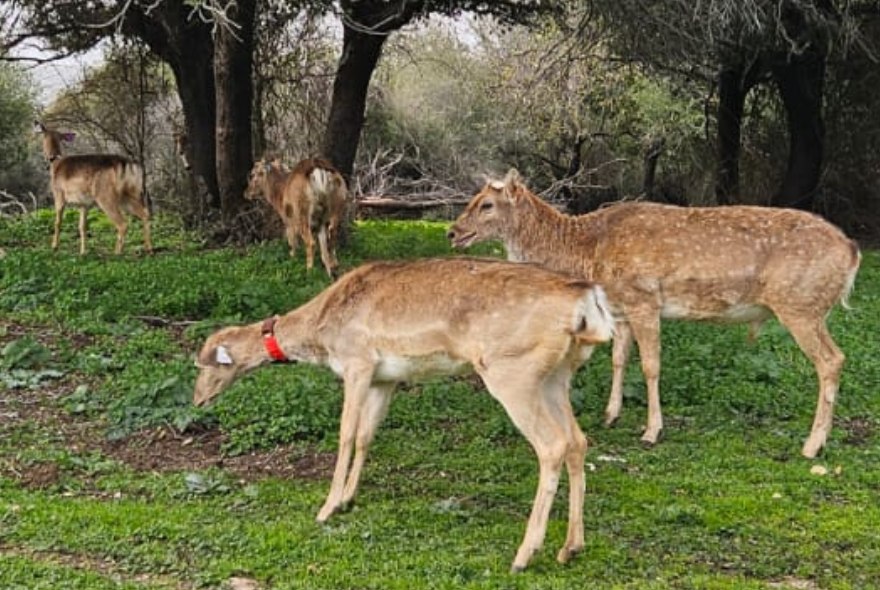
Six Persian donkeys, four females and two males, were released last Wednesday to the Upper Galilee Nature Reserve, after being in the Nature and Parks Authority's breeding nucleus - and they are the first to be released into the wild in 2026.
The six Persian ostriches will join the growing population of the species in Israel, which currently numbers about 300 individuals. In 2025, 15 ostriches were released into the wild, 9 in the Upper Galilee and 6 in the Carmel, and in about two weeks, another 4 individuals are expected to be released in the Carmel Park.
Amit Dolev, Northern District Ecologist at the Israel Nature and Parks Authority, notes that the population of wild asses living in Israel is the largest wild asses population in the world, and is entirely a product of the restoration project, which began in 1996.
 Want more news, videos and stories? Join the Haredim 10 WhatsApp channel >>
""The Persian ass, a large and noble mammal of the elk family, became extinct from Israeli nature about a century ago due to continuous and uncontrolled hunting. Many dangers threaten these special wild animals, therefore maintaining a continuity of high-quality open areas and establishing crossings to prevent trampling are extremely essential for the survival of the populations in the Upper Galilee, the Carmel and the Jerusalem Mountains. We wish the asses released today a beautiful and long life in Israeli nature.".
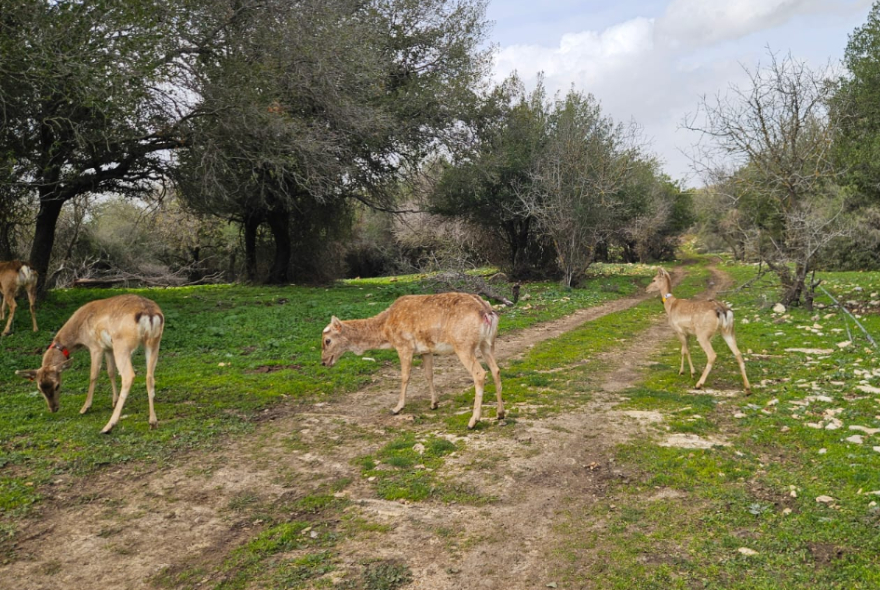
The Nature and Parks Authority says that the Persian donkey is a species that became extinct in Israel at the end of the 19th century due to hunting and severe damage to the dense Mediterranean forest, its natural habitat.
Until the 1950s, it was considered a completely extinct species, but a small population of donkeys found in southwestern Iran gave hope for the species' survival. In 1976, two pairs were brought from a breeding nucleus established in Germany, and in 1978, four more females were brought on the last El Al flight from Tehran, in a complex and secret operation.
These individuals formed the basis of the central breeding nucleus established at Hai-Bar Carmel. Since 1996, many dozens of individuals have been reintroduced into the wild in Israel, and today, the size of the Persian donkey population in Israel is estimated at approximately 300-400 individuals - over 200 individuals live in the Western Galilee and Upper Galilee, dozens more in Carmel, and approximately 100 live in the Nahal Sorek area.