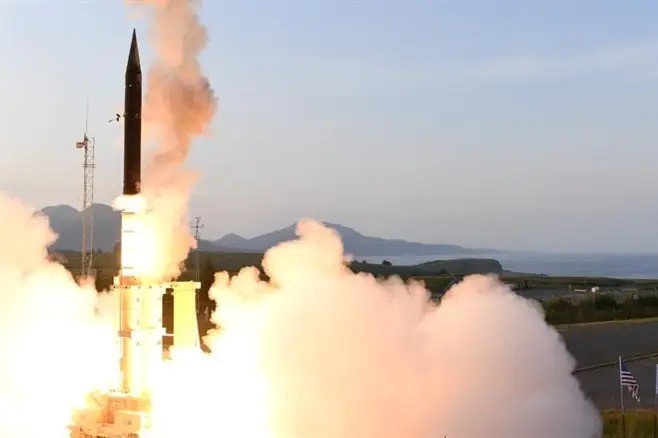
The Israeli defense establishment is monitoring with concern the pace of reconstruction of Iran's ballistic missile system.
How to make the most of the Hanukkah days? Travelers: All about shows, tours, workshops • Previously
Following reports in the international media about renewed Iranian intensification, security officials emphasize that this is a disturbing development - even if it was expected in advance.
 Want more news, videos and stories? Join the Haredim 10 WhatsApp channel >>
It was reported on Galei Tzahal today (Sunday) that, according to the same sources, Iran is working to return to producing surface-to-surface missiles on a large scale, as well as to restore the air defense systems that were severely damaged in a previous attack.
""We are concerned about the restoration of the missile arrays - but not surprised. In the first months after 'Am Kalavi', the motivation in Iran to restore these arrays was relatively low, and now we see increasing motivation among them. There is an understanding that the next round with Iran will be more difficult and complex.".
Regarding the NBC report, which quoted sources claiming that Iran is producing about 3,000 missiles per month, Israel clarifies that these numbers do not match the intelligence information in their possession.
However, even in much lower volumes, it is noted in Israel that "one must not take things lightly.".
According to the NBC report, Prime Minister Netanyahu intends to warn President Trump during their meeting at the end of this month about the acceleration of Iran's development of ballistic missiles, which he says could necessitate an immediate response.
Netanyahu will seek to make clear, according to the report, that Iranian developments do not only threaten Israel, but also undermine regional stability and harm the interests of the United States. As part of the conversation, he is expected to put a number of possible scenarios on the table, including direct American involvement or assistance for future military action.
The opposition website Iran International reported last night on unusual activity by the Revolutionary Guards in the areas of drones, missiles, and air defense systems - activity that led to increased surveillance. The unusual movements are apparently related to military exercises.
The Chief of Staff previously defined the Iranian missile threat as a "super-conventional" or "sub-nuclear" threat, and made it clear that this is an existential threat in every sense, no less than the nuclear threat.