The real story of Hanukkah begins long before the edicts of Antiochus and the persecution of religion that were conducted under his orders. The story must begin with the rise of Greece and the flowering of Hellenistic culture. It was a culture open to all, and whoever adopted it and spoke its language was welcomed with sympathy. It was, in effect, the entrance ticket to the modern world of those days.
Here began the test that has accompanied the Jewish people throughout the generations: How to maintain Jewish uniqueness while integrating into the social and commercial life of the wider world? How do we manage to adhere to the laws of the Torah and the mitzvot and to the tradition of the Jewish people, in an environment where other norms prevail? To what extent can a Jew be a modern person, involved in what is happening in the wider world, while at the same time remaining faithful to his religion and the heritage of his ancestors?
The same dilemmas
 Want more news, videos and stories? Join the Haredim 10 WhatsApp channel >>
These are questions that many Jews today, especially those who come for business and social ties with the wider world, ponder: Should they participate in a festive meal that may not be kosher? Should they close a display booth at a prestigious exhibition on Shabbat? Should they appear wearing a kippah and attract 'unnecessary' attention? Should they interrupt an important meeting for the purpose of Mincha and Arriving prayers?
Some will say: It is impossible to ignore the big world. We live in a modern world. If we do not progress and integrate into the space, we will end up remaining isolated from the family of nations. Against this, the Jewish heritage cries out: progress and modernization cannot come at the expense of Jewish identity. The Jewish people are a 'people who dwell alone,' and they exist when they preserve their uniqueness and do not assimilate among the nations.
In this reality, we see Jews who decide to give up parts of Judaism, in order to integrate into the mainstream, and standing in front of them are those who insist on maintaining their faith and religion, and not assimilating into foreign cultures.
More than two thousand two hundred years ago, this was the debate between the Hellenists and those Jews who remained faithful to the teachings of their ancestors. In subsequent generations, the same debate took place right within the Jewish people, and only the names of the camps changed.
A victory that gave rise to a holiday
It is worth considering another interesting thing in the parallel between those days and these days: the majority of the people remained essentially faithful to Judaism. There were differences in the degree of religiosity and adherence to the Torah and its commandments, but the deep-rooted and internal connection to Judaism was preserved and not lost. Hellenization swept away mainly a certain stratum, the one that had trade and cultural ties with the surrounding peoples; but the majority of the people remained faithful to their religion, and this was expressed in times of testing.
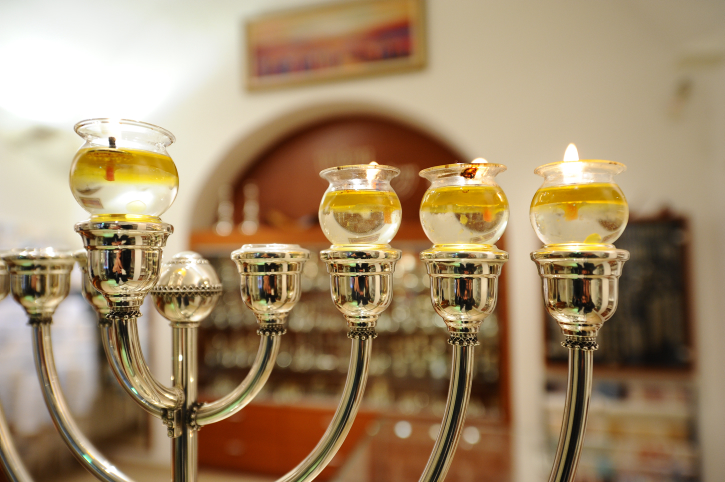
When we light the Hanukkah candles, we express the victory of the Hasmoneans and the righteousness of the Jews who adhered to the faith of their ancestors. The Hellenists claimed that if the Jews did not adopt Greek culture, they would have no chance of surviving in the modern world; but our eyes see who survived and who was lost and disappeared.
We are certain that the light of Judaism and the candles of faith will prevail in our day as well, but this time our prayer and hope is that the campaign will end with the lighting of the menorah in the Third Temple and the complete redemption by the Messiah, the Son of David, very soon.