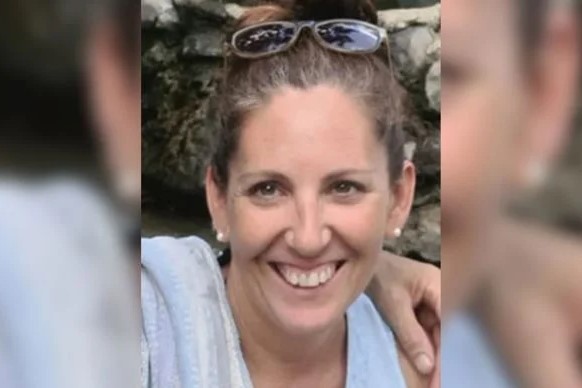
Liat Atzili, who was kidnapped on October 7 from Kibbutz Nir Oz and released in a deal, relived the dramatic moments of the kidnapping in an interview with the B-TV network this morning (Wednesday) and shared her feelings of guilt: "Maybe people who had it harder should have been released.".
Liat, 49, is a history and civics teacher and an educator at the school in the surrounding communities. On Saturday morning, October 7, she and her husband Aviv split up and she wanted to lock herself in the Kibbutz's garage and locksmith's office. Aviv, the manager of the garage and locksmith's office on the kibbutz, jumped in with the emergency response team to protect the kibbutz.
Aviv managed to send her a final, reassuring voice message - before he was murdered and she was kidnapped.
 Want more news, videos and stories? Join the Haredim 10 WhatsApp channel >>
""I smelled that the house was on fire and I was very scared. I realized that I had to get out of the police station and see what was happening, and then two armed terrorists came in," she said. "They told me quietly and very calmly, in English: 'You're coming with us now, come, get dressed, we won't hurt you, we'll take care of you.' I asked if I could take some pants from the bedroom, they told me, 'Take them,' and they came with me.".
As she stood in her bedroom with the terrorist couple, Liat encountered an almost surreal question: What are they taking captive?
""One of the terrorists took things out of the closet and said, 'Take clothes, take a blanket - take what you need,'" she recalled. "There were all kinds of objects that I looked at, I didn't really understand the situation, so I didn't know what to take. I thought about taking a book, I thought about taking a passport... I told them I needed to find my glasses, they helped me look but I couldn't find them. When I returned home after two months, I found them exactly where I remembered they were supposed to be.".
Besides her glasses, Liat also had trouble finding her car keys - so, "luckily," she was kidnapped with another friend from the kibbutz: "We drove 'duuch' into Khan Yunis, it's nothing - a 10-minute drive. When we arrived, they separated us. They gave us a few minutes to say goodbye. They took me to a family's house, which really calmed me down. There were children and women there, I wasn't afraid.".
Liat's captors on the first day after the kidnapping didn't understand why she was crying: "I cried a lot, all the time. I was very worried and stressed - what was happening in Nir Oz? How was this day going to end? And of course, what was happening with my children? What was happening with Aviv? They (the terrorists) kept asking: Why are you crying? They told me: 'You don't have to be afraid, we won't do anything to you, you're safe here.'".
A day later, Atzili was transferred to another building - where she met her friend, Manir Oz, with whom she spent her time in captivity: "It took us half a minute to understand where we knew each other from, and from that moment on we clung to each other. It was a huge relief for both of us, not to be alone.".
During her stay in Gaza, ironically, Liat managed to establish a human connection with the terrorists: "They kept talking about how they wouldn't hurt us, that they didn't hurt women. We told them: 'But we're here, they kidnapped us,' and they said: 'That's not right, they shouldn't have kidnapped the women. We are devout Muslims, we don't hurt women, the elderly, and children.' Within a few days we felt more comfortable.".
""At first, one of them watched over us when we went to sleep, so that we wouldn't run away. At some point we told them: 'We're not going to run away anywhere, we feel as safe as possible here in the situation, let us go.' So they let us go," she said. "It's a huge dissonance. There's also complete dependence - we were completely dependent on them, so there was a desire to be okay with them. They treated me with respect, knew that I was the mother of a firstborn son, and called me 'Om Ofri.'".
The moments of terror for Atzili and her captive friend came precisely when the IDF entered the Strip: "At some point, a lot of refugees started arriving at the building and on the street. There were things that happened on the street that were scary, and also the IDF shelling," she said. "Every night the captors would tell us: 'You need to sleep now or be quiet,' they were terribly afraid that they would hear us, because there were already a lot of refugees there. They were afraid that they would lynch us.".
Liat's attackers treated her with respect throughout, she says: "It's a private surveillance, as my Haredi friends say." Even though she was kidnapped herself, she felt guilty: "I feel guilty that I didn't suffer, and that others suffered and are suffering greatly. I tell myself: I'm healthy, relatively young, I'm strong, I was in a place that was overall good and bearable... Maybe those who had it harder should have been released.".
""Everyone needs to be released, even those in good conditions like me deserve to be released, this is the duty of the state. It cannot allow its citizens to be kidnapped from their homes and held captive. It should be self-evident that every person deserves to be free, that they are entitled to freedom - this is a basic thing.".
The full interview with Liat Atzili will be featured on the "At Heruty" program on Passover on the B network, which will broadcast conversations between Keren Neubach and released abductees.