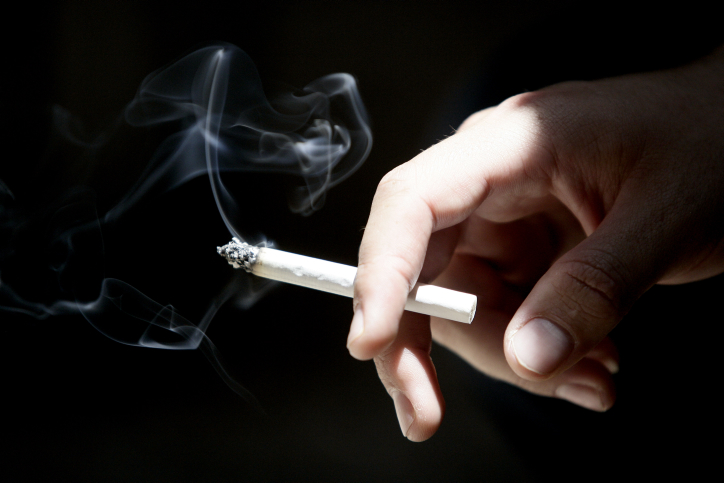
The 2021 Smoking in Israel Report was submitted to the Knesset in accordance with the Mandatory Reporting Law regarding the Health Damage Caused by Smoking Tobacco Products, with the aim of presenting the current situation regarding the smoking epidemic in Israel.
The report is intended to put the issue on the public agenda and emphasize the need to combat the smoking phenomenon and its severe harm.
Smoking is one of the leading causes of morbidity and mortality and is a risk factor for many diseases. The health system has a crucial and ongoing role in eradicating the smoking phenomenon and providing help and assistance to the smoking public who wish to quit smoking.
 Want more news, videos and stories? Join the Haredim 10 WhatsApp channel >>
The annual report presents data on the smoking epidemic in the adult population in Israel, data on smoking among youth and IDF soldiers, a comprehensive review of prevention activities and the many efforts invested in them, which are shared by the Ministries of Health, Education and Finance, the IDF, health funds, civil society organizations and many other bodies.
In addition, the report presents an overview of legislative and enforcement activity in the field of smoking, smoking cessation in Israel, and various economic data related to smoking, including state revenues from tobacco taxes and more.
According to the data presented in the report, which refers to the year 2020, one in five adult Israelis smokes (20.1%). The smoking rate among men is 25.6%, while among women it is 14.8%.
The smoking rate in Arab society is higher than in Jewish society (24.4% compared to 19.1%). The group with the highest smoking rate is Arab men (38.2%), followed by Jewish men (22.6%), Jewish women (15.8%), and Arab women (10.2%).
1.61% of the adult population uses electronic cigarettes, but data presented by the Ministry of Health just last week in the Knesset reveals much more difficult data, according to which 101% of 10th grade students use electronic cigarettes.
The data regarding teenage smoking that appears in the report is also not up-to-date and correct for 2019. According to them, approximately 151% of the students have ever tried smoking cigarettes and approximately 251% have tried smoking hookah.
The report also shows that smokers in Israel spent more than 10 billion shekels on tobacco and smoking products in 2021 - cigarettes, electronic cigarettes, and rolling tobacco.
More than 801% of the expenditure is taxation that returns to the state treasury.
Below are the highlights of the report:
• During 2021, extensive staff work began on the subject of the IDF's smoking cessation basket. The work includes expanding personal counseling to all IDF units, by training medical personnel to provide smoking cessation counseling. In addition, the Medical Corps launched a program to employ smoking cessation counselors to improve the professionalism of the service provided to soldiers. As part of the program, it is also planned to introduce nicotine substitutes to the IDF's basket committee, so that soldiers can receive the treatment free of charge. 10 group cessation workshops were held in the IDF in the various units, in addition to personal cessation counseling and support processes.
• Since the introduction of smoking cessation workshops and pharmacological responses to smoking cessation into the health care basket in 2010 and until the end of 2021, 308,054 smokers, women and men, have sought assistance in smoking cessation.
• In 2021, there was an increase of approximately 181% in the scope of participation of smokers in the various smoking cessation assistance programs within the health funds.
• The four health funds conducted detoxification workshops nationwide and with linguistic and cultural accessibility for a variety of groups in the population.
• Since the establishment of the National Smoking Cessation Hotline in February 2020 and until the end of 2021, the hotline has supported approximately 3,000 people who have been counseled and quit smoking. The National Smoking Cessation Hotline offers a program and personal counseling accompanied by certified cessation counselors, some of the leaders in the field in the country. The hotline provides service to all Israeli citizens in four languages - Hebrew, English, Russian and Arabic and is active Sunday-Thursday between 8:00 AM and 8:00 PM. This service is recognized by all health funds and the IDF and is provided free of charge. In addition, there is entitlement to a discount of 85% on pharmaceutical treatments.
• As part of the business licensing reform and the transition to uniform specifications for various businesses, provisions regarding the restriction of smoking in public places, as well as provisions regarding the prohibition of advertising and the restriction of marketing of tobacco and smoking products, were incorporated into the specifications of common businesses.
• 69 local authorities reported on the scope of enforcement carried out in 2021, but although an increase in the scope of reporting can be seen compared to previous years, compliance with reporting is still low. Most local authorities do not report, contrary to the legal provision requiring an annual report to the Minister of Health, and despite a direct request for information by the Enforcement and Supervision Division. Of the local authorities that reported according to law, 36 authorities reported that enforcement is taking place to prevent smoking but no fines were issued during 2021.
• Among the 69 local authorities that reported issuing fines in 2021 - the municipalities of Haifa (2,877), Tel Aviv-Yafo (1,699), Be'er Sheva (1,397), Rishon LeZion (657) and Petah Tikva (374), lead in the number of fines handed out.
• Local authorities issued a total of 8,189 fines during 2021 for violating the law preventing smoking in public places and exposure to smoke.
• According to a report received by the Enforcement and Supervision Division, 69 local authorities employ 1,011 inspectors who enforce the law to prevent smoking in public places.
Director General of the Ministry of Health, Moshe Bar Siman Tov: "Children and teenagers mainly use disposable electronic cigarettes, which are their gateway to the world of smoking. We are seeing a surge in the use of these products that harm their health: 31% of children in grades 5-6 and 101% of teenagers in grades 10 report smoking electronic cigarettes.
In one year, the percentage of children reporting starting to smoke between the ages of 12 and 14 has tripled (from 3.41% in 2021 to 13.71% in 2022) – this is a real epidemic that is harming the health of children and we must do everything we can to stop this trend. A decision to reduce the tax will do exactly the opposite. The low taxation conveys a seemingly reduced risk, even though this is not the case, and will encourage even more consumption of a product that causes our children addiction and is harmful to their health. Like any bad habit that is harmful to health – the best way to get rid of it is to not start at all.".
Head of the Public Health Division, Dr. Sharon Alrai Price: "Reducing the phenomenon of smoking and its harms is one of the important national tasks in the field of public health, and we are committed to the fight against smoking and its consequences. In recent years, the Ministry of Health has led many national initiatives, including the imposition of taxation on electronic cigarettes, educational and information activities among youth and adults to prevent smoking and exposure to it, and extensive collaborations with government ministries and civil society organizations in the field of smoking prevention.
""The fight to eradicate smoking in Israel needs increased and stable budgetary resources and professional manpower, to ensure that as few youth as possible enter the smoking cycle and that those who are already in it receive an appropriate response that allows them to break free from this addictive and dangerous habit.".