Pnina Milo is a veteran volunteer at Beit Ghilgalim, a personal life coach, a social worker by training, and holds a degree in Hebrew literature.
Alongside all this - she is also a lifelong cooking enthusiast, with a special affection and strong emotional connection to Ashkenazi Jewish cuisine.
For the past 15 years, she has been in a wheelchair, as a result of illness, and believes that everything that happens in life is intended to grow us and advance us to the next stage of our lives.
 Want more news, videos and stories? Join the Haredim 10 WhatsApp channel >>
""Sitting in a wheelchair, which prevented me from going out to cook alone, led me to write my second book, 'Gha'akta Leber.' I wanted to preserve traditional Jewish food and thus allow others to cook the food that I love so much. The fact that I stopped cooking created a situation in which I wrote down precise recipes so that my family members and others could cook, and in the house this food would continue to be the star even if I didn't cook it myself.".
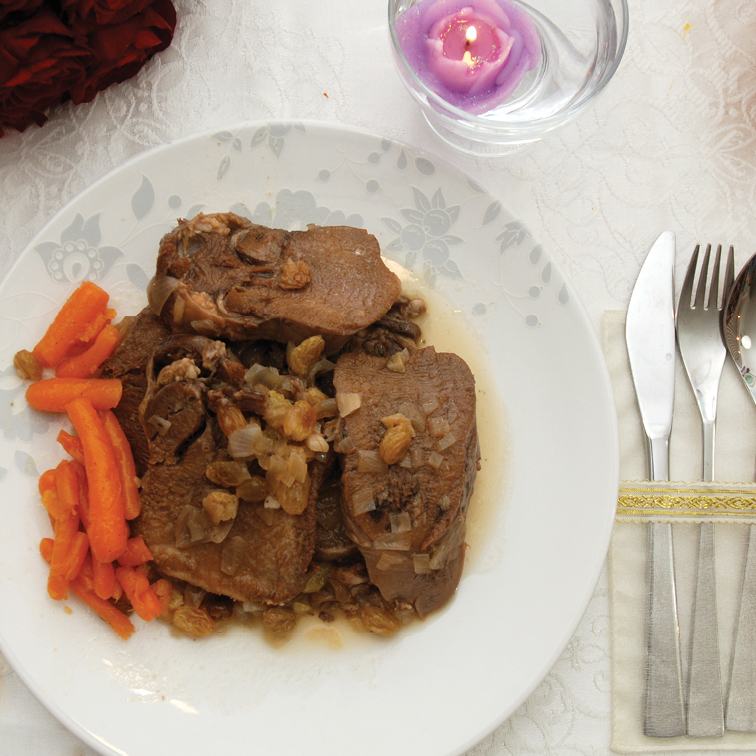
Gefilte fish, horseradish, leek pie and tongue with raisins are just some of the recipes I found in the book, which was recently released, especially for the holidays, by Media10 Publishing Ltd. The proceeds, by the way, are dedicated to the 'House of Wheels' non-profit organization, which operates services for children, youth and adults with physical disabilities.
According to Pnina, "Jewish food always reminds me – and many other people – of a taste of home, of old nostalgia. The desire to make it accessible and easy to prepare and to bring back the homely taste of traditional Jewish food to the table, especially on holidays and Shabbat, led me to write this book.
""As a self-proclaimed Pole, I have no greater pleasure than seeing children eat, whether they are my children, my grandchildren, or other children. There was never a situation where there was no food available for my family members or a surprise guest. Both sophisticated and simple dishes were always brought to the table, and we always made sure to prepare everyone's favorite food, despite the hassle. This tradition, which I brought up since childhood, I have also passed on to my children and grandchildren.".
Pnina's motto is: "Make simple food that only looks sophisticated.".
After she became ill, she spent 4 years developing the new vision of the House of Wheels, "to allow each of the campers to reach their full potential and not allow their disability to control them.".
In this article, I will present the first, selected recipe: beef tongue with raisins. Later, without a doubt, I will present more and more interesting and surprising recipes.
•
Tongue is also one of the parts of meat that many people don't know how to prepare, and some shy away from it, due to the "repulsive" appearance of the skin that covers the tongue.
It is considered a very festive dish that is complicated to prepare. The tongue is purchased fresh or frozen. It is best to choose a tongue that is not pickled.
In this recipe, the first stage of cooking is designed to soften the tongue so that it will be easy to peel and to give it a delicate pickled flavor. Once you learn how to prepare it, you will see how simple and easy the preparation is and what excellent results it gives.
Components:
For cooking The tongue : 1 tongue (not pickled)
2 carrots
1 onion
4 cloves of garlic
3 bay leaves
3 allspice grains
1 teaspoon salt
Pepper to taste
For the sauce:
2 tablespoons oil
1 onion
3 cloves of garlic
2 tablespoons honey
A tablespoon of sweet chili sauce
2 tablespoons soy sauce
2/3 cup raisins
Mode preparation:
1. Cooking consists of two stages. In the first stage, the tongue is cooked with the ingredients (without the sauce ingredients) in a pot that comfortably holds the tongue and is covered with water.
2. Cook until the tongue is tender (about two hours). Cool, peel the skin (the skin comes off easily) and slice.
Preparation The sauce:
1. Fry the onion until golden brown and add the garlic and the remaining ingredients, season with salt and pepper to taste and add a glass of water.
2. After the water has boiled, add the tongue slices and cook for about twenty minutes.
3. It is recommended to serve with white rice.