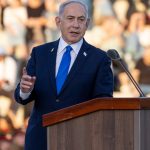
Against the backdrop of the surge in morbidity: The Labor, Welfare and Health Committee approved today (Tuesday) the Health Ministry's demand to add 18 countries, including the US, Greece and the Netherlands, to the list of countries from which returnees will be required to enter quarantine - including vaccinated and recovering people.
Crazy: 5 days of non-stop family fun and attractions • All the details
Without conditions and with scholarships: earn an average of 35,700 shekels per month
 Want more news, videos and stories? Join the Haredim 10 WhatsApp channel >>
Why should young people get vaccinated against the coronavirus in the 'between times'?
Those returning from abroad will be required to quarantine for 7 days, subject to 2 negative tests.
The new regulations were supposed to go into effect this Friday, but following criticism of the quick decision, the Ministry of Health is postponing the start of the isolation from the new countries to next Wednesday.
The new list of countries: Ukraine, Italy, Iceland, Eswatini, United States, Botswana, Bulgaria, Germany, Netherlands, Tanzania, Greece, Malawi, Egypt, Czech Republic, France, Cuba, Rwanda and Tunisia.
In addition, 8 countries will be removed from the mandatory quarantine list on that date: Seychelles, Zambia, Paraguay, Costa Rica, Uganda, Liberia, Panama, and Kenya.
This will bring the list to a total of 42 countries.
It should be noted that this is the first time that the US has been included in the list of countries requiring isolation.
This means that grooms who are due to get married in the coming days and are in the United States will be required to fly to Israel by Friday.
Data presented by the Ministry of Health in the discussion shows, among other things, that 141 patients returned from the US from the end of June to the end of July, constituting 0.241% of all returnees from there. Accordingly, 27 patients arrived from Italy (0.241% of all returnees), 43 patients from Germany (0.291% of all returnees), 292 patients from Greece (0.471% of all returnees), and 42 patients from France (0.24).
Committee Chairwoman MK Efrat Reitan Marom: "Representatives from the various government ministries that make up the inter-ministerial committee came here to explain the move and give us answers. The public is very curious and wants to understand why countries are being closed.".
After the order was approved by vote, she added: "I hope this is the last time we meet here on this issue. Imposing a seven-day quarantine is a difficult decision. My heart, along with all the workers in the tourism industry who are under pressure to stay warm, breaks every time we discuss and approve these orders.".
Officials in the tourism industry told Israel Hayom that if the decision is approved, it would be a "death blow to the industry": "This could lead to the dismissal of hundreds of workers who will no longer be able to go on unpaid leave.".
Want to independently check the risk level of your family and loved ones?
Exposure: Everything you can get at the Hebrew University as a graduate of Haredi education
Tal Fox, the legal bureau at the Ministry of Health, explained: "What is being discussed here is the obligation to isolate vaccinated and recovering people. Anyone who is not vaccinated or recovering is required to isolate upon returning to any country. There has been no change in the criteria, but more countries currently meet the existing criteria. We are adding 18 countries to the list and accordingly removing eight other countries where the situation has improved.".
Ilana Gans, Head of the Public Health Staff at the Ministry of Health, added: "The current wave of morbidity is a similar picture to what we see in the world. Most of the world is experiencing an increase in morbidity, mostly due to the Delta strain. The model for building the list is based on several criteria - the most important is the entry of morbidity into the country. It doesn't matter what the country reports on itself, because some countries do not test, cover variants or report. The additional criteria are an assessment of the extent of morbidity using international models - British and American - that indirectly assess excess mortality in the country and morbidity. In addition, the presence of variants in countries, serological tests in those countries and other factors are taken into account.