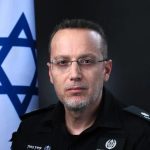
Last Shabbat night, I sat in the synagogue in the Har Nof neighborhood, and like any self-respecting Haredi, I participated in a lively conversation about the exploits of the "attacking overseer," as he is affectionately called on Haredi websites.
Gedaliah was the chief spokesperson. "The third daughter blew the story up through Rabbi Nissim's Beit Din," he said.
Shimon waved his hand dismissively and said: "Nonsense, it was actually Rabbi Asher Weiss's way, and the one who actually brought it up first was the middle daughter.".
My brother sitting next to me whispered to me: "It's amazing how they have no idea, neither the third nor the middle one. It was the police who found out about this through a tip-off from a third party who received approval from Rabbi Silman.".
After this topic was exhausted, the issue of the overseer's wife came up. "She knew everything," Gedaliah concluded, "but she didn't say anything because he threatened her." The people sat transfixed, and Gedaliah was also able to tell that she was "currently under investigation." He added that the couple had not been in contact for years, and the wife had remained silent because she didn't want to dismantle the house and escape into the street.
We would have bought this interesting piece of information, had it not been for Nissim, whose brother-in-law once worked for the ultra-Orthodox Neyez line, who heard the end of Gedaliah's words and his face turned red: "You have no idea what you're talking about. My brother-in-law is in a group that is close to one of the sisters' uncles, and he told me that the woman is completely broken. She had no idea and she doesn't believe that this could happen.".
Gedaliah was not left unpunished, of course, and only the abrupt transition to a discussion about the condition of the yeshiva where the overseer taught saved us from a scuffle between the two 'journalists'.
In the next 20 minutes, until the cantor's "blessing," I heard that complaints about the man had already been heard 10 years ago, but also that everyone was shocked by the accusations against him. That he was an extremist and jealous man but also kind and generous, that he wore a tailcoat but also a short suit.
In addition, all participants had a brother, brother-in-law, or cousin who was currently studying in a yeshiva, but surprisingly, each had a different description of the exact role of the supervisor in the yeshiva.
Right before Maariv, the really big and important question arose: How did the owners not know? How did they not recognize? Then I received a wonderful description of the owners' personality traits, not always flattering, which, somewhat surprisingly, were well known to the random and loud group that had gathered in the back room of the synagogue for a fascinating conversation about the events of the last few days.
This precise description clearly characterizes the difference between journalistic work and the institution known as "Niess" that so characterizes the Haredi public.
""Every fact must be checked," stated journalist Sidney Freiberg, who won the Pulitzer Prize twice, "even a quote from a previously published article requires re-examination.".
Another quote on the subject belongs to the editor of the Washington Post, who directed his articles dealing with the exposure of the Watergate affair: "I want to get confirmation of this information from two different sources, which are not dependent on each other.".
But these requirements are a recommendation for those involved in news in our beloved sector.
Because in the meantime, every headline about a shameful affair, even if it's not true, manages to garner a few thousand more views, and demote this profession, which some still see as a respectable one, to low places - from which descending from here on out will be a difficult journalistic task in itself.
Bigger dreams. The talented and challenging rabbi of Efrat, Rabbi Shlomo Riskin, was a prominent student of the rabbi Yosef Dov Halevi Soloveitchik at Yeshiva University. During his studies, the yeshiva encouraged him to spend some time in Israel, and he chose to study part of the time at the Ponivez Yeshiva. There he met the rabbi Yosef Shlomo Kahneman - the Ponivez rabbi, and the two maintained contact over the years, and the rabbi from Ponivez even visited Rabbi Riskin from time to time when he was in the United States.
Years later, the rabbi fell ill and was hospitalized at Mount Sinai Hospital in Manhattan. Rabbi Riskin came to visit the great man of his generation and tried to help him as much as he could.
And this is how he describes his last meeting with the rabbi: "The rabbi, confined to his bed, seemed depressed to me, so I said to him: 'I hope the Rosh Yeshiva understands what a privilege it is for me to know him. Every person has dreams, but how many people have succeeded in fulfilling their dreams to the extent that the Rosh Yeshiva succeeded? What was achieved at Ponivez is a miracle of wonders. Most people consider themselves lucky if they manage to fulfill ten percent of their dreams. The Rosh Yeshiva must have fulfilled ninety percent. There is no doubt that he had a great privilege.'.
""He looked at me and smiled," Rabbi Riskin continues, "then he took my hand and said: 'No, no, Rabbi Riskin. No, no. It is true that most people do not fulfill more than ten percent of their dreams. 'No man dies with half his desires in his hand,' our sages said.
""But I'm no different: I, too, only ten percent of my dreams came true. It's just that my dreams are bigger.".
 Join the Haredim 10 Facebook page >>
 Join the X page of Haredim 10 >>
 Want more news, videos and stories? Join the Haredim 10 WhatsApp channel >>