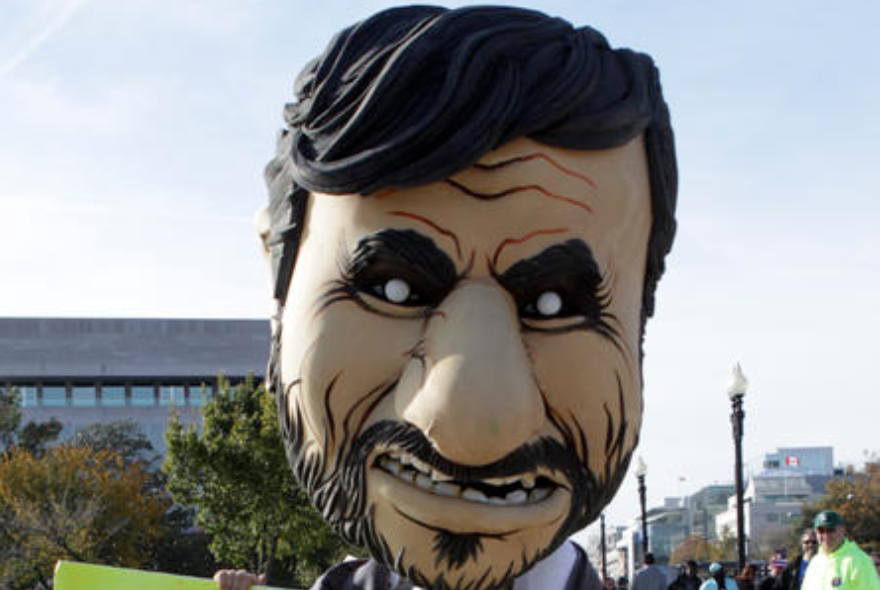
'The New York Times reported last night (Wednesday) from senior American officials that Israel and the United States wanted to install former Iranian President Mahmoud Ahmadinejad as a leader, despite the fact that during his tenure as president he was known for his anti-Israeli and anti-American views, called for the destruction of Israel, and even denied the Holocaust.
The report noted that just days after the Israeli attack that killed Iran's supreme leader and other senior officials in the opening salvos of the war, US President Donald Trump publicly stated that it would be better for "someone from within Iran" to take over the country.
According to the report, although Ahmadinejad was considered an unusual choice, American officials discussed joint plans with Israel in the early days of the war to identify a pragmatic figure who could seize power.
The same sources insisted that they had intelligence that parts of the Iranian regime would be willing to work with the United States, even if they could not be defined as "moderates.".
However, the bold plan, developed by Israel and reportedly in consultation with Ahmadinejad himself, quickly went awry.
The report indicates that it is unclear how Israel and the United States planned to bring him to power, and what the meaning of the airstrike that wounded him was.
American officials claimed to the newspaper that the Israeli attack on Ahmadinejad's home was intended to eliminate the guards assigned to him, as part of a specific plan to release him from the house arrest he was under.
According to the report, Ahmadinejad has disappeared since the attack and his whereabouts are unknown.
In recent years, Ahmadinejad has clashed with the Iranian regime's leaders, accusing them of corruption, and they in turn have questioned his loyalty. Three times - in 2017, 2021 and 2024 - Ahmadinejad has tried to run for his former position, but each time, Iran's Guardian Council, a group of civil and Islamic jurists, has blocked his presidential campaign.
His aides were arrested and his movements were restricted to his home in eastern Tehran.
 Join the Haredim 10 Facebook page >>
 Join the X page of Haredim 10 >>
 Want more news, videos and stories? Join the Haredim 10 WhatsApp channel >>