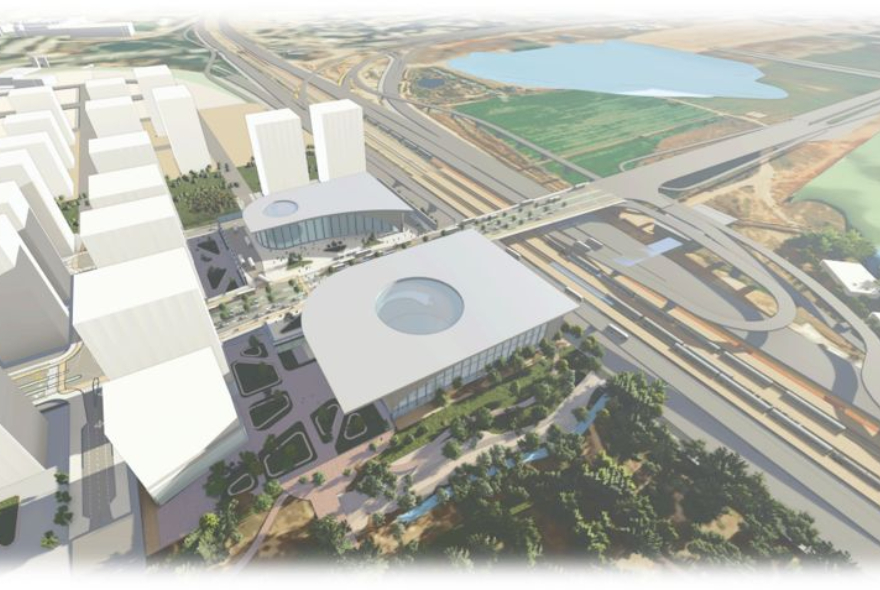
The National Committee for National Infrastructures (NCNI) approved today (Monday) to advance the plan of the Ministry of Transportation and the National Transportation Authority to establish an integrated transportation center (ITC) in Glilot, which will constitute one of the largest integrated transportation centers in Israel.
This is part of the national hubs program promoted by Transportation Minister Miri Regev, to establish a network of 650 integrated transportation centers throughout the country.
 Want more news, videos and stories? Join the Haredim 10 WhatsApp channel >>
The approval given to the Ministry of Transportation to promote the publication of the preparation of the plan, along with setting conditions for issuing permits and an environmental impact assessment, constitutes a significant step towards the establishment of one of the central and important complexes in Israel.
The Glilot complex will create, for the first time, a direct, complete and convenient connection between all the central public transportation systems - two metro stations (M1 and M3), a new train station, a metropolitan bus terminal and a network of bicycle and pedestrian paths - all with full connections and connectivity.
The complex will enable convenient, fast and friendly transition between all means of transportation, and will make passenger traffic in the Tel Aviv metropolitan area more efficient, reliable and accessible.
The complex is integrated into the urban development of the South Glilot neighborhood, which will include approximately 20,000 housing units and large-scale employment centers.

Image: Courtesy of the Ministry of Transportation
The connection between the metro, train, and buses at one hub in the west of the neighborhood is expected to change the construction, accessibility, and urban development of the entire area, and create an advanced model of a city focused on public transportation.
According to Ministry of Transportation forecasts, by 2050, over 34,000 passengers are expected to pass through the metro at peak hours.
The construction of the new bus terminal, which will serve as a northern gateway to Tel Aviv, will be another key element in the process. The terminal will include dozens of platforms, charging stations for electric buses, overnight parking, operational areas and dedicated solutions to improve the reliability of metropolitan and intercity service lines.
The move is expected to reduce bus traffic into the city center and divert traffic to regulated and efficient access routes. The planning progress is being made with full consideration of the unique natural environment in the complex, which includes winter pools, the Achia Stream, and natural drainage outlets, and in coordination with the drainage plans of TAMA 47 and TAMAL 3007, combining runoff control solutions, water diversions, and protection of natural values.
Minister of Transportation Miri Regev: "The Glilot Metro is a significant milestone in the revolution we are leading in public transportation in Israel. It is a clear example of what we are doing as part of the national hub program: connecting all transportation systems in one space - metro, train and buses - to create a comfortable, simple and fast passenger experience. We are establishing a network of 650 such hubs across the country, as part of the 'Connecting Israel' vision, which brings advanced and reliable service to every citizen, everywhere.""