State Comptroller and Ombudsman, Matanyahu Engelman, is publishing today (Tuesday) the Ombudsman's Report for 2024.
According to the report, in 2024, the Public Complaints Commission received 21,592 complaints. 46% of the complaints that the Commission had the authority to investigate in 2024 were found to be justified or were corrected. This is an increase of 7% compared to 2023.
 Want more news, videos and stories? Join the Haredim 10 WhatsApp channel >>
32.71% of all complainants belong to the ultra-Orthodox community.
The three local authorities that received the largest number of complaints per 1,000 residents in 2024 are the municipalities of Netivot, Beit Shemesh, and Bnei Brak.
Comptroller and Commissioner Engelman warned of a 500% jump in the number of complaints about the Ministry of National Security (1,436 complaints). The reason: the handling of hundreds of thousands of applications for firearms licenses submitted after the outbreak of the Iron Sword War. "Another disturbing statistic is the fact that even at the end of 2024, more than a year since the start of the war, there are thousands of justified complaints about government ministries. The Minister of National Security and the other relevant ministers must keep in mind the service to the public during this time of emergency.".
The report contains examples of a number of complaints received from the ultra-Orthodox public.
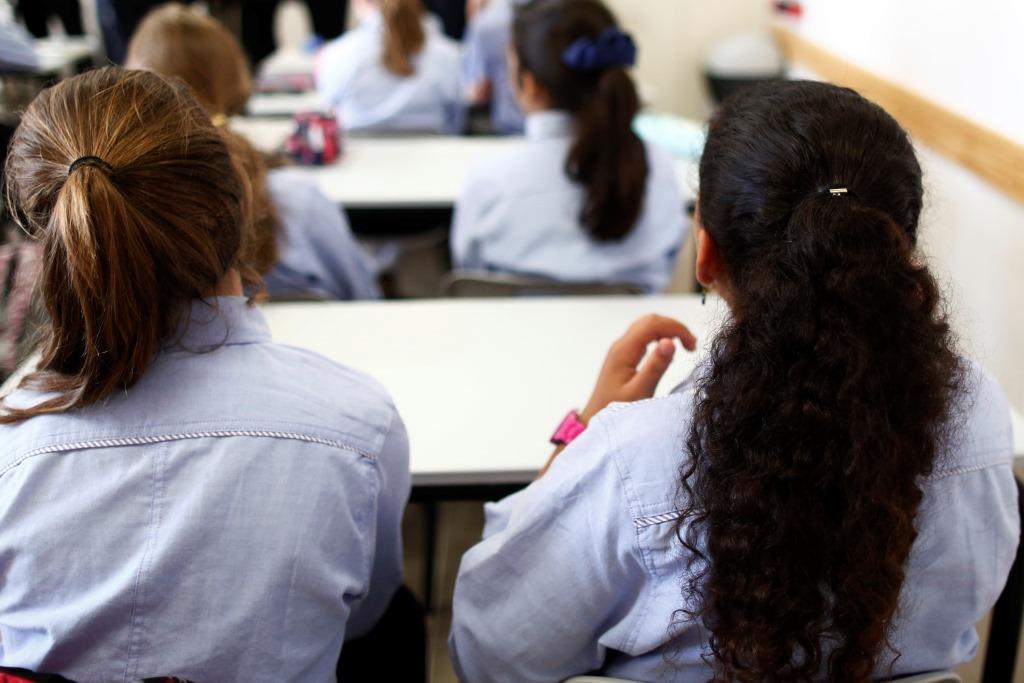
Thus, a parent of female students at a Haredi seminary complained to the commission that the seminary administration illegally collects a fine of 25 NIS from female students who are frequently late for classes or miss classes. In addition, female students who request to take an exam on an additional exam date are required to pay 30 NIS.
In response to the commission's inquiry, the school supervisor in the Haredi district of the Ministry of Education stated that a fee was charged for postponing a test, in order to finance the expenses associated with composing the test and for financing the testing team. According to her, the fee charged for tardies and absences is intended to finance a team that composes and checks work assigned to students who have accumulated tardies and absences, and that the fees are charged with the consent of the students' parents.
The commission warned the Haredi district that collecting the payments is contrary to the provisions of the Ministry of Education circular regarding parental payments, which does not permit the collection of such payments, even if the majority of the students' parents agreed to collect them.
The matter was referred to the Haredi district administration for a decision, which informed the Ombudsman that an investigation into the case revealed that charging a fee for making up assignments in the event of absences and for taking an exam at an additional time is invalid and illegal. The seminary has stopped charging fees.
Another complaint came from a yeshiva student whose passport was stolen from the safe in his room during the "Bein Tzhamin" vacation. The Population Authority rejected his request to be exempted from paying an additional fee for the stolen passport, partly on the grounds that the theft did not occur at his registered residential address.
The Ombudsman noted to the Population Authority that the complainant had lived in the yeshiva for 6 years, but due to the authority's procedures, the yeshiva address cannot be his residential address.
The Ombudsman found that the Population Authority's actions were excessively rigid and blatantly unfair, since it was expected as an administrative authority to consider the special circumstances of the case and exempt the complainant from paying the fee. The Population Authority acted in accordance with the Ombudsman's position and refunded the complainant the additional fee he had paid.