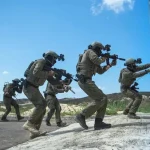
The IDF published today (Friday) its investigation into the battle at Kibbutz Nir Oz on October 7, and unequivocally determined that the IDF failed in its mission to protect the residents of the kibbutz.
The investigation determined that the civilians were left alone in the face of the Hamas attack for more than six hours and that about a quarter of the kibbutz residents were injured, murdered and kidnapped. Security forces arrived in the Nir Oz area about 40 minutes after the last identification of terrorists in the kibbutz and did not encounter any terrorists during search and rescue operations.
The local standby squad fought bravely, but was unable to stand up to an organized enemy force with a significant numerical advantage. The main failure, the investigation shows, is the collapse of the chain of command and the lack of a clear situational picture at the time of the incident, which prevented the dispatch of reserve forces in real time.
 Want more news, videos and stories? Join the Haredim 10 WhatsApp channel >>
The investigation team determined that if the battalion had been given even a very brief warning, there is no doubt that the damage could have been reduced - both in terms of creating advance awareness that this was a war and in terms of the deployment of forces in positions and communities.
At the time of the Hamas attack on the morning of Simchat Torah, there were 386 residents, guests and foreign workers on the kibbutz. 69 were murdered, including 6 who had fled to the kibbutz from a nearby 'Psydek' party. 76 were kidnapped to Gaza, including 22 who were murdered in captivity, and 5 kidnapped alive who are still there: Eitan Horn, Ariel and David Kunio, Matan Tsengaukar and Natpong Pinta, a foreign worker from Thailand.
What happened on the kibbutz?
On the day of the incident, at 06:29, Hamas launched a broad surprise attack on the Gaza Strip, using heavy weapons, explosive drones, and IEDs. The forces defending the area, including the Golani Battalion, were quickly neutralized by massive fire, and the terrorists penetrated Israeli territory through 14 different infiltration routes.
Residents of Nir Oz entered protected areas, but the terrorists entered the kibbutz through several gates and began a campaign of killing and kidnapping. Fighting began at 06:52, and the local alert squad waged stubborn fighting for about two hours until it was subdued.
Chief of Staff Nir Oz called the alert squad at 06:43 and at 06:49 the first terrorists entered the kibbutz territory through the northern gate, and then also through the Kerem Gate and the southern gate. The first murder inside the kibbutz took place around 06:57.
The attack on Nir Oz involved organized Nuhba forces, which included between 100 and 130 terrorists, alongside unaffiliated terrorists who arrived from Gaza following calls from the Hamas leadership to participate in the operation. In addition, the burned tank on the border became a focal point, causing crowds to flow towards the kibbutz.
The investigation team estimates that the number of unaffiliated terrorists who arrived in Nir Oz was in the hundreds, between 300-530 terrorists.
The military's failure to defend
The report notes that the forces were unprepared for such a large-scale attack and did not receive advance warning. In addition, the chain of command quickly collapsed: senior commanders were injured or cut off, the brigade headquarters was under fire, and the military camps were neutralized. At the same time, attempts to convey information about the severity of the incident failed, which caused a severe delay in the arrival of reinforcements.
Despite desperate cries from residents, the sectoral forces were fighting in other sectors and did not understand the scope of the incident in Nir Oz.
At 09:22, a combat helicopter arrived for the first time and attacked south of the route leading from the Gaza Strip to the kibbutz, where a concentration of dozens of terrorists was identified. In its attempt to cut between the terrorists and the kibbutz and while close to the ground above the kibbutz, the helicopter was hit by terrorist fire, was forced to leave, and ultimately made an emergency landing in the compound.
As the fighting continued, there were four more sorties by helicopter gunships, which fired on the axis and hit many terrorists. The investigation indicates that this fire also hit the kidnapped kibbutz residents, and one of them was killed.
Around 12:30 - about six hours after the start of the attack, the last of the terrorists was identified on the kibbutz. The first force to arrive in the area was the Yams at 1:10 PM, after the terrorists had already left, followed by the 'Egoz' force and the 13th Squadron, and later also the General Staff Patrol.
Main conclusions
The IDF failed to protect Nir Oz; the serious damage was caused by the lack of preparation and poor functioning of the commands.
The residents of Nir Oz were left alone for six hours facing armed terrorists; the readiness squad fought bravely, but could not cope with such a large enemy force; a western outpost for the kibbutz needs to be established and significant improvements in the decision-making and information transfer processes in the army are required.
The investigation team noted two gaps in the force's conduct:
A. The force had to contact Rabashat Nir Oz or other officials in the locality to clarify the situation and help the Southern Brigade prioritize forces. Without the flow of information from below, it was very difficult to build a situational picture in the brigade.
B. The force had to prevent the neutralization of the R&D camp; in such a case, it had a reserve that could be used in favor of Nir Oz. This issue still needs to undergo in-depth investigation, both regarding the exercises and instructions and the fact that there should be outposts built for defense near the fence, not camps.