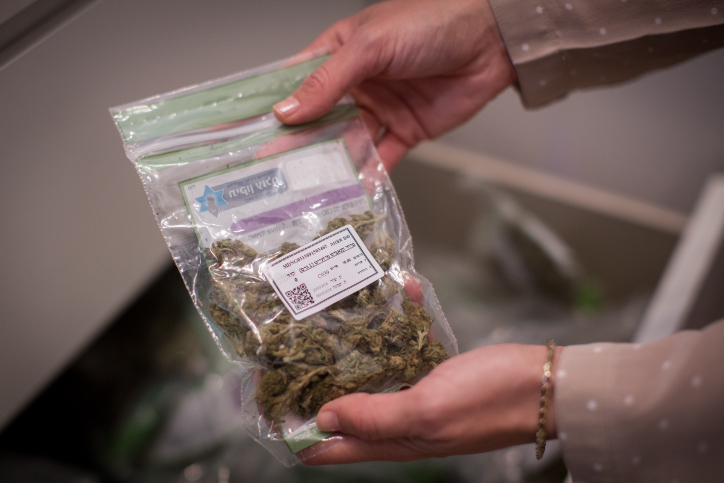
The Ministry of Health today (Monday) published the outline for the reform in the field of medical cannabis - which aims to improve and reduce regulation in the field of medical cannabis in Israel.
Arik Dvir tries to dance at both weddings. Did he succeed? • Watch
The outline is published after in-depth staff work with patient representatives, manufacturers, and doctors, and after receiving public comments on the draft outline. The outline is under the responsibility of the Medical Cannabis Unit (MCU) in the Economics, Regulation, and Innovation Division of the Ministry of Health.
 Want more news, videos and stories? Join the Haredim 10 WhatsApp channel >>
This is another element in the Ministry of Health's new policy approach to reducing the regulatory burden on those supervised in various fields while protecting public health.
The new outline is expected to significantly reduce the scope of regulation on those involved in the medical cannabis market, create certainty for those supervised, help reduce the cost of medical cannabis for patients, and promote research and development in the field of medical cannabis in Israel.
The outline presents a clear policy for the coming years, characterized by reducing the scope of regulation and transferring responsibility to the supervised entities, while maintaining an emphasis on health and quality. In addition, in accordance with professional opinion that will be received following the work of the Shemer Committee, the outline deals with improving the regulator's responsibility in additional areas, including the exclusion of non-psychoactive components from the Dangerous Drugs Ordinance, as well as the implementation of the gradual transition from licenses to prescriptions - a move that will reduce the bureaucratic burden on patients and will facilitate the provision of medical treatment with cannabis.
Main points of the new outline:
1. Transition to prescriptions by a specialist physician – Implementation starting at the end of December 2023 of the outline for transitioning to prescriptions in the ten indications approved in the regulations. After one year from the start of implementation, a follow-up and decision-making discussion will be held that will include reference to a possible expansion of the outline.
2. Significant simplifications in the way farms and factories work while transferring responsibility to them – reducing the number of regulatory controls and the number of tests required of the trader who maintains a proper quality system; liberalizing the production chain (possibility of a farm-type license without Postharvest or factories with Postharvest or Postharvest separately) and moving between segments between different traders.
3. A significant change in the way the IHC supervises the market, with an emphasis on transferring responsibility to the trader.
4. Promoting innovation and R&D – dramatic easing of research approval mechanisms, a structured research license for a farm or factory owner, granting permission to researchers to issue cannabis prescriptions to research subjects, and creating a clear procedure for proving safety and efficacy of use (clinical trials) for the purpose of approving new forms of administration of medical cannabis.
5. Encouraging and completely simplifying the export process – exporting based on a declaration without the need for on-site inspections, allowing the movement of raw materials or products between dealers for export, and granting EU-GMP approval by the Institute for Inspection and Standardization, or another entity authorized by the Director General of the Ministry of Health, to establishments that meet this requirement.
6. Strengthening medicalization and making things easier for patients – updating Procedure 106 and examining the removal of restrictions on cannabis treatment as a last resort (without the obligation to pre-treat with opioids) in accordance with medical discretion, automatic extension of licenses upon a doctor's recommendation in cases where there are bureaucratic delays, moving to uniform medical packaging in accordance with pharmacy procedure and labeling in accordance with clinical categories as is customary in the pharmaceutical field.
7. Improving the definition of a dangerous drug and addressing CBD – in accordance with the policy direction of the Shemer Committee for February 2024 and beyond, and in accordance with the recommendation of the follow-up team headed by Boaz Lev, examining the possibility of leaving in the Dangerous Drugs Ordinance only psychoactive components with a THC concentration (and the rest of the THC cannabinoid family) above 0.3%.
8. Approval and publication of a clear and transparent office work procedure – the procedure was published to the public on April 30, 2023 and is accessible on the Ministry of Health website, regulating the office's work method vis-à-vis all external parties and creating certainty for practitioners.
Health Minister Moshe Arbel: "The reform that the Ministry of Health is promoting in the field of medical cannabis is great news for tens of thousands of citizens in the State of Israel and for the Israeli economy.
""As in the most developed countries in the world, the Israeli health system also sees medical cannabis as a therapeutic measure - and therefore we are committed to acting to provide relief to patients who need it. One of the first decisions made by the previous Minister of Health, Rabbi Aryeh Deri, upon taking office, was to promote a revolution in the field, and the new outline for reducing regulation in the medical cannabis market is a step that combines social sensitivity alongside the protection of public health.
""The Ministry of Health is currently leading a comprehensive policy of reforming the ministry's regulation of the business sector, and this outline is an important step in this process.".
Director General of the Ministry of Health, Moshe Bar Siman Tov: "The Ministry of Health is leading a new policy concept of easing the regulatory burden as much as possible while protecting public health. As we do in the areas of food, cosmetics, medicines, pharmacies and medical devices, the field of medical cannabis is now also undergoing a significant reform, which will move the field forward. This is a significant paradigm shift that the Ministry of Health is leading in favor of regulating the field of medical cannabis in Israel.
""Today, Israel has over 120,000 medical cannabis license holders, the highest per capita rate of any Western country. The outline will help reduce the bureaucratic burden on patients and reduce the prices of medical cannabis for them, creating long-term certainty for those involved in the field while transferring responsibility into their hands.".