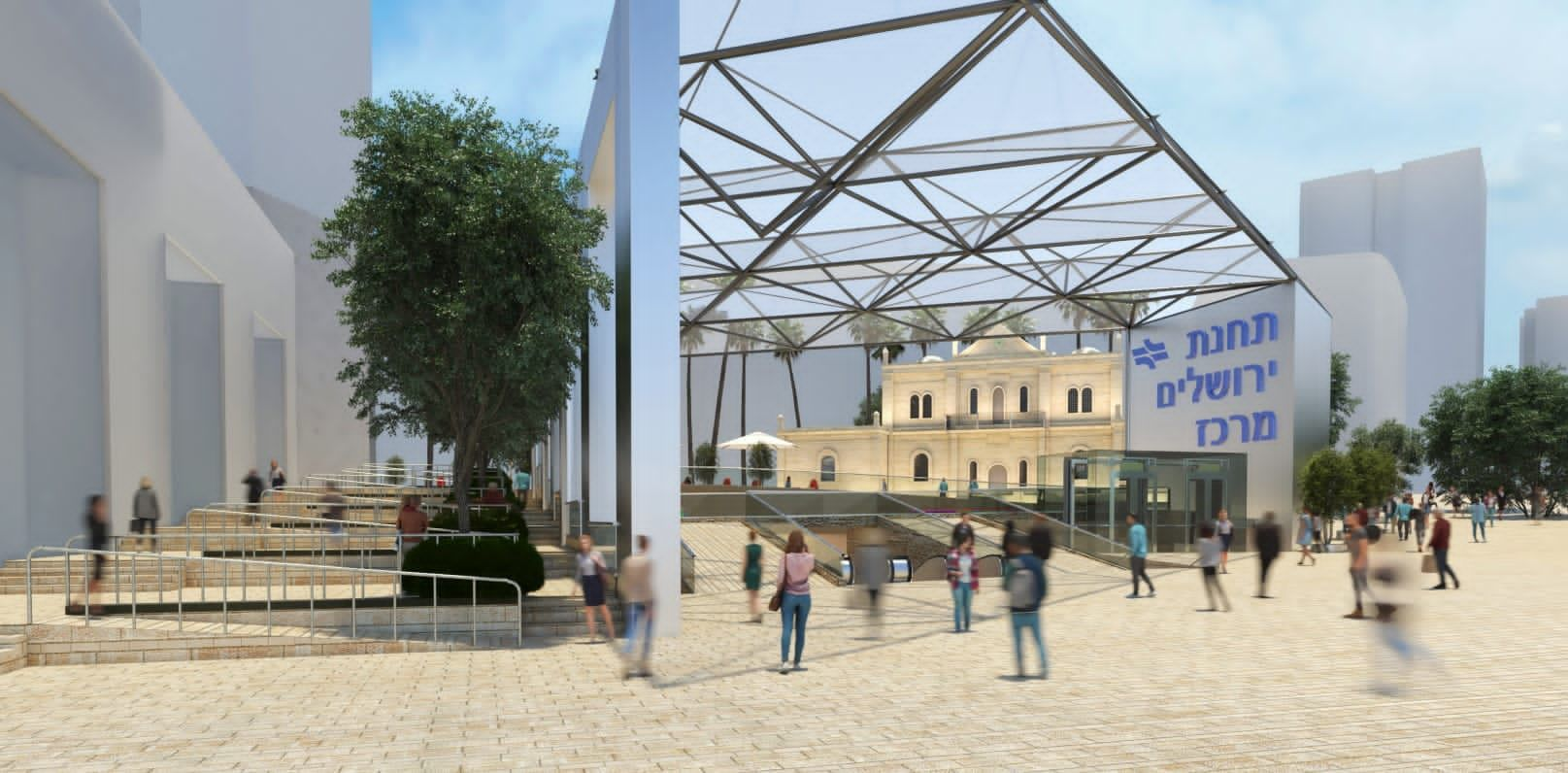
The project to extend the high-speed train route to Jerusalem is gaining momentum: The Ministry of Transportation and Israel Railways today (Monday) - in honor of Jerusalem Day - for the first time showed what the two new train stations of the high-speed line that will be built in the center of the capital will look like. The Ministry of Transportation, through Israel Railways, is currently promoting a large-scale plan to extend the high-speed line to Jerusalem, so that it reaches the city center. The line will include two new train stations, continuing the underground route, from Yitzhak Navon Station. In the future, the line is planned to reach Malcha. The project is in advanced planning stages and has already received the necessary permits. Work is expected to begin in two months. The entire line will operate in an underground tunnel that will not interfere with traffic in the city, and will include the construction of two new mega-stations: Jerusalem-Center and Jerusalem Khan. The project is being promoted in cooperation with the Jerusalem Municipality and the Transportation Master Plan team. The new stations will be designed as environmental monuments that characterize the fabric of life in Jerusalem. Upon completion of the project, 13 trains will be able to operate per hour in each direction, carrying approximately 20,000 passengers per hour. The first station to open is Jerusalem-Center Station, near the intersection of King George and Jaffa Streets. The stations will interface with public transportation lines in the city center and the two light rail lines, the existing Red Line, and the Blue Line, which is planned to be operational before the end of the decade. Jerusalem-Center Station will allow passengers arriving from outside the city by train to continue directly to the center of Jerusalem, without having to exit Yitzhak Navon Station and transfer to the light rail or bus, and to reach within a few minutes the business centers and entertainment areas of Mahane Yehuda Market and Jaffa Street, and the Mea Shearim neighborhood, Davidka Square, and the Old City and the Western Wall. The next station to be built is the Khan Station, near tourist hotspots such as Gan HaPaamon, the Old Station Complex, and the renovated Carriage Theater. The station will be connected by short and convenient walking paths to the Old City, with optimal connectivity to all means of transportation. The entrance plaza to the station building will serve as a central gateway to the tourist and cultural routes in the area, and will allow for a stay and observation of the new space to be built and access to the historic station building. [Gallery] Minister of Transportation Miri Regev: "Jerusalem, as the capital of Israel, the center of government institutions and a global tourist hub, is getting an advanced and efficient transportation system. Extending the express line, so that it reaches right into the city center and near the Old City, is a significant step in advancing the Ministry of Transportation's vision - to enable every resident to get from anywhere to anywhere by available, reliable and affordable public transportation. We have placed the capital at the center of our transportation activities, and by the end of the decade Jerusalem will be the first city in Israel to enjoy a full network of light rail and a high-speed rail connection to all parts of the country, with optimal connectivity and connectivity to all means of transportation in the city and beyond." It should be noted that since the Jerusalem Express Line began operating in 2018, 15 million trips have been made on it. The Jerusalem Express Line operates 24 hours a day, Sunday through Thursday (except on the night between Tuesday and Wednesday when essential work is being carried out in the tunnels) with a frequency of two trains per hour until midnight and after midnight with a frequency of one train per hour. On Fridays and Saturday evenings, the line operates according to the times of the Sabbath. The Jerusalem Stations Project joins other important projects of the Ministry of Transportation and Israel Railways that are currently being promoted, which are intended to absorb the expected accelerated growth in the number of trips, from about 70 million trips in 2019, to over 100 million trips in 2025, and to the 300 million trips expected in 2040. Among the projects currently being promoted: the fourth track on the Ayalon, the eastern track, and track 431. These projects will allow Israel Railways to increase the frequency of trips and expand the track network to new areas.

 Join the Haredim 10 Facebook page >>
 Join the X page of Haredim 10 >>
 Want more news, videos and stories? Join the Haredim 10 WhatsApp channel >>