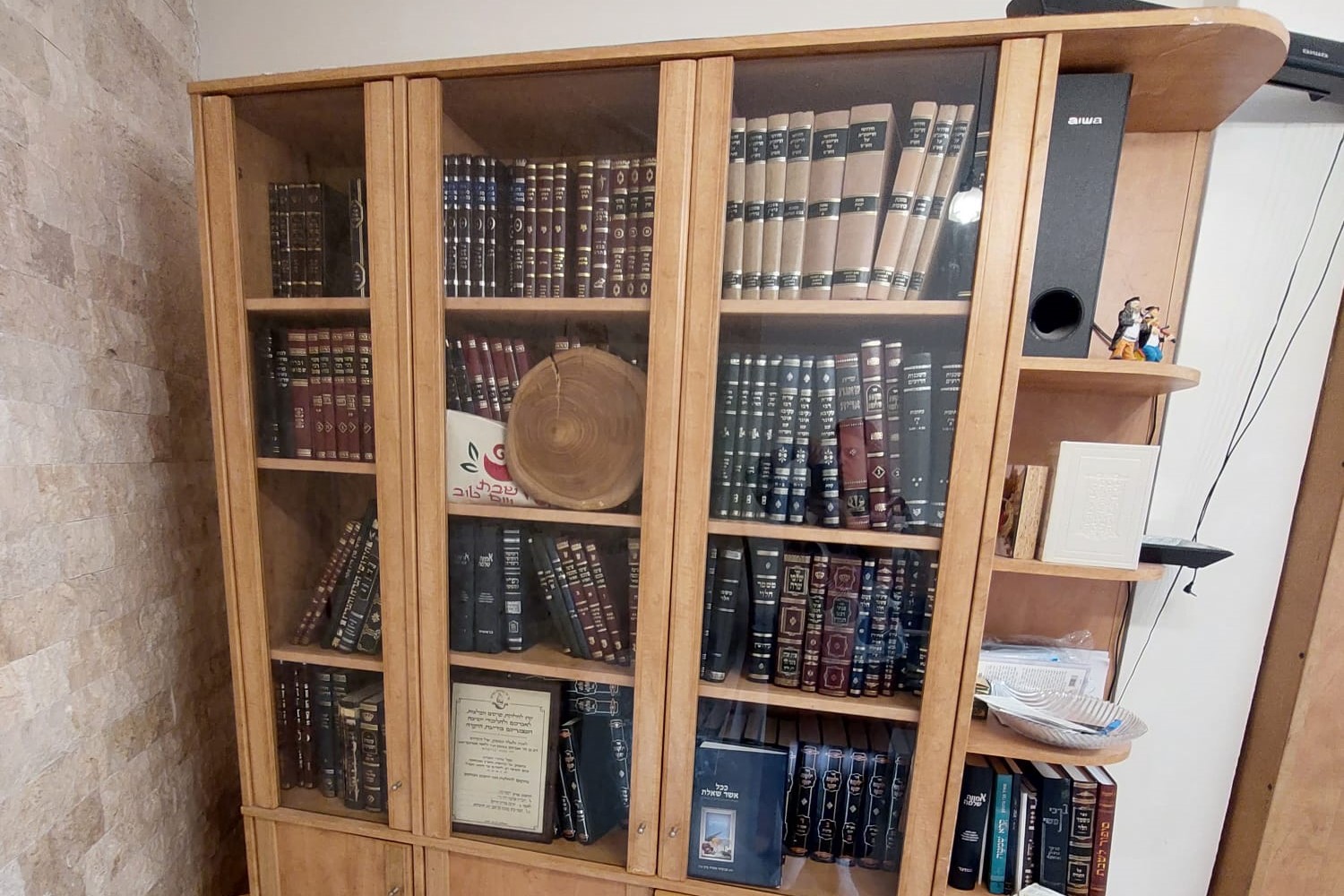
Dozens of people [did] respond to the ad I posted about the Bible cabinet in the living room, which is, "has glass doors, in excellent condition, only 500 NIS.".
""So you're complaining about the coffin?" my wife asked sadly, "What will be next?""
And me: But haven't the hundreds of books behind the glass been opened by this for ages?! When was the last time - that is, in the last 17 years - I leafed through the elegant sets of the Rishonim [with annotations], and the lessons of the yeshiva heads [general and daily]?
This fact may not earn me much respect, but it is at least true, and therefore why should I hold the old coffin with its many titles?
But I couldn't shake off the sadness.
It turns out that the overflowing bookcase, found in every living room of an ultra-Orthodox Jew today, and perhaps a former Talmud Torah scholar, constitutes what researchers of organizational aesthetics call [for example, Prof. Michal Frankel] - a sophisticated means of control that controls what the organization seeks to convey: What are the values that are important to it? Who are the employees that excel in its eyes? What is expected of visitors to see?
And so, even if my friends and I make the hand gesture toward the closet mainly to take a shower, while our wives insist that the beautiful plaster shelves in the living room house:
Deborah's Song Column, Shas Oz and Hadar, Shulchan Aruch Jerusalem Institute, Rambam Frankel, Mishnah Berurah, Rishonim and Achronim published by the Rabbi Kook Institute.
For if they disappear, what are you - as the woman says - going to continue to complain about? Where will you further deteriorate?
The material bookcase as a shaper of values, ideology, and culture.
 Want more news, videos and stories? Join the Haredim 10 WhatsApp channel >>