Ministry of Health data released this morning (Wednesday) shows that 13,384 confirmed cases were diagnosed in the past 24 hours, out of 96,695 tests conducted. The positivity rate is 17.241%.
All this while the full impact of the Purim celebrations is still not seen, and therefore a relatively high jump in the number of confirmed cases is expected.
According to the data, the R infection coefficient is 1.39, indicating another increase from yesterday, when it was 1.33.
 Want more news, videos and stories? Join the Haredim 10 WhatsApp channel >>
The number of active patients in Israel stands at 64,271 people, of whom 300 are hospitalized in serious condition, 119 are on ventilators and 16 are connected to an ACME machine.
The number of people who have died in the epidemic stands at 10,449, with more than 4,000 of them dying during the current government's term - which has failed in the fight against the virus.
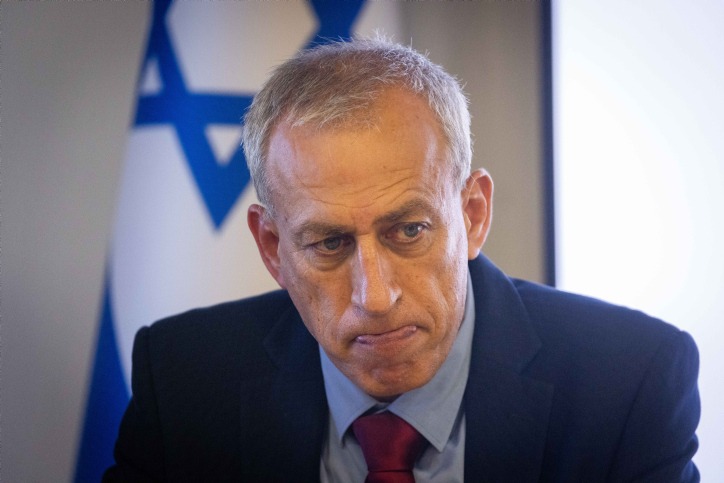
The Director General of the Ministry of Health, Prof. Nachman Ash, spoke with Anat Davidov and Golan Yochpaz on 103FM and addressed the increase in coronavirus cases: "A new variant has not arrived. It is indeed an evolution of a variant that existed here recently, but as long as it does not reach very high numbers, we think it is related to the previous wave. I cannot rule out that we will eventually call this another wave, but there is no doubt that the connection to the previous wave is strong.".
When asked whether it is right to present the strains of the virus to the public, he said: "As we progress to a situation where we live with the virus, which is what we want, which is a disease that we know how to deal with, we won't have to say which strain. The difference between BA.2 and the micron is so small, so it's not important to talk about this strain. It's part of the discourse that, in my opinion, is important to disappear as part of living with the virus.".
""New variants are constantly being discovered with these and other changes, there are many of them. The question is when there is a variant that has clinical significance, right now there is nothing new like that. The publication that was made a few days ago about a combination of BA.1 and BA.2 is also probably without any special clinical significance.".
He referred to the morbidity data in recent days, in which there has been a slight increase, and explained: "Usually there is no increase from day to day, but rather jumps every week. This is the biggest question - how far it will go. If it stays at these values and does not rise beyond that, it is part of the previous wave with a little more increase. The infection coefficient is still high, today it is 1.39. The direction is the spread of the epidemic, but we have to wait a few more days to see what the trend is.".
On where we went wrong - he replied: "I can't say that we did anything wrong, I think this is the behavior of the virus. This happens in all countries in the world, we had to move forward and open the economy, otherwise it would have been impossible to continue with all the restrictions.".
""In terms of vaccination, the most important thing right now is that the population at risk gets vaccinated, severe illness will be prevented, and people will maintain their health in this context. There is an uptick in the number of people getting vaccinated, but it's not enough. We are preparing and launching a campaign in the coming days.".
Regarding the possibility of a fifth vaccine, he said: "Right now I don't think it's on the horizon. That's one of the big questions we're thinking about - when should the entire population be vaccinated again. Maybe towards next winter, when some time has passed since the previous vaccinations, so I don't see it right now.".