What's worse than telling a lie? – Making lying the norm. When you're lied to without batting an eyelid, without being ashamed, without feeling that there's anything wrong with it. Did I say it? Did I promise? Did I commit? So what? Does that obligate me to keep my word? You made me laugh.
The culture of lies deliberately empties words. There is no meaning to the things that are said. It is like writing on ice, which will melt in a moment.
You see people in suits and ties standing in front of microphones and cameras, making statements, making promises, confirming or denying, and you know it's all a bluff; that in a minute they'll do the exact opposite, without blinking. So what's the point of listening to these interviews and statements?
 Want more news, videos and stories? Join the Haredim 10 WhatsApp channel >>
Dealing with a scammer
This week's parsha presents the struggle against the culture of lies. Our forefather Jacob goes to Haran and meets Laban the Aramean, the "deceiver" in the reverse order of the letters. His word is not a word, his commitment is not a commitment. Jacob agrees with him to work for seven years in exchange for his daughter Rachel, and he deceives him and brings Leah into the marriage instead. Jacob negotiates with him about the terms of his wages, and Laban violates the terms again and again - "And you shall exchange my wages for ten shekels.".
These are not 'white lies' or those told in an ambiguous gray area. A white lie is a resolute lie, blatantly denying clear commitments on his part.
Even when Jacob speaks to him "in the name of your little daughter," and it seems to him that he has closed every possible loophole, he discovers that Levin does not need escape routes to provide a cover for his lies. He has no problem lying in front of everyone. Because lying is an accepted norm in his eyes.
The culture of lying is incomparably more serious than lying itself, because it distorts fundamental concepts and turns light into darkness and darkness into light. It creates a reality in which the liar not only does not have to be ashamed of his lies, but he is also respected and admired, while those who are required to stand by their commitments are seen as naysayers who worry about trifles.
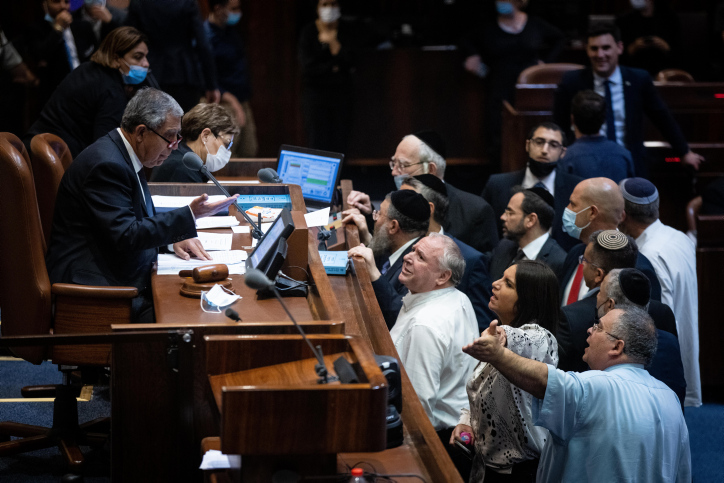
Making lying a norm is doubly serious during elections. The ballot paper that a citizen holds is the precious tool that democracy gives him to influence government policy and elect the people he deems worthy. When election candidates allow themselves to lie to him with a determined face, they are essentially stealing his democratic right and leaving him betrayed and deceived.
Unforgivable crime
This culture of lies must be eradicated.
Indeed, an elected official has the right to change his opinions and positions, but he does not have the right to do so after receiving a mandate from the public for a completely opposite policy. Let him return to the voter and tell him that he now holds different positions. If he gains his trust, please, he will then have the moral authority to act according to the new light that has shone on him. As long as he has not received a mandate from the voter, he must be faithful to his declarations and commitments – or resign.
Anyone who believes in the importance of telling the truth must make it clear to elected officials that lying and deception are unforgivable crimes, and that anyone who lies to their constituents will never be elected again, no matter what. This is the only way to restore the value of words.