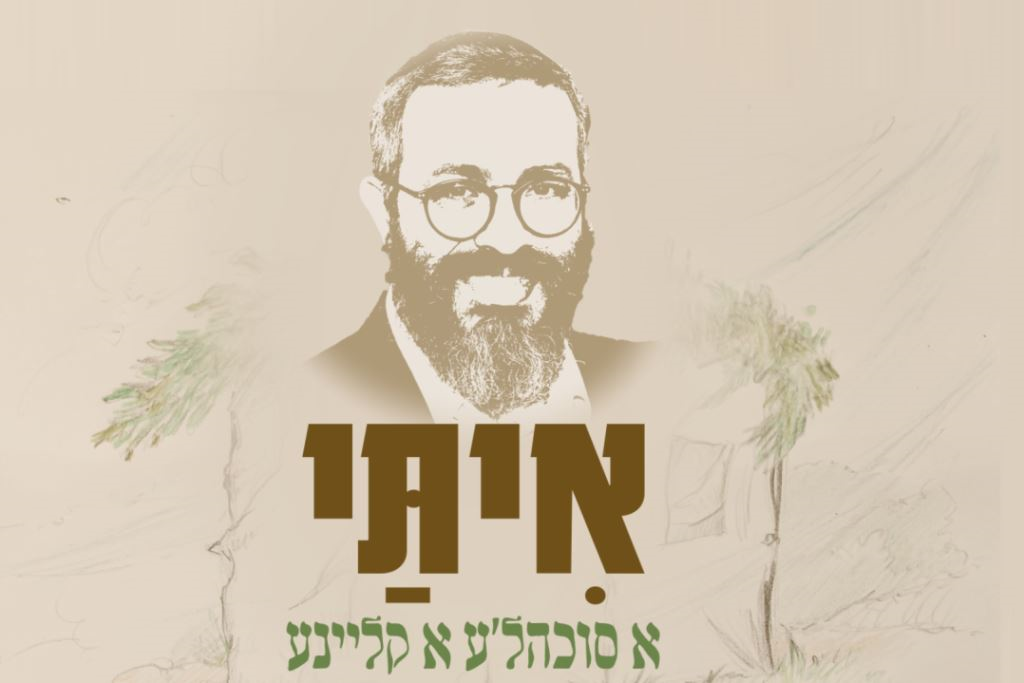
About one hundred and twenty years ago, Avraham Risen, one of the "wise men" of that generation, wrote a story that accompanies the Sukkot holiday of a poor elderly couple living in a distant town, when the husband, with the sweat of his brow and the little money he has, gathers trees and a few branches to build a tiny kosher sukkah in honor of the holiday.
Obey the 'Torah' and celebrate Sukkot safely: This way you are 10 times more protected
Synagogue schedule for the holidays of Tishrei: This is how you will adhere to health guidelines
 Want more news, videos and stories? Join the Haredim 10 WhatsApp channel >>
During the meal - the Jew's wife is afraid of the extreme weather that is hitting the town, and comments to her husband that the wind will soon topple the sukkah.
The husband, in response, lightly reprimands his wife and tells her the following sentence:
The Sukkah will stand for many years // The Sukkah will stand for many years;
For the winds will roar, // the winds will tremble,
Many worlds it comes, // many times it will come again,
The Sukkah will stand forever. // But the Sukkah will stand forever.
Despite the identity of the story's author, the words were adopted by Hasidism and became an integral part of the holiday songs, because the meaning of the song is essentially the story of all of Judaism from now until today: At every moment there are foreign spirits trying to tear down our personal sukkah, to divert us from the path we are walking, but we have been here for 2,000 years and no spirit will bring us down, like the sukkah that will stand forever.
Singer and songwriter Itai Amran, a Chabad follower, who has written hits that have scorched playlists and the internet in recent years, is tackling the task of performing a song in Yiddish for the first time, and with great success, a song that many, many people, were afraid to perform.
This moving melody has survived like the sukkah from father to son, mainly in Ashkenazi postcards, and its Yiddish rendition receives curly polishes from Itai Amran.
How symbolic: the contrast between the original Yiddish, and the curling with the Yemenite root that cannot be ignored, with the line of reply in Hebrew - in the holy language - 'The Merciful will raise up for us the fallen Sukkah of David' - symbolizes the unity of the people of Israel in one Sukkah: Sephardim, Ashkenazim, Yiddish speakers and Yemenites in a curling of curls. We are all sitting in a two-thousand-year-old Sukkah. The exile, the winds of division and the frost - will not defeat us.
The person who initiated the idea to perform the song was Rabbi Moshe Kahane, son of the late Rabbi Chaim Kahane, who was a humble Hasid, one of the veterans of Kfar Chabad, who would sing the song with great devotion and ascension, every year on the first night of the Sukkot holiday, with great anticipation of imminent redemption.
Itai Amran: "Today more than ever, this melody becomes relevant. The conversation between the husband and wife in the Sukkah, when the winds of time threaten to collapse the unity of the Jewish people, and the confidence that the planks of the Sukkah and the little thatch will prevail – this is the story of our generation. I see this as a mission to unite the Jewish people under one Sukkah – the Sukkah of peace and the unconditional unity of Israel.""
Tomer Matana, who accompanies Itay in producing his debut album, arranged the song in such an artistic way, with the percussion sounds of Rafi Hevroni joining in the background, adding an important and meaningful touch to the final result.
Singer Haim Shlomo Mayyes played an important role in the song to perform the words in Yiddish with the exact pronunciation.
The music video that accompanies the song "A Sukkah'le A Kleine" is an amazing painting by the painter Yoav van den Berg, and the film editors at Gadka Studio turned the project into a music video that completely conveys the message.
Credits:
Words: Abraham Risen | melody: Popular Jew | Musical arrangement and production: Tomer Manta
Keyboards and programming: Tomer Matana | percussion: Rafi Hevroni
Recordings, Mixing and Mastering: Tomer Matana | Linguistic advice: Haim Shlomo Mayes
Photo: Avi Raz | painting: Yoav van den Berg | Clip production: Gadka Studio
Personal management and public relations: Lachyani's, Yossi Lahiani -