1.
Every year when the High Holidays arrive, I enter into a kind of anxiety. I used to think it was anxiety from the fear of judgment. And the truth? It did me some good. It is true that I suffer, but it is sublime suffering, I belong to the highest spiritual millennium, to the fearsome and complete people who are sick as a fever just thinking about the word "Elul.".
Holidays? New from Danona WOW: Yogurt with a strudel-flavored cream layer
 Want more news, videos and stories? Join the Haredim 10 WhatsApp channel >>
Hundreds of thousands have already obeyed the 'Gadoilim' and received a third vaccination. And you?
How to ensure yourself a safe ride on public transportation? This is how
But recently I realized that this is not accurate. It is less anxiety about the terror of the High Holy Days, and more anxiety about the terror of the cycle of the High Holy Days. That is, about the very long prayers, the prolonged stay in the synagogue, the forgiveness that is not always understood, the repeated confessions, and of course the fasting, which makes the whole thing exhausting.
So how do you deal with this? How do you not miss these big days because of phobias and conditioning from the past? After all, it's easiest to say: Okay, come on, we'll get through this. It's a little hard now, but Sukkot is coming soon, and it's actually a fun holiday. You sit with the whole family and eat in the Sukkah. There's all the greenery, and the magical smell of the etrog, and the joy of the house of the water-maker.
Well, we'll suffer a little now with the long prayer of Yom Kippur, but even in the difficult hours, which pass so slowly, we'll always remember that in a moment we'll all be singing "And rejoice in your holiday." Just a few more hundred pages in the mazhor, a small kiddush of the moon, and everything will be fine.
2.
Speaking of phobias and conditioning: I noticed something that amazed me. Every year, like clockwork, as the last week of the month of Elul arrives, I get this kind of pressure, Elul anxiety. Here we go again, those days when you have to get up very early in the morning and go to synagogue to say the selichot.
There's just one problem: For 17 years, since I've been hosting a morning show, I've woken up every day at five in the morning. Not in Elul - all year round! In Adar, Nisan, Iyar. Now, let's say I go to the earliest prayers in Elul, the ones before Shacharit Kevatikiin. After all, even they are said at about five twenty, which means twenty minutes after the time I wake up anyway.
At this hour I'm already in the middle of work. So, what's the big pressure of getting up for Selichot? I don't know. But go argue with the girl's terms.
3.
Rabbi Shmuel Pollak is the editor of the newsletter 'Az Nedbru', which is distributed mainly to yeshiva students. Even if I am not the target audience for the newsletter and its editorial style is not exactly to my taste – there is not a week in which I do not find profound ideas. Or funny. Or exciting (and usually all of these together).
At the beginning of last Elul, Pollak published an article titled "Preventive Treatment: How to Get Through Elul Without Going Paralyzed?".
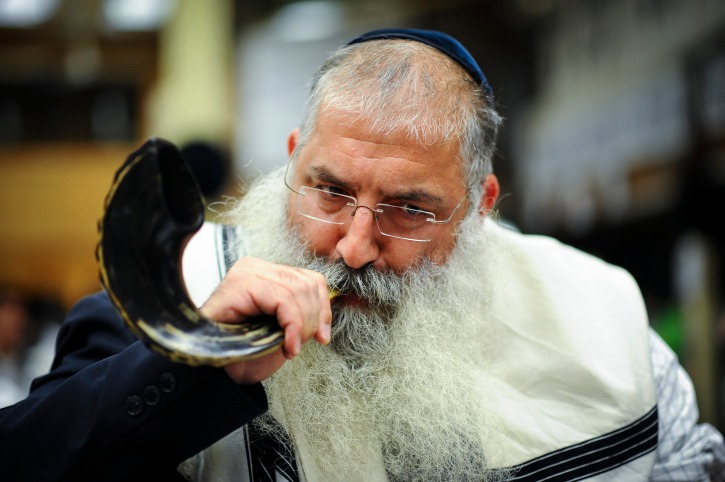
He opens his remarks with a diagnosis of the challenges of the High Holy Days: "One of the reasons why the month of Elul paralyzes us is because it has been enshrined in our minds that the whole point of the month of Elul and the Ten Days of Repentance is preparation for Rosh Hashanah and Yom Kippur. The month is just beginning, and the stressful countdown begins, 29 more days, 28 more days, shofar blasts every morning, for David, Uri and Yeshua, a little more Selichot, and then comes Rosh Hashanah and the Ten Days of Repentance, and Yom Kippur.
""Once every month of Elul, I was busy praying that I would be able to pray well on Rosh Hashanah, and that I would be able to receive good kabbalah, and three days before the first day of Selichot I was busy preparing for Selichot, and during Selichot I was busy crawling and trembling for Judgment Day, and on Judgment Day I was preparing to blow the shofar, and during the blowing of the shofar I took upon myself to repent during the ten days of repentance... and today I suddenly realize that all that time, Heavenly Father missed me.
""He told me: Well, speak up, say what you have to say, I long to hear you here and now. I am the Creator of the world, standing here opposite you not in 'and give effect' but in the middle of a routine morning. I am listening to you. Say exactly what you want. What you are planning to tell me now at the end of Yom Kippur, tell me now. Stop being busy with preparations.".
4.
Pollak reminds us that during this period, there is significance not only in the great prayers of Rosh Hashanah and Yom Kippur, but also in the small, routine prayers on all the surrounding days. Yes, Shacharit, Mincha, Ariv. Birkat HaMazon. Asher Yazer. Every prayer, every blessing, every commandment, every strengthening, is an important unit in its own right: "The king is in the field and he wants to hear your morning prayer this morning. Is someone stopping you from praying with all your heart now? Forget it. Not everything necessarily has to be preparation and intention for Yom Kippur. Of course, those who are built for this dramatic preparation, so why not. After all, it is true. But if it paralyzes you, you are allowed to know that the morning prayer of a regular day is a unit in itself. The routine prayer is important enough to be considered a unit in itself. If you prayed with all your heart and met God - you did it. It does not necessarily have to be part of the whole preparation for the Day of Judgment. There is a Father in Heaven and He is here. He understands and listens, looks and listens. Now. And instead of getting straight to the point and talking to Him directly and to the point now, we enter a whirlwind of grand strategic plans for Rosh Hashanah and Yom Kippur.
""Leave it. Five more minutes of Maariv, here and now. A hundred blessings are before you today, here and now. The Lord of the universe is present, here and now. Think about the fact that you have a hundred opportunities a day to say, 'Blessed are you, the Lord our God, King of the universe...'. Who has finished chanting the words 'King of the universe' a hundred times a day and has time left to think about additional ideas on how to enthrone the Lord? Who has free energy left to think about the Queen of the Lord tomorrow?
""In short, the greatest reinforcement of the High Holy Days is to focus on the work of God today, of the moment. To engage in the 'secret of the wise and prudent' of today's Chazrat Shatz. Not of Yom Kippur. To engage in the atonement that you make today in front of all kinds of faces that you deal with and that make a little more dirt and mess than the roosters on Yom Kippur Eve... This is your atonement!
""The moment I realized that," he concludes, "the tension level suddenly dropped. I realized that I was capable of making it to a regular Shacharit - and now it's happening. Now I'm standing before God and I'm telling Him exactly what I would have wanted to tell Him in the Yom Kippur supplement. If I plan to take on this and that, then why wait for the dramatic moment of Rosh Hashanah and Yom Kippur. The king is in the field here and now, and I'm just focused, and I have my mind set, so go ahead. Now we're closing all the corners, now I'm going straight to the heart of the matter and talking to God. Apologizing for everything that happened. Explaining my plan for the future. Making a quick grab and signing a contract with the Sovereign of the universe. And that's it. It happened in the midst of a routine Shacharit. What's certain is certain. Wait, what will happen with the upcoming Mincha? I don't know. What's the connection between one and the other? Every prayer and every mitzvah is unique in itself.".
5.
I hope this is okay, but I take the idea of breaking down Elul and the High Holy Days into units, into small capsules, even into the prayers of the holy day itself.
Are you in synagogue on Yom Kippur and the prayer is long? Heavy? Thirsty? Or just not uplifting? Okay. Who said you have to tune in to the entire Yom Kippur prayer? Let's start with the Yom Kippur dawn blessings. So you're not hungry yet. And it's not as long as all the piyyutim of the Chazat Hashat. Oh, and before that: I admit it. It's a pretty short prayer, isn't it?
Then verses of the Yom Kippur hymns. Not heavy. Not scary. Not someone at the end and someone not at the end. All in all, Hallelujah chapters. And then Nesmat. That wonderful prayer that we say every Shabbat morning, on Yom Kippur you can invest a little more intention. And then the blessing of the Creator of Light, great love and the recitation of the Shema.
Okay, you understand the principle. I don't need to continue now dividing the prayer until closing. You will do that. It is also your personal matter. Each one and the small and short prayers that awaken his soul. That do not stress his soul.
It is not worth waiting only for the thrilling, heroic moments of "And We Have Succeeded" or of the work order or of the lockdown. Who promised you that exactly then you will be able to awaken the intention? Take the Yom Kippur prayer in small, unpretentious portions, in small lessons, each time less than a writer.
6.
And if all this doesn't help, and Yom Kippur still seems like something big, long, and threatening to you, then here comes a parable I read in the same issue exactly a year ago. Unfortunately, that was after the Yom Kippur column went to press. But I cut it out and saved it for next year, that is, this year:
""On Saturday night I arrived for Selichot. I really wanted to pray with intention and get excited. I even had a cup of coffee before that, and rested on Shabbat at noon, and yet during Selichot I was tired, unfocused, unable to focus. I was so disappointed in myself. And suddenly a thought struck me: Wait, wait. Who said I should get excited during prayer? Maybe God should get excited? Who said that God's excitement depends on my excitement? It's like a siddur party. The little girls are practicing exciting sentences, they don't really understand the meaning of what they're saying ('May I deserve to make peace and continue the chain of generations.') But the mother and grandmother are sitting there crying and getting excited to the depths of their souls, from the very sentences that are being said.
""It's true, the six-year-old girl doesn't fully understand, but that doesn't stop the mother from getting excited, because she understands, and that's enough. The same goes here: When I say, 'And we have strayed from our land and we cannot perform our duties in the house of your choosing,' I have to look at the commentaries to direct and understand, but with our Father in heaven, this sentence immediately floods Jewish history at once, and all the affection from the time of the Temple, and all the suffering and troubles throughout the generations, everything floats and rises before Him.
""I am not the story. If it's hard for me, I have to be like the girls at the Siddur party – we are at a performance, mom and grandma come here and want to hear. Lord of the universe, I will try to understand what I am saying, but if not, you should know that I came to appear before you, to enthrone you, to make you feel at ease.".
• The column is published in the newspaper 'Bisheva''