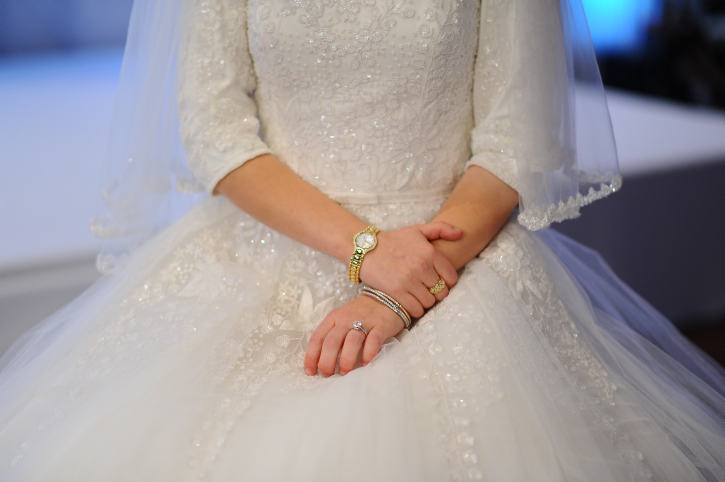
Tu B'Av represents the value of family, marriage, and establishing a home in Israel. It is always exciting to participate in a ceremony where couples stand under the canopy and make a covenant between themselves "according to the law of Moses and Israel." Another Jewish home is being built, with all the hopes, prayers, and good wishes.
Without conditions and with scholarships: earn an average of 35,700 shekels per month
 Want more news, videos and stories? Join the Haredim 10 WhatsApp channel >>
But good intentions and dreams of a home where they will live happily and richly are not enough. Preserving a marriage and creating a stable family unit is a challenge that requires a lot of work.
The vicissitudes of life put married life to difficult tests, and sometimes they threaten to collapse the walls of the home.
In general, it would be desirable for every couple, both before and after marriage, to receive guidance on how to manage their marital and family life in a healthy way. Often, couples come to seek advice and guidance only after the family ship has run aground.
Even then, it is not too late, and it is certainly appropriate to turn to professionals to help resolve the crisis, but it would be much better if the couple received the tools and insights before disaster struck.
Family safety
And there is another important aspect to remember – safety. Nowadays there is great awareness of the issue of safety. Many resources and laws are invested in an effort to protect people from dangers. On the road, at work, in food factories, in the production of children's products, and more. They build separation fences, safety railings, and set standards. The goal of all of these is to keep people away from danger.
It is strange that precisely in a world where safety awareness is so high, there is disdain for the mechanisms to protect the integrity of the family, and some even despise them.
But the Torah is a law of life, and it knows the reality of life and the temptations that lurk for the best of people. It set boundaries and restrictions precisely out of its desire to protect the things that are most important to us – our home, ourselves, our children.
The modesty fences are the separation fences that protect the Jewish home from collisions and crashes. No driver intends to knowingly cross into the oncoming lane and risk a head-on collision. It happens in a moment of weakness, of distraction, of a sideways glance.
But when there is a separation fence, there is a safety margin that protects the person even from his weaknesses.
Sometimes people resent the boundaries of modesty. What, don't you trust yourself? The answer is clear and unequivocal: No! We are only human. We have weaknesses, passions. Every day we pray: ""Do not bring me into temptation or disgrace.".
Because many times when you put a person to the test, it can end in humiliation.
''The religion of equality''
Modesty fences protect us and others. Thanks to them, we have much more confidence that we will leave for work or school in the morning and return home safely. They prevent countless negative phenomena that modern society suffers from.
True, it comes at a certain price, but the payoff is immeasurably great.
It is sad to see that 'there are judges in Jerusalem' who do not understand this value at all, and from their perspective we are doomed to be rejected by what has become the new religion - the 'religion of equality.' We are not confused by changing fashions. We will continue to build a healthy and stable family life, on the foundations laid throughout Jewish history.