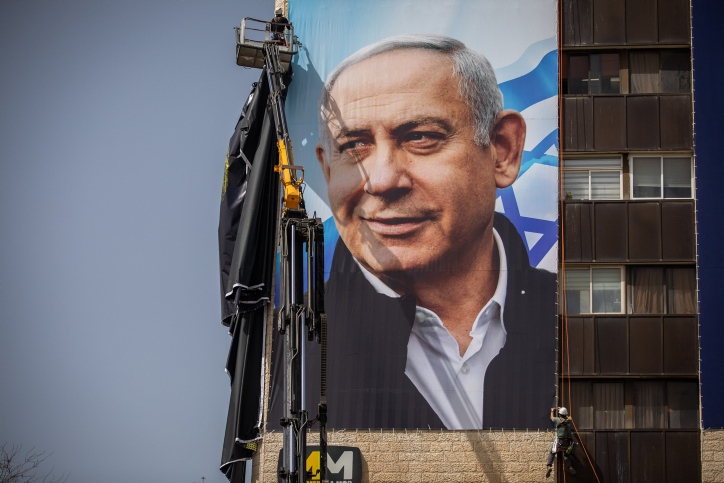
Shir Cohen, head of Netanyahu's communications department, summarizes in an interview with Israel Hayom's Knesset correspondent Danielle Roth Avnery, a period of high pressure.
""When I took office, I always held my head high and said what I thought," she said of her appointment to the bureau at the age of 25. "The prime minister always let me be an equal among equals and always asked me in discussions what I thought. At first, CEOs and senior executives raised their eyebrows, but that faded very quickly and I did not allow them to doubt me because of the combination of being young and a woman. If the prime minister recognizes my authority, everyone should straighten up and recognize it.".
""Once you are the prime minister's spokesperson, you are marked; my job was not to be nice but to excel," she said.
 Want more news, videos and stories? Join the Haredim 10 WhatsApp channel >>
Shir Cohen knows every nuance of the media, knows firsthand what strength it takes to stand up to determined journalists. After nine years of working around the clock in the office of outgoing Prime Minister Benjamin Netanyahu - including three and a half years as head of the communications department and the prime minister's communications advisor - she has developed the ability to maintain sharpness over time and not stumble. "One mistake of mine could have set the Middle East on fire.".
When she talks about the relationship between her former boss and the media, Sheer has no intention of being neutral.
""I completely understand Netanyahu's side of the media," she states. "He brought the country tremendous achievements and I truly believe that our current situation is excellent thanks to him. I also felt how difficult it was to convey this to the public with the media mediation that he always criticizes. Of course, I also understand the role of the media very well, but journalists sit in front of the prime minister in a discussion on a specific issue and will always introduce questions that are in no way related to the event itself. These can be political questions or questions that the reporter keeps in his heart for months.
And what would you do in such cases?
""Many times I would bring the conversation back to the topic for which they had gathered.".
What did you learn from working with Netanyahu?
""He taught me not to get excited about things and to always keep my cool. For example, when there was a political process that had not yet matured but came to me through a request from the media because its very existence was going to be made public - he would tell me not to comment in any way until the process matured. I was always ready and sharp for every conversation with the Prime Minister. This is the requirement and there is no other option when you are in the most strategic place in the country. More than once I grabbed my head and said, 'How did I win?' and forced myself to stay with my feet on the ground.".