A year ago, when we stood on Rosh Hashanah and prayed before the Creator of the world, we could not even in our wildest imagination describe the year we had. When we said the words 'who in the plague', this concept seemed distant to us, belonging to ancient times. And then the global pandemic came and shook the entire earth.
The terrible days bring before our eyes the fragility of life. In ordinary days we are tempted to think that everything is in our hands. We make plans and are confident that nothing will prevent us from carrying them out. We trust in the property we have accumulated, the status we have achieved, the job we have received, the business we have built, the good health we enjoy. The ground seems stable and firm to us.
But in the terrible days we return to the truth, that everything is so fragile. In one moment everything can change, in any direction. Those who are at the top may crash to the ground, and those who are at the bottom of the ladder can suddenly rise to the top – "Who will be humbled and who will be exalted.".
The chilling words that conclude the poem "And He Was Given Power" powerfully illustrate the nothingness of man: "He is like a broken pot / Like a dry stalk and a withering bud / Like a passing shadow and a burning cloud / And like a blowing wind and a blooming flower / And like a fleeting dream.".
We have a king.
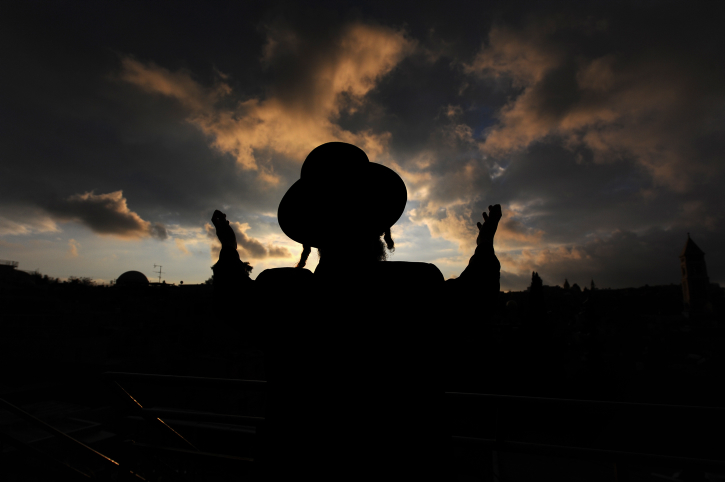
On Rosh Hashanah, we cast off the armor of arrogance and entrust ourselves to the Creator of the world. Everything is in His hands. With His will – we will succeed, prosper, fulfill dreams, be blessed with abundance and all good things. He is the source of our strength and power, and we are simply trying to be worthy instruments for the blessing that comes from above.
On these days, we stand before the Creator in humility and accept His kingdom over us, recognizing that He is "King over all the earth." This recognition is the foundation for our conduct throughout the year.
The world is not a jungle, where everyone does as they please. There is a king, there is a householder, and we submit ourselves to him.
A person who lives with this awareness remembers his commitment to the Creator of the world even on a normal weekday. In moments of doubt, he asks himself: Is this action according to the Creator's will? Am I thereby fulfilling the purpose of my life on earth?
This is essentially the meaning of the verse, "The Lord is always before me" – I always live with the feeling of the Creator's presence before me.
Time to ask
Rosh Hashanah is the time to ask for all the wishes of our hearts. Health, longevity, a dignified livelihood, peace at home, contentment from our children. It is also the time to ask for the public wishes, for our people and our country. These requests are written in the prayer cycles.
We ask, "Give glory, O Lord, to your people, glory to those who fear you, and good hope to those who seek you." We pray for the peace of the people of Israel, for the foiling of the enemy's plots, for the building of Jerusalem, for the return of the Shekhinah to Zion, and for worldwide unity around the Kingdom of the Creator.
In fact, if we look at the prayers of the High Holy Days – we pray primarily for the coming of true and complete redemption: "And a horn shall sprout for David your servant, and a lamp shall be lit for the branch of Jesse, your anointed – quickly in our days." We ask our Father in Heaven to grant us a good and sweet year, a year of redemption and salvation.
 Join the Haredim 10 Facebook page >>
 Join the X page of Haredim 10 >>
 Want more news, videos and stories? Join the Haredim 10 WhatsApp channel >>