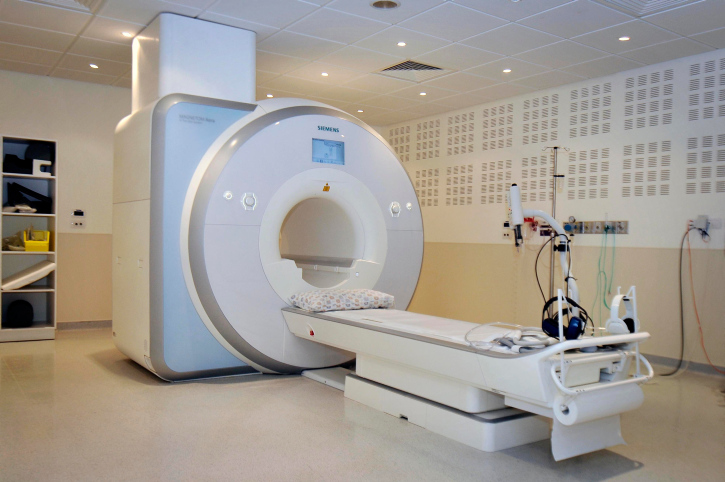
Checking theMRI Known as a particularly stressful test, the patient is placed in a sealed chamber and ordered not to move for dozens of minutes at a time. Many patients, mostly children, are placed in the device after taking anti-anxiety medication or being lightly sedated.
According to a lawsuit filed by attorneys Ran Shapira and Sephi Klu of the Almog-Shapira law firm against Assuta Hospital, the incident that happened to L. is perhaps the biggest nightmare a test subject can go through as part of a medical examination. MRI.
According to the lawsuit, S., a 60-year-old woman who suffers from multiple benign tumors and has already undergone several surgeries to remove them, is required to undergo a checkup every 2-3 months. MRI Head, neck and spine.
 Want more news, videos and stories? Join the Haredim 10 WhatsApp channel >>
The lawsuit alleges that before one of the tests,MRI During her period at Assuta, she was told that since it was a closed machine that could lead to stress and anxiety, she could press the distress button at any time and the medical team would arrive immediately and respond to her distress.
During that very test, the deviceMRI It suddenly turned off and stopped working, leaving the examination chamber in darkness. After waiting a few seconds, the patient began to panic.
At first, she gently pressed the panic button, and even heard the bell ring, but as the moments passed and no one responded to her signals, she had a severe panic attack, during which she began screaming loudly and hitting the device with her fists and limbs, but to no avail.
Only after about fifteen minutes, which felt like an eternity to her, did the medical team feel for her, begin the examination, and successfully complete it.
According to Attorney Shapira, immediately after the examination, the woman filed a complaint with Assuta. In a letter sent to her from Assuta about three weeks after the incident, the hospital admitted to the incident, claiming that the technician was required to evacuate urgently and unusually asked the receptionist to replace him and to locate him immediately if the woman pressed the distress button.
The letter also stated that Assuta takes the technician's behavior seriously, and an apology was expressed to the woman.
According to Attorney Shapira, the letter is a confession by a litigant, whereby the hospital admits and assumes responsibility for its gross negligence.
According to the lawsuit, the woman began to suffer from increasing anxiety, as she avoided situations and enclosed places, which caused her severe anxiety and a feeling of claustrophobia.
According to Attorney Shapira, since the incident, the woman has had difficulty getting on elevators, and gets off them every two floors. Since she lives on the 17th floor, this is a daily and prolonged nightmare.
Also, since the incident, the woman has begun to develop severe anxiety about flying, avoids underground parking lots, has difficulty entering basements, avoids shopping malls, and insists on having her cell phone within reach at all times so she can call for help.
Prof. Moshe Kotler, a psychiatric expert whose opinion was attached to the lawsuit, states that the plaintiff's mental condition deteriorated significantly after the incident, and he estimated that her permanent mental disability as a result of the events of the lawsuit was 151% of the total.
These days, Attorneys Ran Shapira and Sephi Klu, of the Almog-Shapira law firm, filed a lawsuit with the Tel Aviv Magistrate's Court against Assuta Hospital and the insurance company that insures it, for negligence in the treatment of Sh.
As part of the lawsuit, Attorneys Shapira and Klu are asking the court to order the defendants to compensate the patient for her damages up to the maximum amount within the court's authority (2.5 million shekels).
A defense has not yet been filed.