The Jewish calendar is largely likened to a long journey, with supply stations scattered throughout. At each such station, you receive unique equipment, necessary for the continuation of the journey.
It goes without saying that the equipment provided at each station is not intended for the duration of the stay at that station only, but for the duration of the entire journey.
This is also the spiritual purpose of holidays, festivals, and days of special significance throughout the calendar – each such day carries with it messages, ideas, values, and experiences, which must be absorbed and internalized throughout the year. The holiday and festival are like a 'refueling station', where the reservoirs are filled with its special values and contents, which must be applied throughout the year.
The main problem
This week we enter a period of time that particularly emphasizes the sorrow of exile and the expectation of redemption. The truth is that these feelings should fill our hearts all year round, as evidenced by the many prayers we pray for redemption every day; but these three weeks emphasize these values even more.
This period puts things in perspective. It is a human trait that people bounce from event to event and place the present event at the center of their world.
Someone whose toenail hurts is convinced that this is the most important problem and their mind is not free for other things. Someone who has won some award suddenly sees everything in rosy light. Personal and public moods tend to be influenced by the immediate and the current. Therefore, it is important from time to time to see things in a broader perspective.
What is our central problem: the incendiary kites from the Gaza Strip? The Iranian danger? Housing prices? Assimilation in the world? Internal polarization? Alienation from Jewish values and tradition? – all of these are important challenges, requiring serious confrontation, but they are only branches of the great and central problem – the diaspora.
The concept of exile in Judaism is not limited to physical exile from the Land of Israel and wandering around the world. The true essence of exile is the exile of the Divine Presence, the concealment of the interior, the disruption of the correct relationship between things. All its other expressions branch out from internal exile.
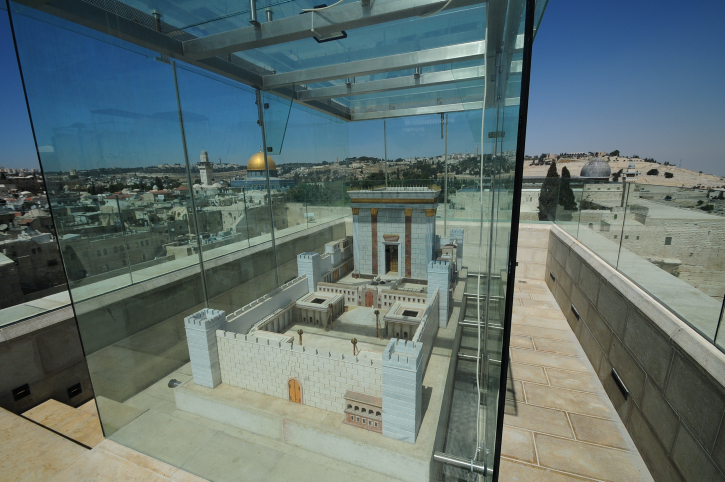
Therefore, when we pray for redemption, we primarily ask for "and let our eyes look to your return to Zion" and "that the Temple may be built." The return of the Shekhinah to Zion and the building of the Third Temple are the full expression of redemption, following which all other things that need to be fixed will be resolved.
The times of the Messiah are heard.
The building of the Temple is the essence of the wishes of the Jewish people for generations. The longing for its construction focuses the expectation for the rebuilding of the Jewish nation and its return to its rightful place, and with it the Divine Presence returning to dwell in Israel.
The days of mourning for the destruction of the Temple give us a healthy awareness of what we truly lack, and inspire our hearts to strengthen in anticipation of redemption. But mourning and expressions of sorrow are not enough. We live in a time when the signs given by the Sages about the end of the exile are being fulfilled. The coming of the Messiah is imminent.
This is the time to be filled with encouragement and hope for the coming redemption, and to combine within the sorrow of the destruction the longing for the rapid building of the Third Temple in our day.
 Join the Haredim 10 Facebook page >>
 Join the X page of Haredim 10 >>
 Want more news, videos and stories? Join the Haredim 10 WhatsApp channel >>